


 19 km
 stage 1 of 6
 You walk the Camino Inglés from Ferrol to Neda.
This morning we could have started the Camino Inglés from our delicious hotel, but of course we don’t. We are in the city where this centuries-old walking route officially starts, so then of course you are meant to walk to the starting point first and begin there. So that is what we do. We walk through the narrow streets of Ferrol and come out at the Rua dos Iramandiños, which leads us under loud traffic noise to the starting point in the harbour. A little sign promises us that from here it is 113 km to Santiago. Today we walk fifteen kilometres; that means that on day 1 of this camino we already pass the 100 km sign . Yes!

The history of the Camino Inglés
The Camino Inglés is a special route. For one thing, it is the shortest official camino to Santiago. If you only have a week’s holiday, this route can be done in four long or five more relaxed stages.
On top of that it is a very old one: it came into being when a clever shipowner in the 12th century had the idea of reopening old trade routes with Spain (those had already been put on the map centuries earlier by the Vikings and the Norsemen) and turning them into routes that formed a combination of economy and spirituality. He not only took English cloth (on the outward journey) and Galician wine, oil or meat (on the return journey), he also took passengers: rich merchants and people of independent means who were looking for the salvation of their souls. When Pope Calixtus II determined in 1122 that if you walked to the apostle’s tomb in so-called jubilee years (years in which 25 July, the birth day of Santiago, falls on a Sunday), you would obtain a full indulgence, there was no holding it back at all. Especially in those years there was a boom of pilgrims who suffered from a guilty conscience. But in any case, in the heyday of this route (from the 12th to the 15th century) hundreds of Britons and inhabitants of other northern countries walked the route from Ferrol to Santiago daily. They arrived in the harbours of A Coruña, Ferrol or Pontedeume and then set off on foot, on horseback or by caravan. The ships stayed at anchor for seven to eight days and waited. As soon as the pilgrims came back after seven days from their journey to the apostle, they were taken home again. Neatly three weeks away from home, all inclusive, and all your sins forgiven into the bargain!


On this first walking day we follow the Ria de Ferrol, an enormous saltwater estuary formed by the river Xubia. Ferrol is one of the cities that lie on this estuary and is somewhat schizophrenic. Once it came into being as a fishing village, but by the 17th century it was the home of the largest arms arsenal in Europe. Besides that it was a centre of shipbuilding; you still find many shipyards there. Now it holds one of the most important naval ports in Spain. Pieter really likes the atmosphere there; I don’t so much. Many dilapidated buildings, every other building has a ‘se vende’ sign behind the window, shabby little streets and bankrupt little cafés. At the same time the warehouses along the harbour look beautiful, there are also many old colonial houses that absolutely radiate grandeur, and the city really does breathe centuries-old history.

Dilapidated little buildings

beside very beautiful houses

And through a beautiful park, with a view of the Puente AP9
We walk through little streets, along broad avenues, on the pavement beside busy roads and through parks. After about twelve kilometres we come to a fork. We can keep walking on a gravel path parallel to a busy road, something we have already been doing for a while, or we can make an 800-metre detour, by looping around a spur of the estuary.

Left? Or right?
We decide to make the detour. Fifteen kilometres is modest, so 800 metres may as well be added. We are glad of our decision. It is a beautiful little extra loop, and especially when we walk through the ‘tunel graffiti’ in Narón and see this street art.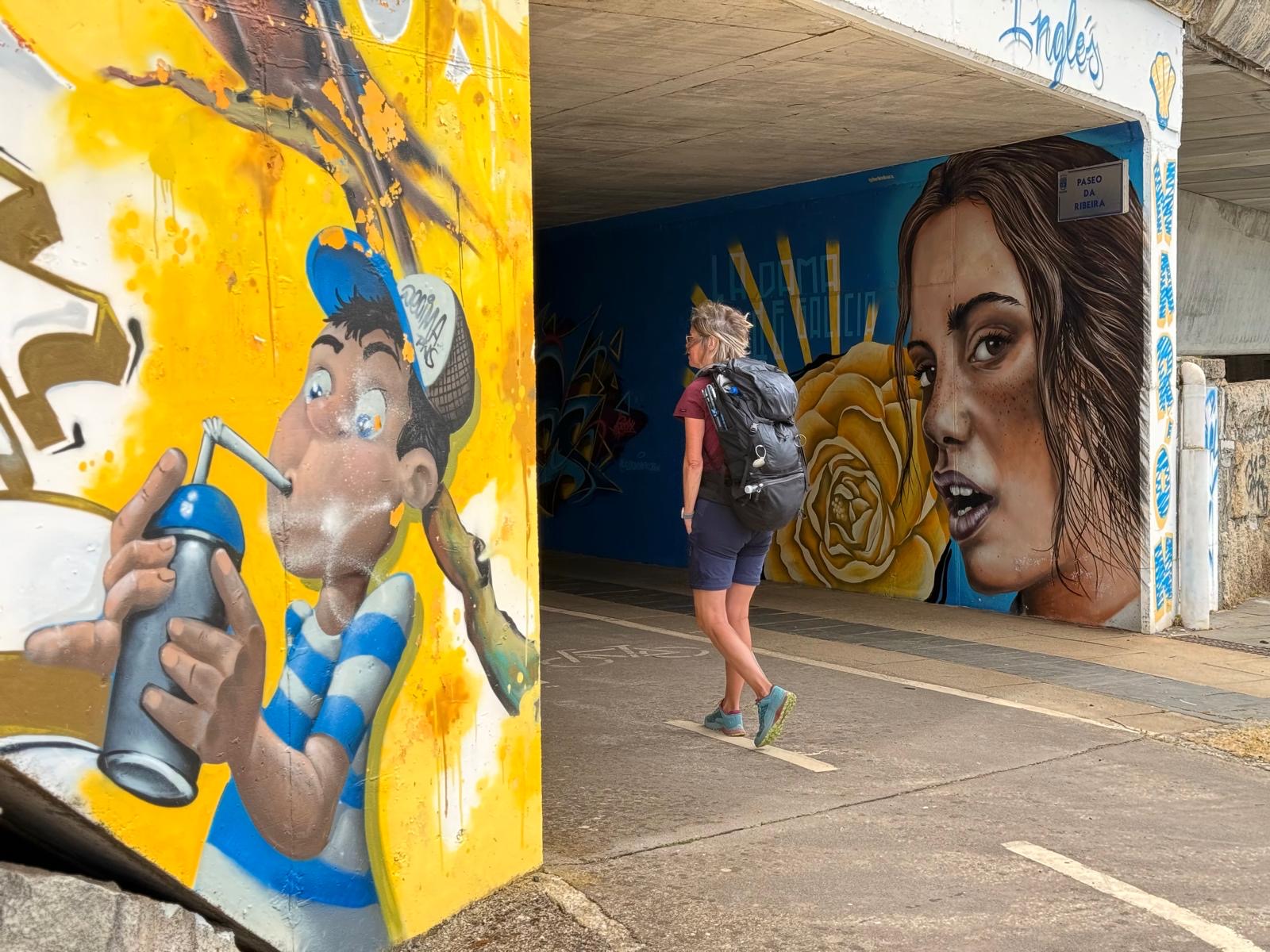


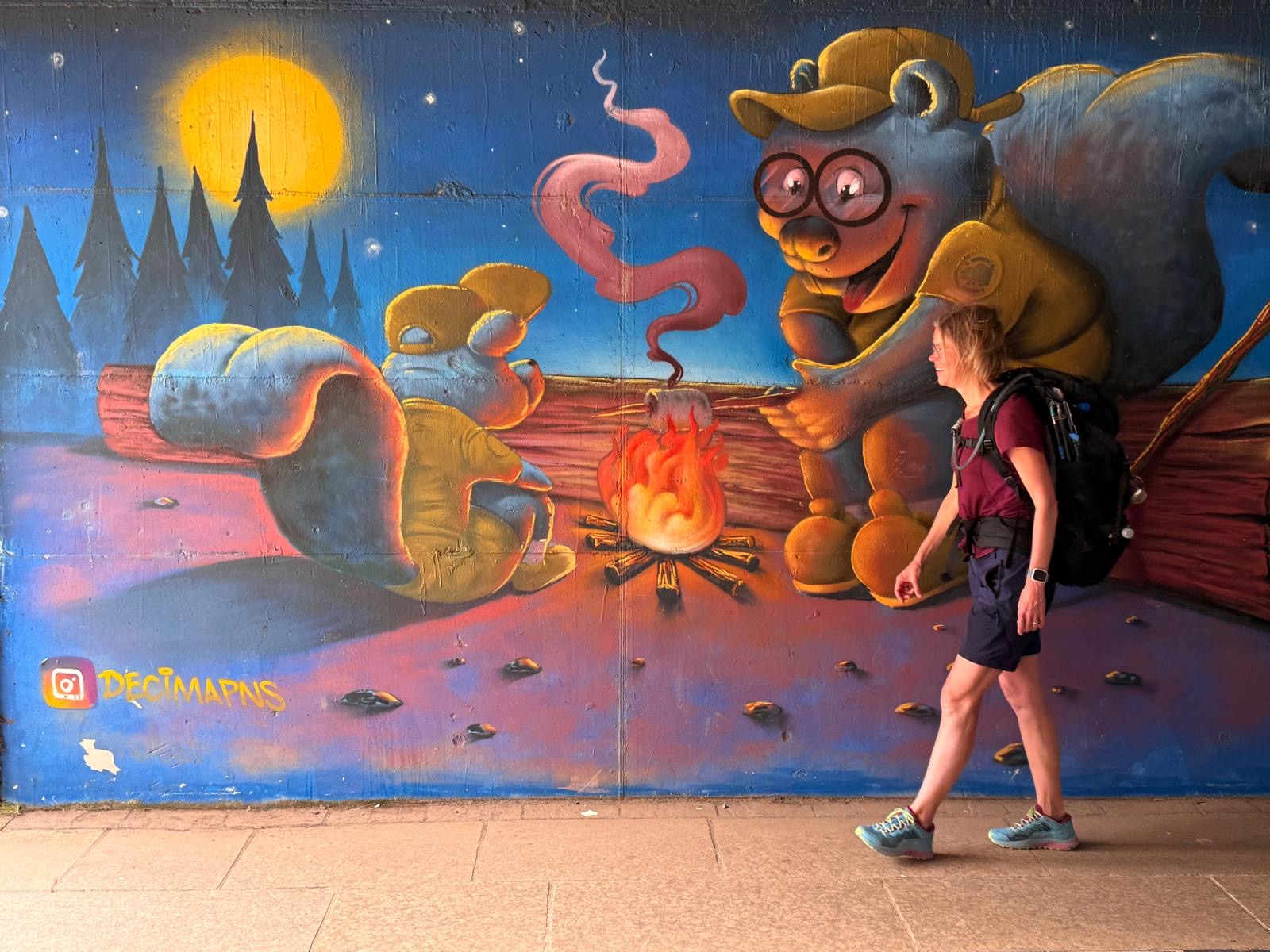
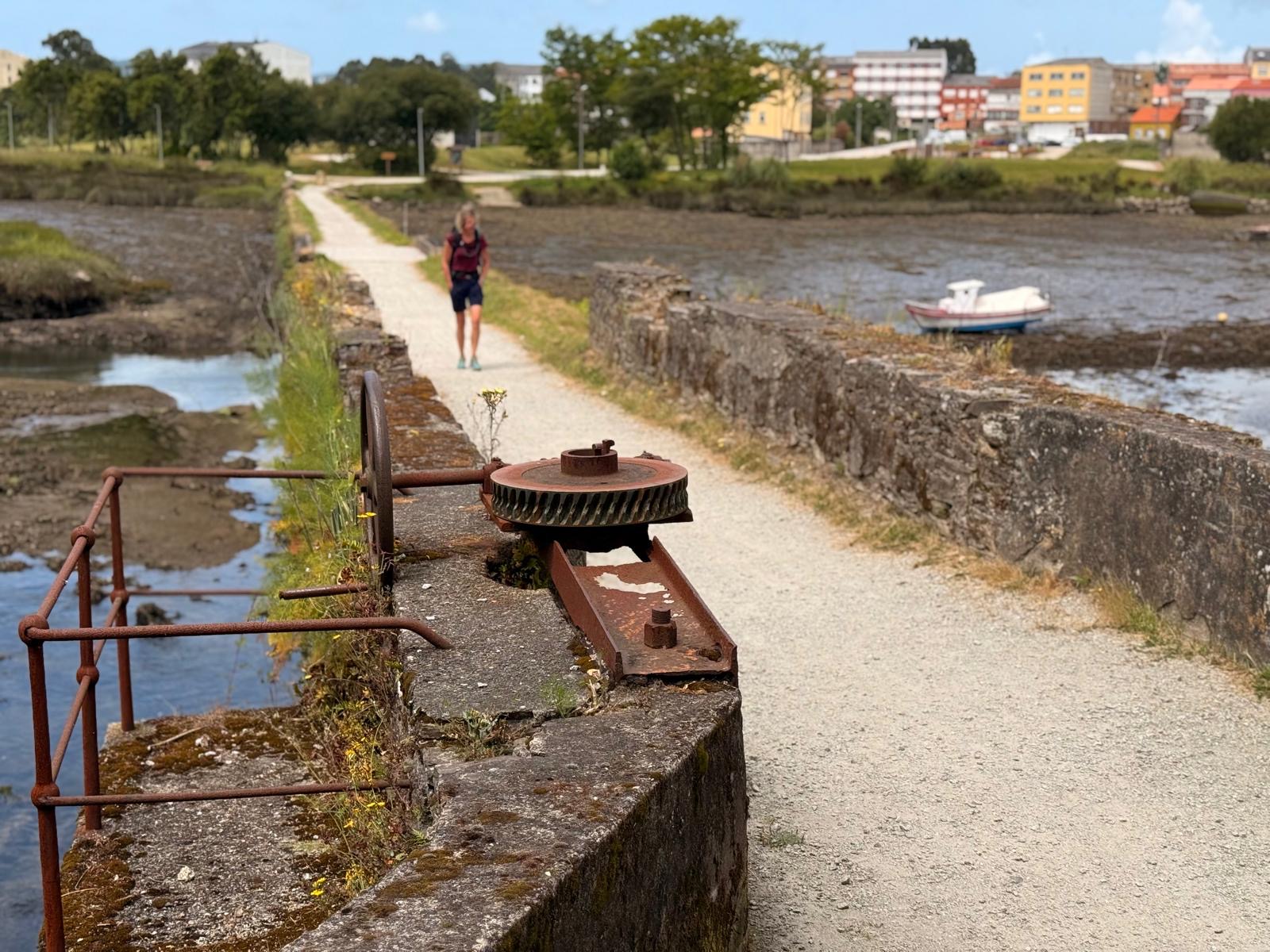
The rest of the little loop is very beautiful too
After that it is along the pavement of a busier road through little ribbon villages such as O Coto, Ribeira da Toeleira and Santa María, until we arrive in Neda. There our hotel, Pazo da Merced, has already been announced with signs well before we get there. When we walk onto the grounds, we understand why. What a special building, and what a wonderful setting! It turns out to be an 18th-century tannery which, after the owner emigrated to Cuba, was converted into a Franciscan monastery. Several owners later it was carefully restored in 1991, preserving earlier elements, and is the beautiful hotel in which we get to spend a night, just like that. According to an old folk legend this Pazo is connected via an underwater passage to the monastery of San Martiño de Xubia, which lies on the other side of the river mouth.
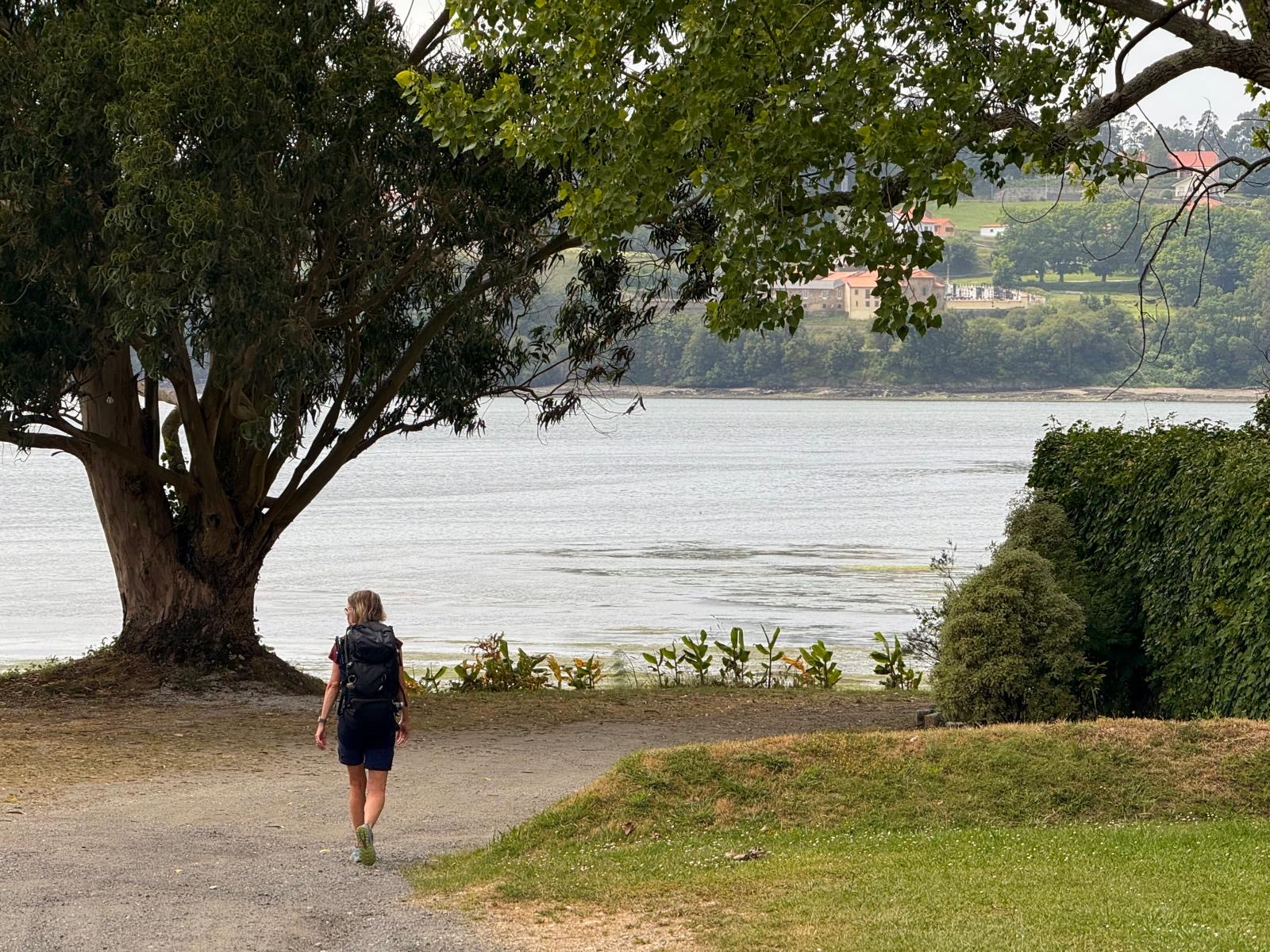
This is how you arrive at the hotel

And then this is the courtyard
Whether it is true, we do not know. We will never discover it either. For now we are going to enjoy our evening and muse about the rest of this Camino Inglés. The first day promises a great deal!
PS Would you like to receive our newsletter? Just let us know, and every now and then we’ll send you an overview of a few posts.
PS II You can also find us on Instagram, in case you can’t get enough of us.
More from this tour: Our Camino Inglés overview
We work together with WAW Travel. For walks we do for WAW Travel, they cover (part of) the trip. This post contains links to their website. More information
This post was translated from Dutch with the help of AI. Read the original Dutch version.


No comments