

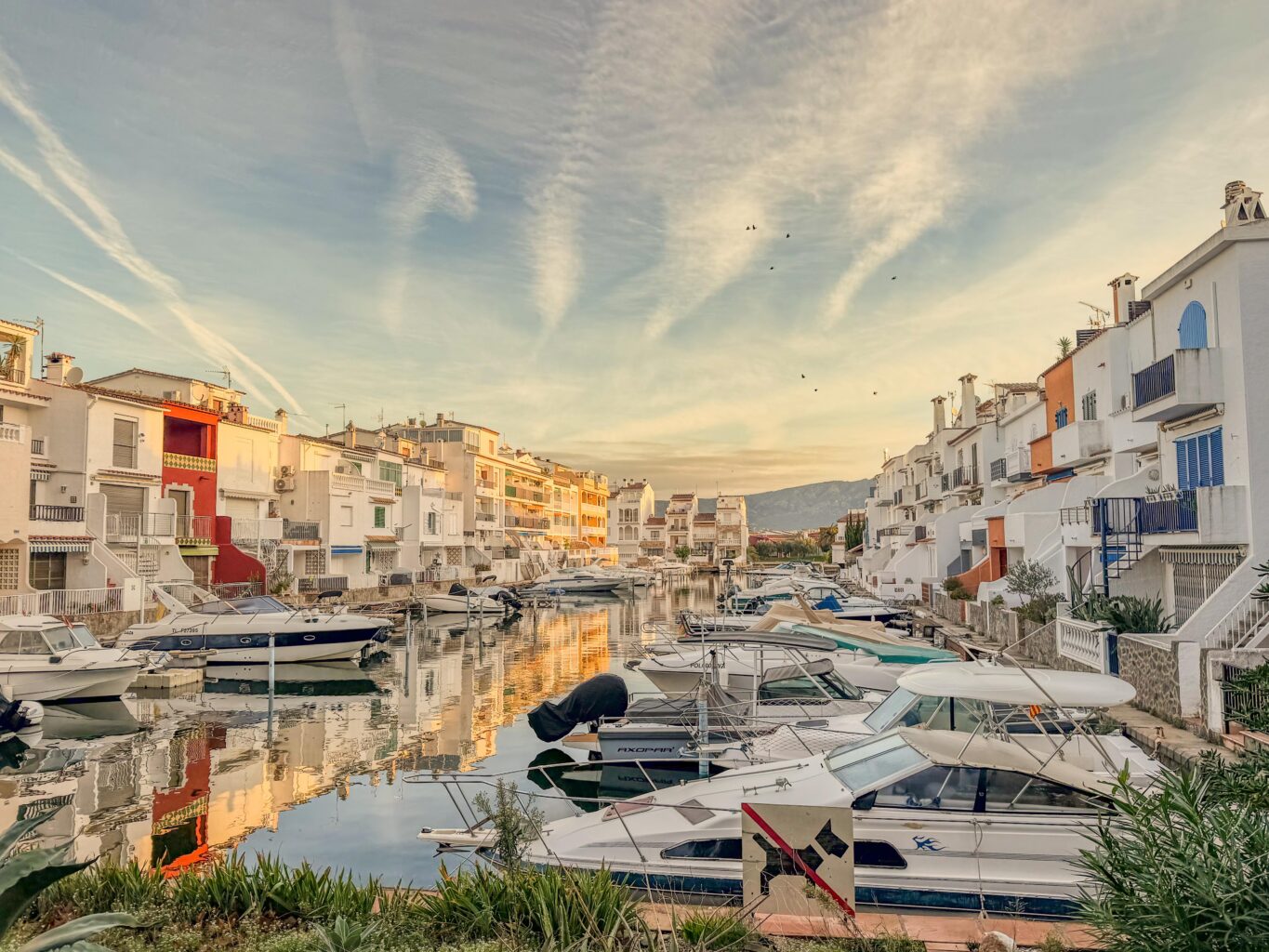
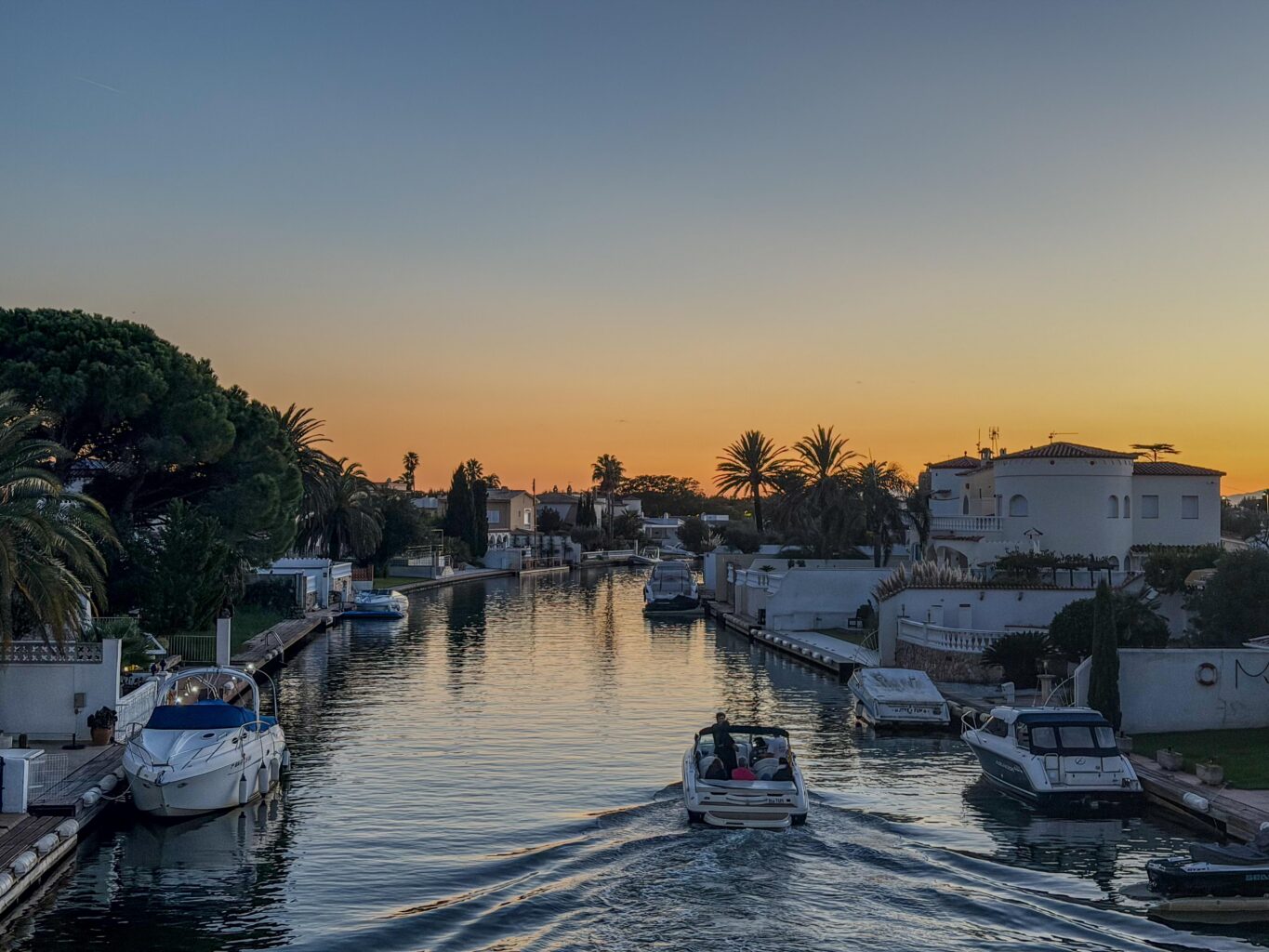
Empuriabrava, our town of departure today, does not do it for us. In the 1960s it was built on drained marshland on the Gulf of Roses, and to look at the houses nothing has been done to it since. What is typical of Empuriabrava is the dozens of kilometres of canals in this town. Many villas have their boat literally at the door, and for that reason it is also called the Venice of the Costa Brava. Pieter has never been to Venice, but said last night that if Venice looks like this, he does not particularly need to go. Empuriabrava is mainly a lot of tacky cafés, an unspeakable number of estate agents and the flashiest boats you have ever seen. We are glad when we walk out of it this morning at 9.00.
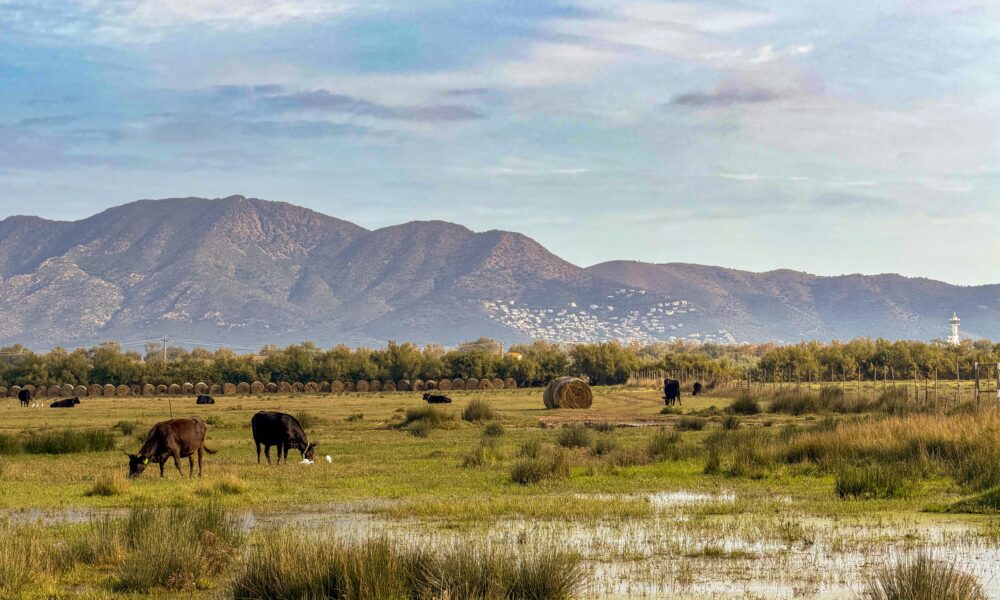
Aiguamolls de l’Empordà
This stage is long and our hotel does not offer breakfast. Without coffee or having eaten anything we go straight to the only bakery in town I could find open. A Deutsche Konditorei. It turns out to be a bullseye. A lovely omelette roll and a still-warm chocolate croissant, excellent coffee and cheese rolls to take with us, and already almost four kilometres in the legs. Within a hundred metres of the bakery we are back on the GR92, and not ten minutes later we find ourselves in Aiguamolls de l’Empordà nature park, the second most important wetland in Catalonia.
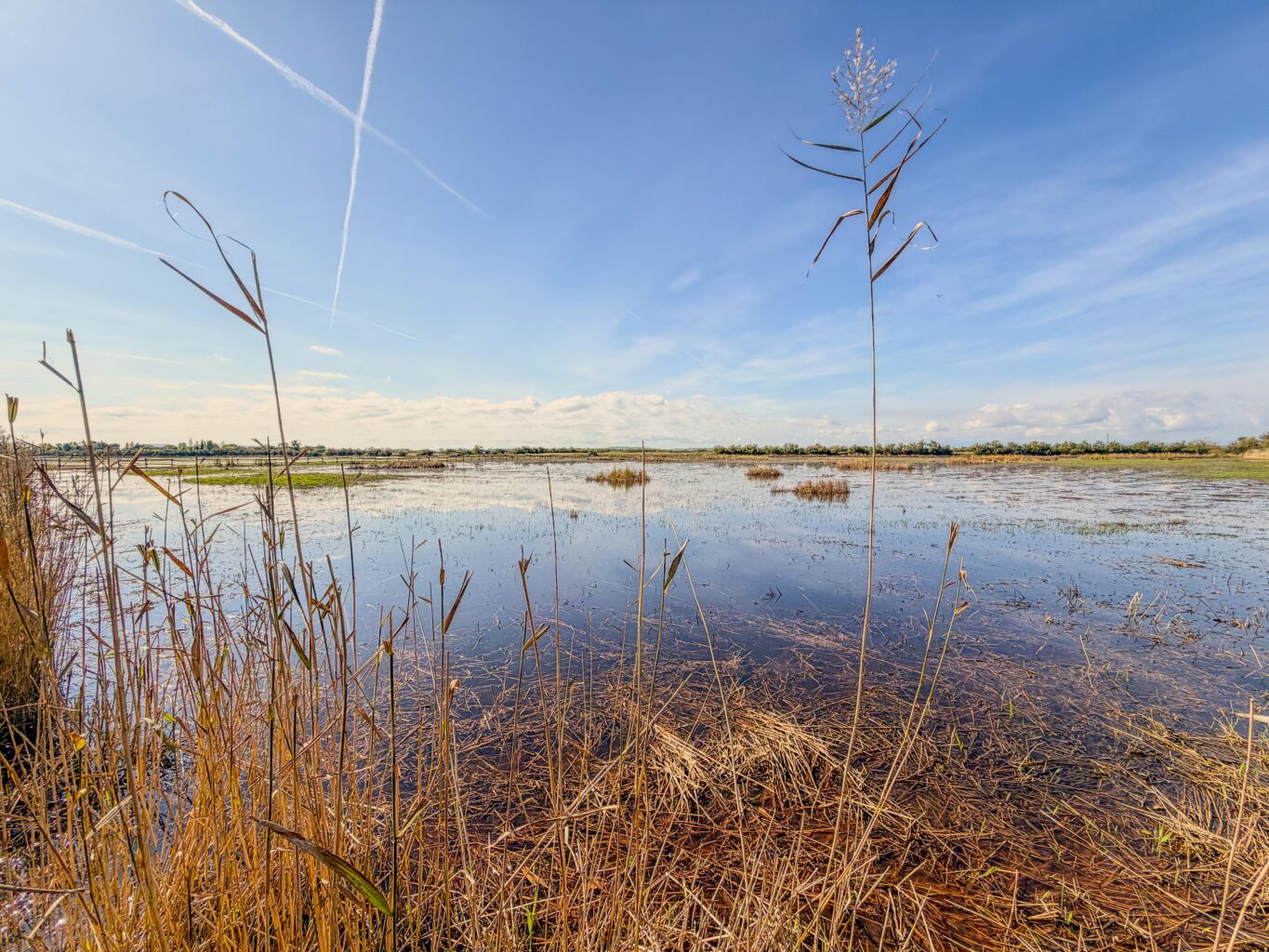
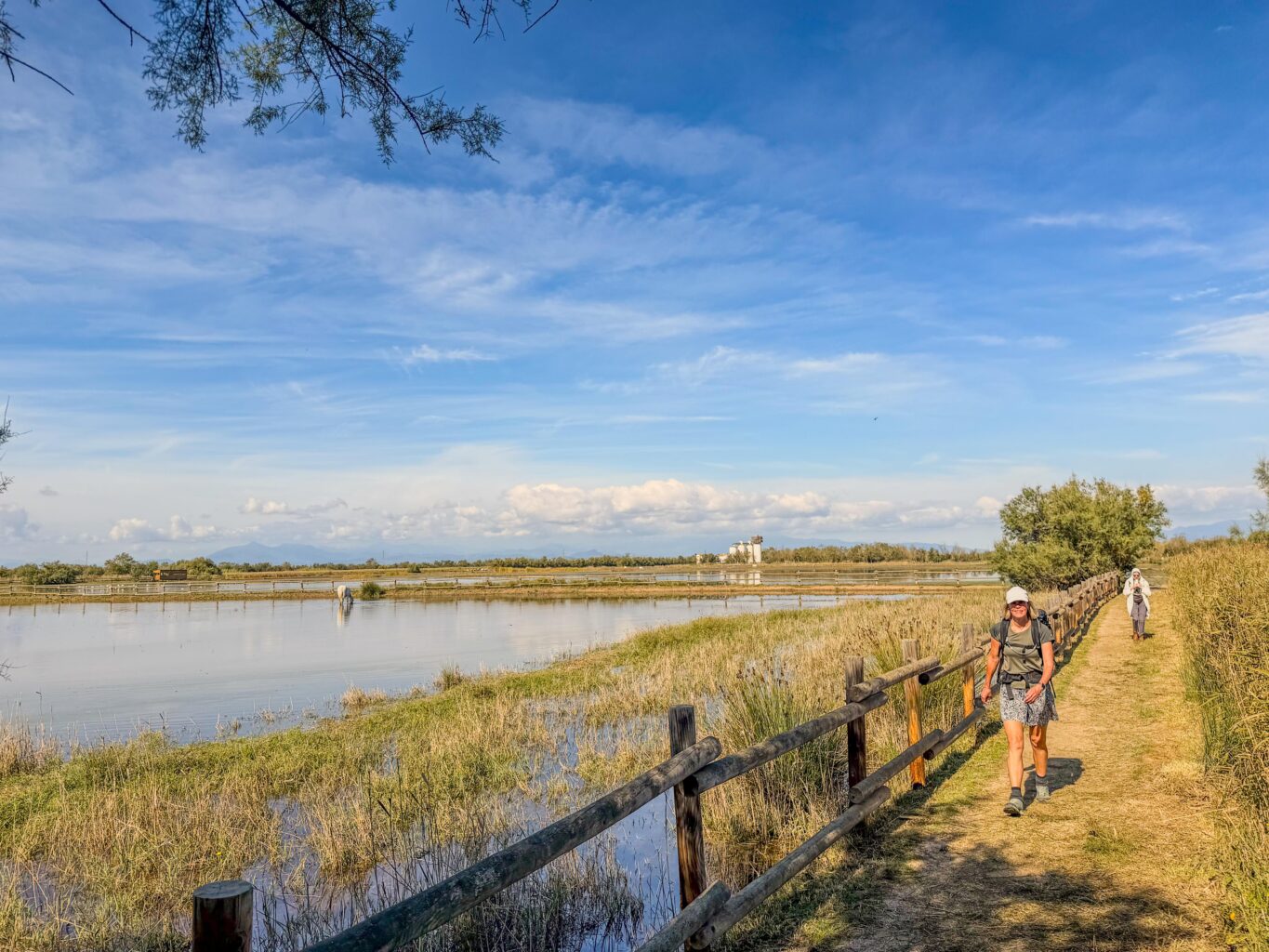
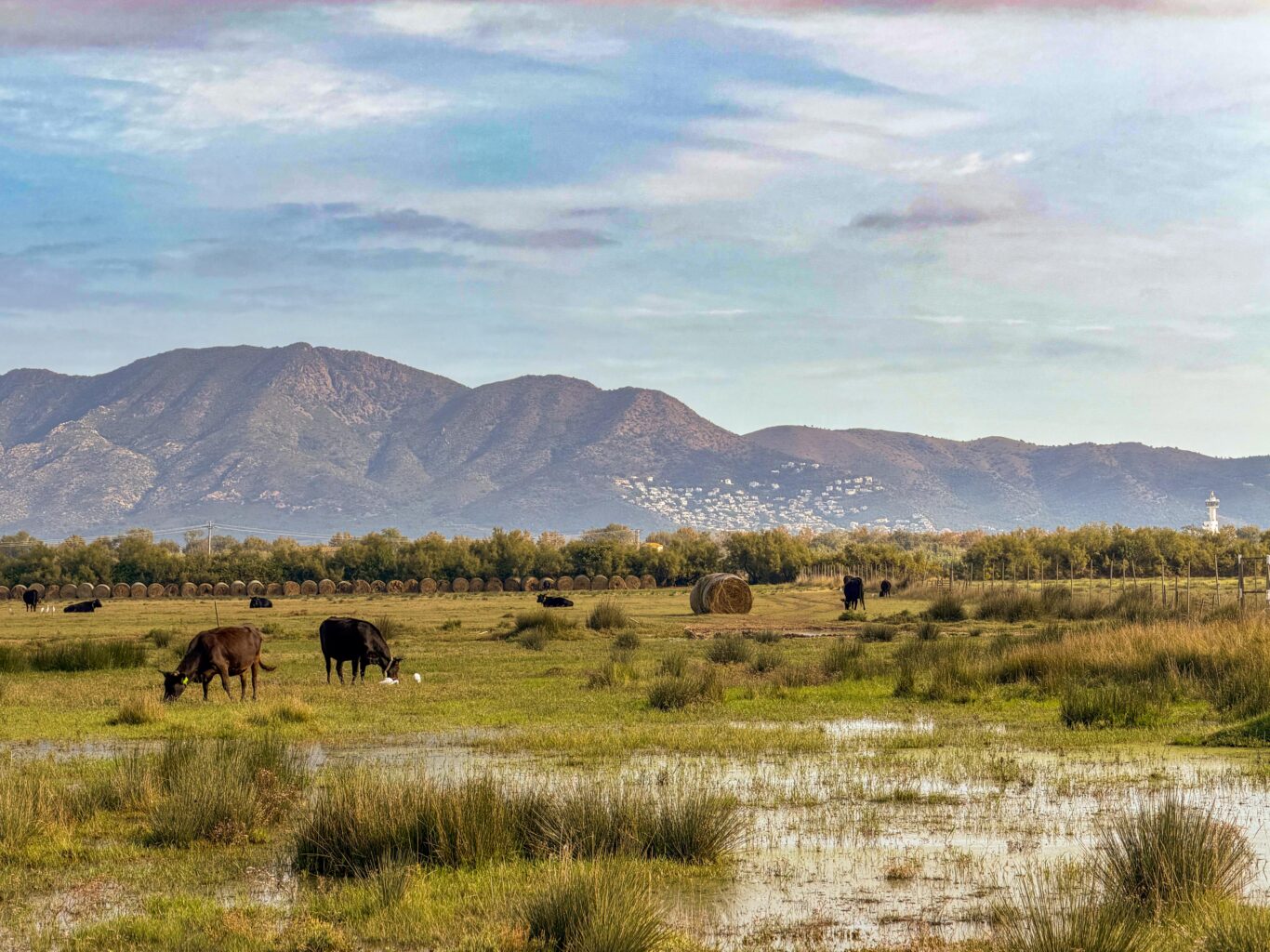
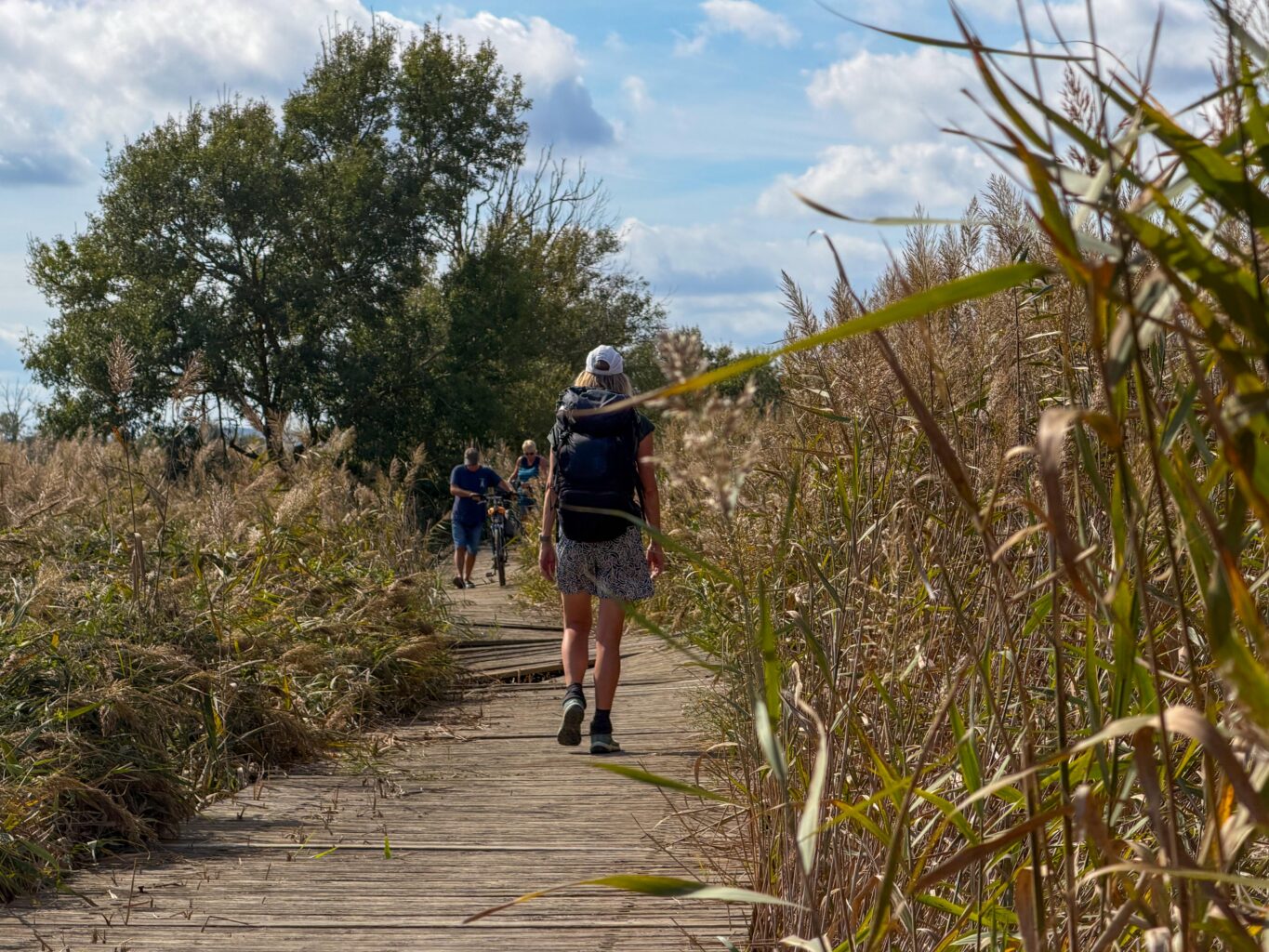
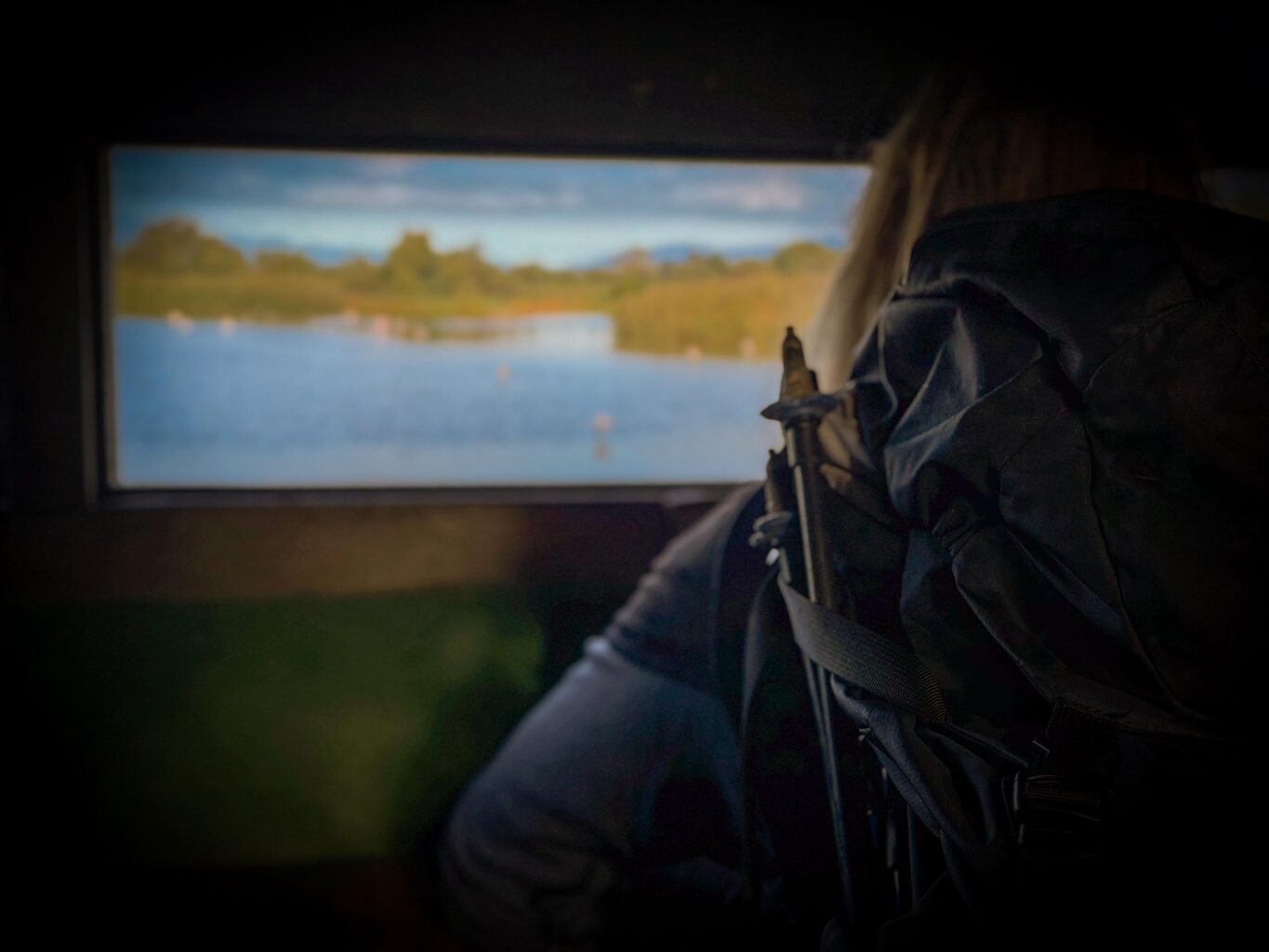
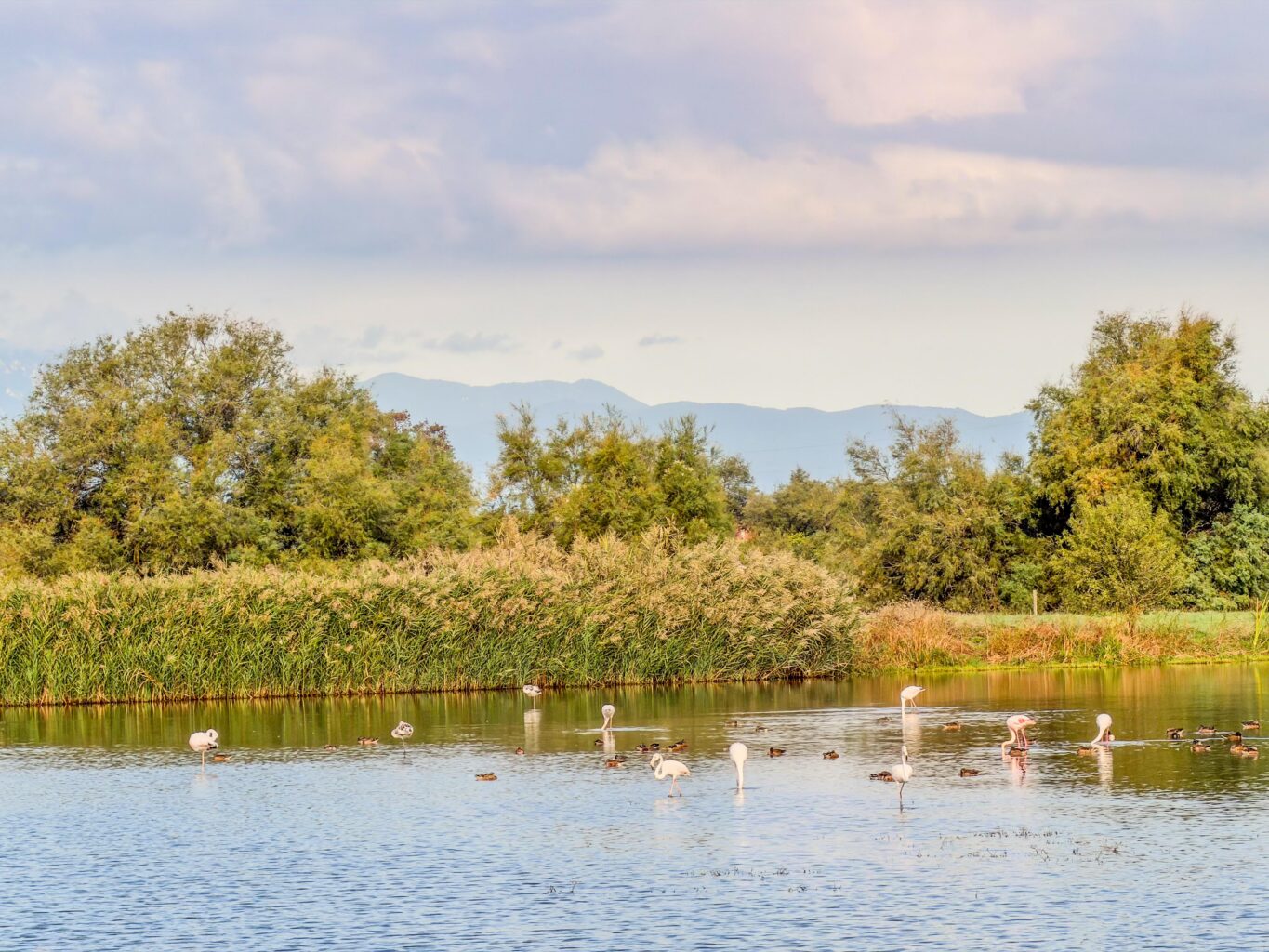
The Danes had said that this stage was the dullest of the whole GR92. No idea where they get that from. We are in our glory as we make our way through the nature park. Between reedbeds and salt meadows we step over boardwalks and walk from bird hide to bird hide. We go into about seven of them and see flamingos, glossy ibises, curlews, little egrets and teals. The flamingos in particular are wonderful to watch at work. With their heads under water they are busy tap-dancing, to stamp little creatures up out of the mud. In one hide we actually see little, but it is precisely in that hide that people with gigantic cameras are sitting. The atmosphere is like that of a church. People whisper softly, sometimes someone points somewhere, otherwise a serene silence, the utmost concentration and respect for nature.
Back to this nature reserve
We walk on. By a little stretch of water just in front of us emperor dragonflies are flying around. We see skylarks, crested larks and a little stonechat. Then it gets busier. People with dogs, children, experienced fast cyclists and uncertain slower cyclists, it all comes together at a large information centre. Groups of children are taken ‘on expedition’ by enthusiastic women. Rangers give guided walks, a man with a microphone on a kind of TV dish leads a large group of people. It is lovely to see how they are engaged in nature education here. After a loo stop we go on quickly, because this really is an awful lot of people.
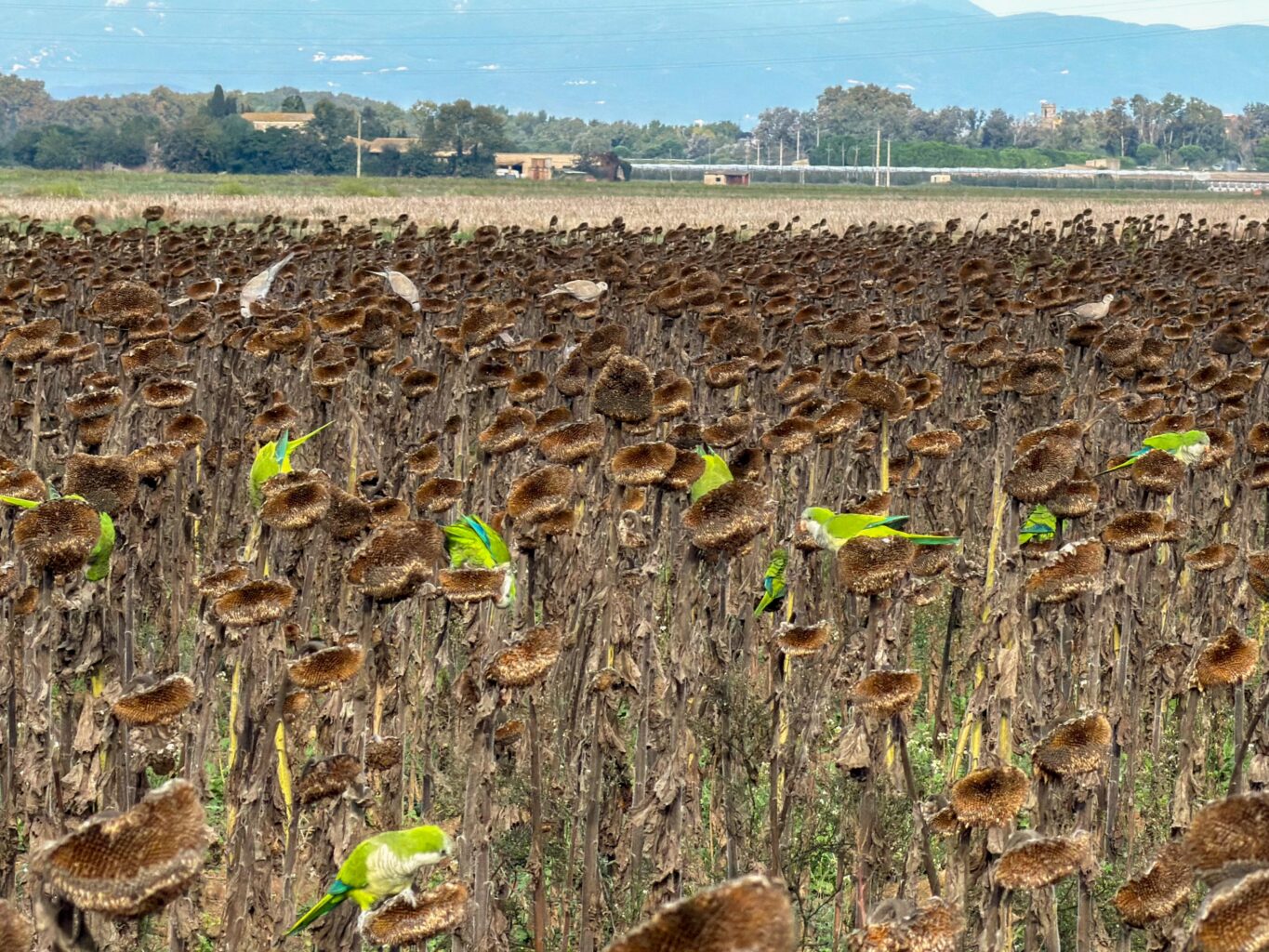
It gets quieter as we leave the information centre further behind us. We pass a beautiful marsh area with snow-white horses in the distance. A stork stands near the horses, in front of them glossy ibises are wading. A little further on, in a field of old, dried sunflowers with hanging heads, dozens of bright-green monk parakeets are eating the old seeds. When we turn a corner somewhere, a young wild boar shoots across the path in front of us, and at the last observation hide there are roe deer in the distance. It is one big celebration. Such a big celebration that we decide on the spot that we will come back here tomorrow. Pieter with his large camera, I with my binoculars, and then we will take a closer look at all this beauty.
Sea and orchards
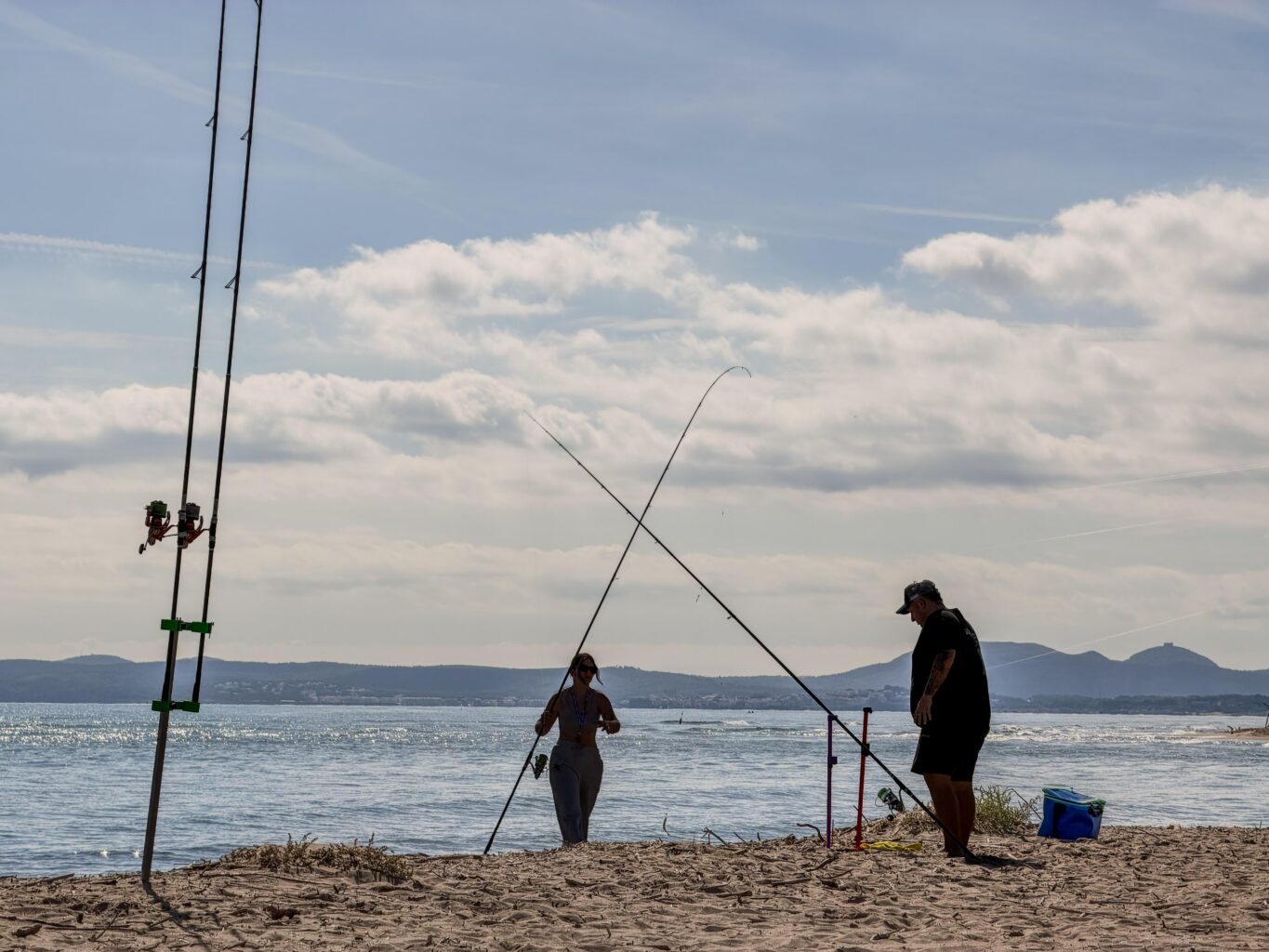
Only after ten kilometres is the celebration over, but the next celebration is already waiting for us: we come out at the sea, with people sunbathing, men fishing and little children playing. In the distance we see Roses and the high blocks of flats of Empuriabrava. When we turn, we see the massif of Montgrí, with the castle on top. ‘It is just like a breast with a nipple,’ is Pieter’s comment. What do you think? (zoom in a little, to the right of the fisherman on the right 😉)
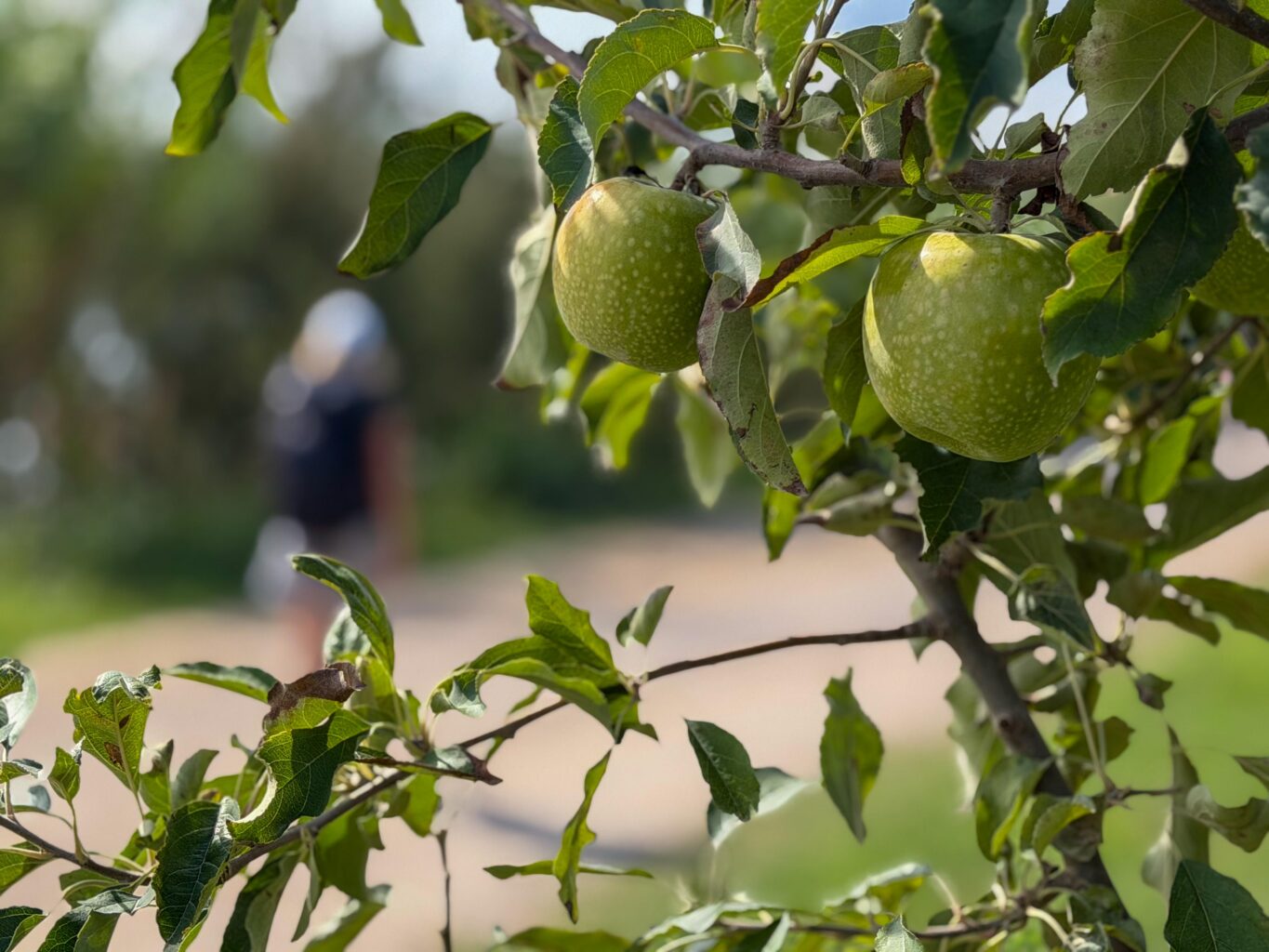
We trudge through the loose sand along the surf. Via a campsite of grassland we come out in the orchards. About this part the Danes may well have been right. It is a bit duller than we are used to. We walk over farm tracks and cart tracks, with mainly apple trees on either side. Many trees have no apples left; they are all lying underneath, on the ground, rotting away. Why have those not been picked? Are they meant for apple cider and therefore do not need to be perfect?
Cuna Spoon
By now we already have almost twenty kilometres in the legs; we would very much like to sit down. I have read something on the internet about a special restaurant we will soon walk past: Cuna Spoon. The restaurant is in a restored farmhouse from the 18th century, with its own organic kitchen garden and a view of the mill pond, and everything they prepare there is cooked on an open fire. The chef uses no gas or electricity. From a long way off you already see the black plumes of smoke drifting into the air. When we go down the steps and sit on their reed-covered terrace, the smoke comes out of the building and it feels as if you are sitting in one enormous barbecue. How do those men work here?
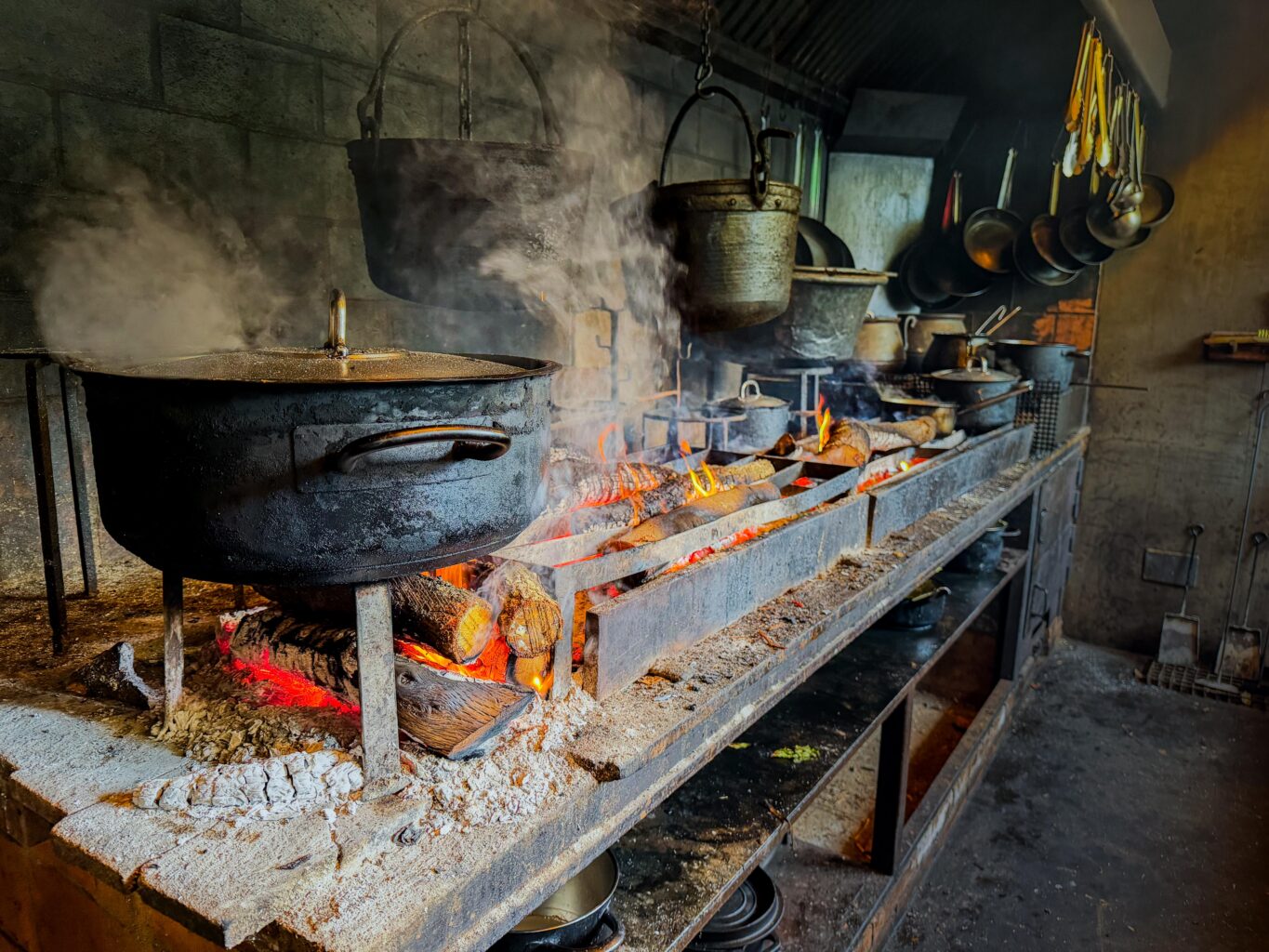
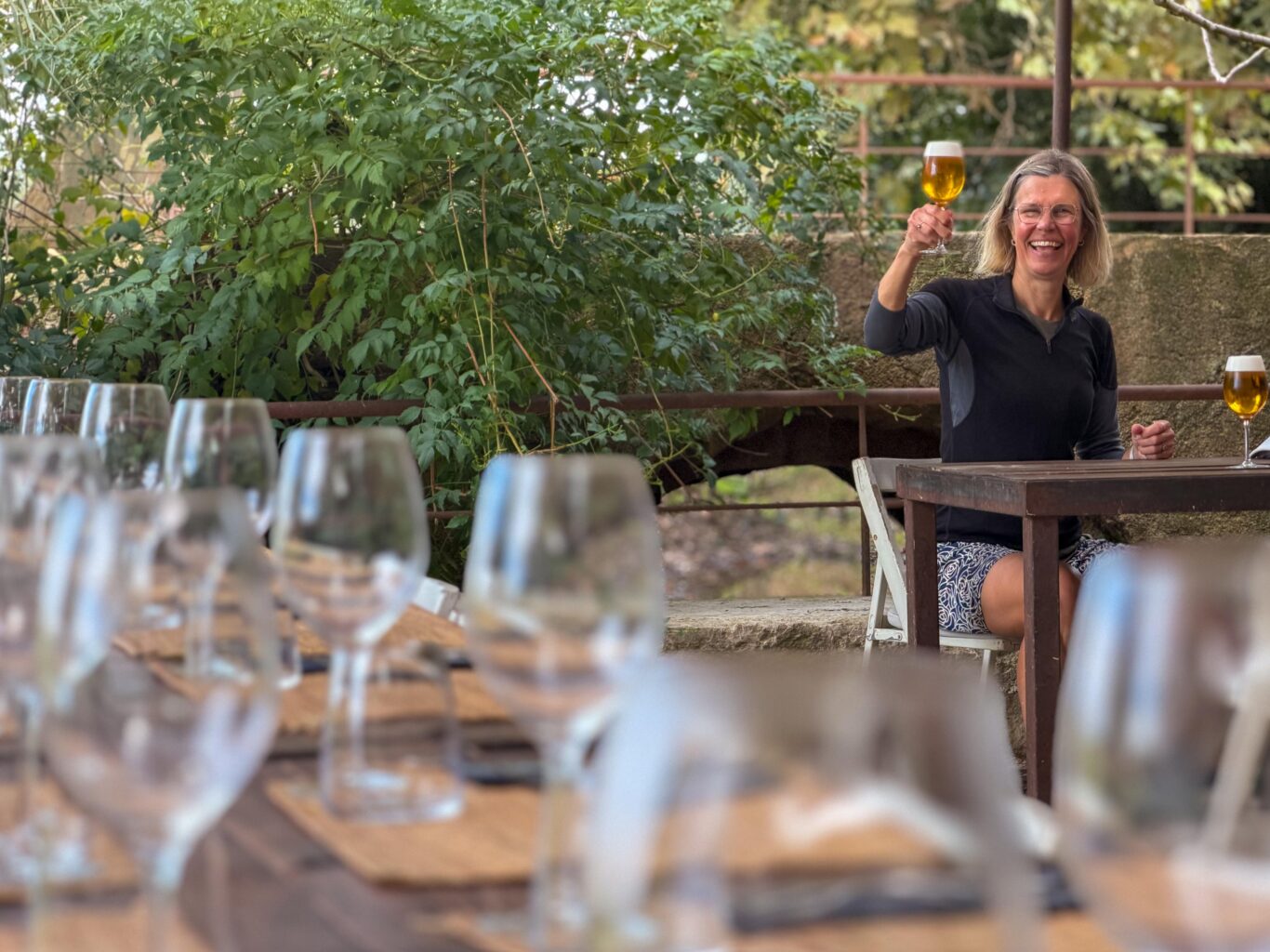
We ask for a drink and a snack. The only small thing he can make for us is escalivada. We have been looking for that for days, so yes, we’ll have that. Escalivada is grilled vegetables and everywhere you get it with its own twist. In general they use onion, pepper and aubergine, and this chef serves it with cured ham. That everything tastes smoky is of course a given in a place like this, but they even put the bread in the wood oven for a moment and man, does that taste good! While we tuck in, the terrace fills with families who sit down at long tables to enjoy a multi-course lunch. When we leave, everything is full and the waiters who smell of wood fire run around among the smartly dressed people. A unique place, this.
Emporion
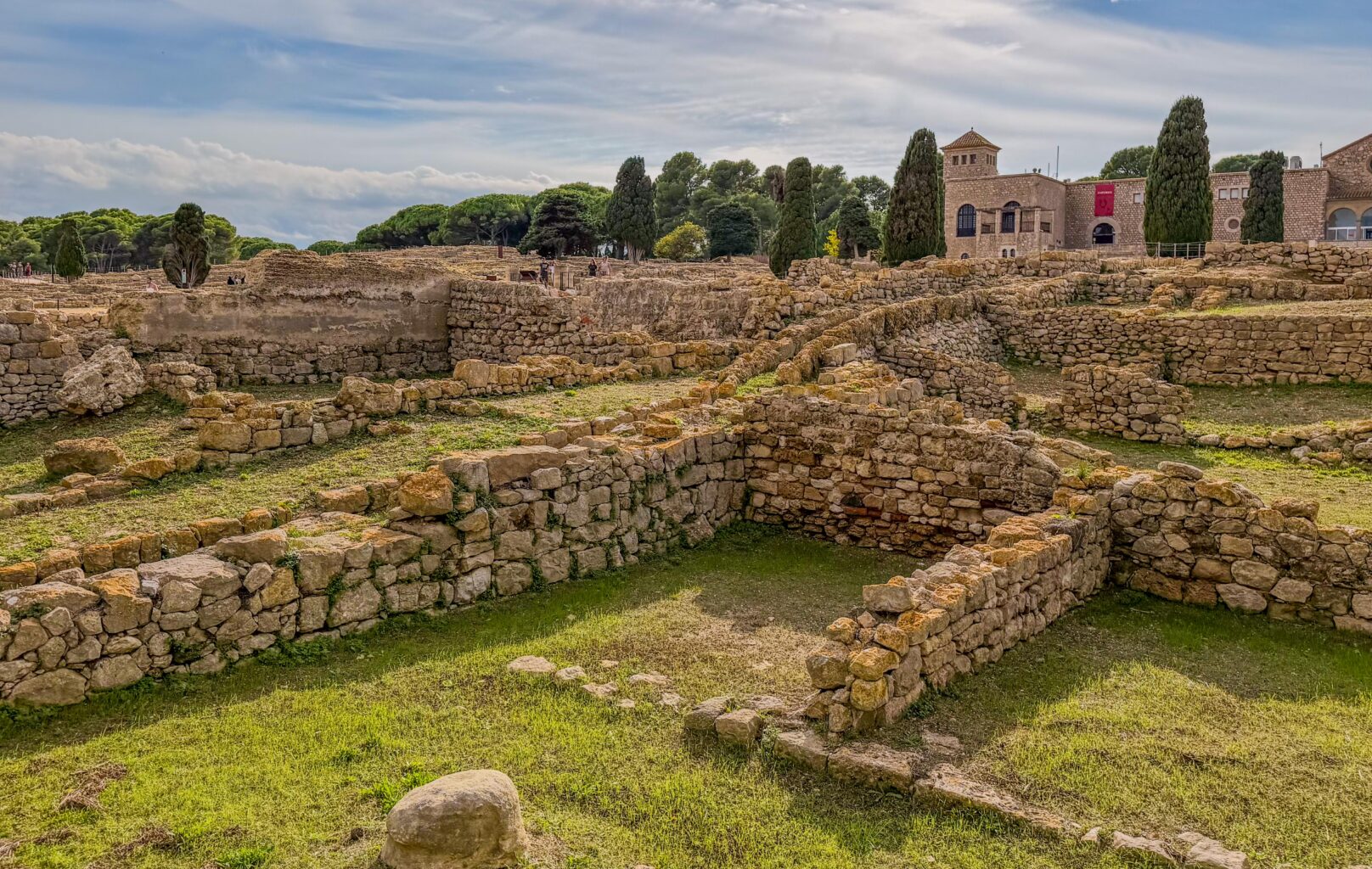
We then walk for a long time along the broad river La Fluvia. Then we are in front of the little village of Sant Martí d’Empuries, where we walk up the steps and come out on the church square. Two terraces full of people give a cheerful cacophony of chatter, which we wade through before dropping down towards the sea. Then l’Escala comes into view. Over a broad promenade we walk towards the lovely fishing town. We pass the incredibly large ancient city of Emporion, which the Greeks founded around 575 BC. There are remains to be seen of temples, houses, wells and an agora. Two centuries later the Romans came ashore and they built their own city on the hill behind. It is a special complex, not least because this is the only place in the whole of Spain where the Greeks ever built a city. Now there are ruins of a Greek quarter and a Roman city, also a unique combination.
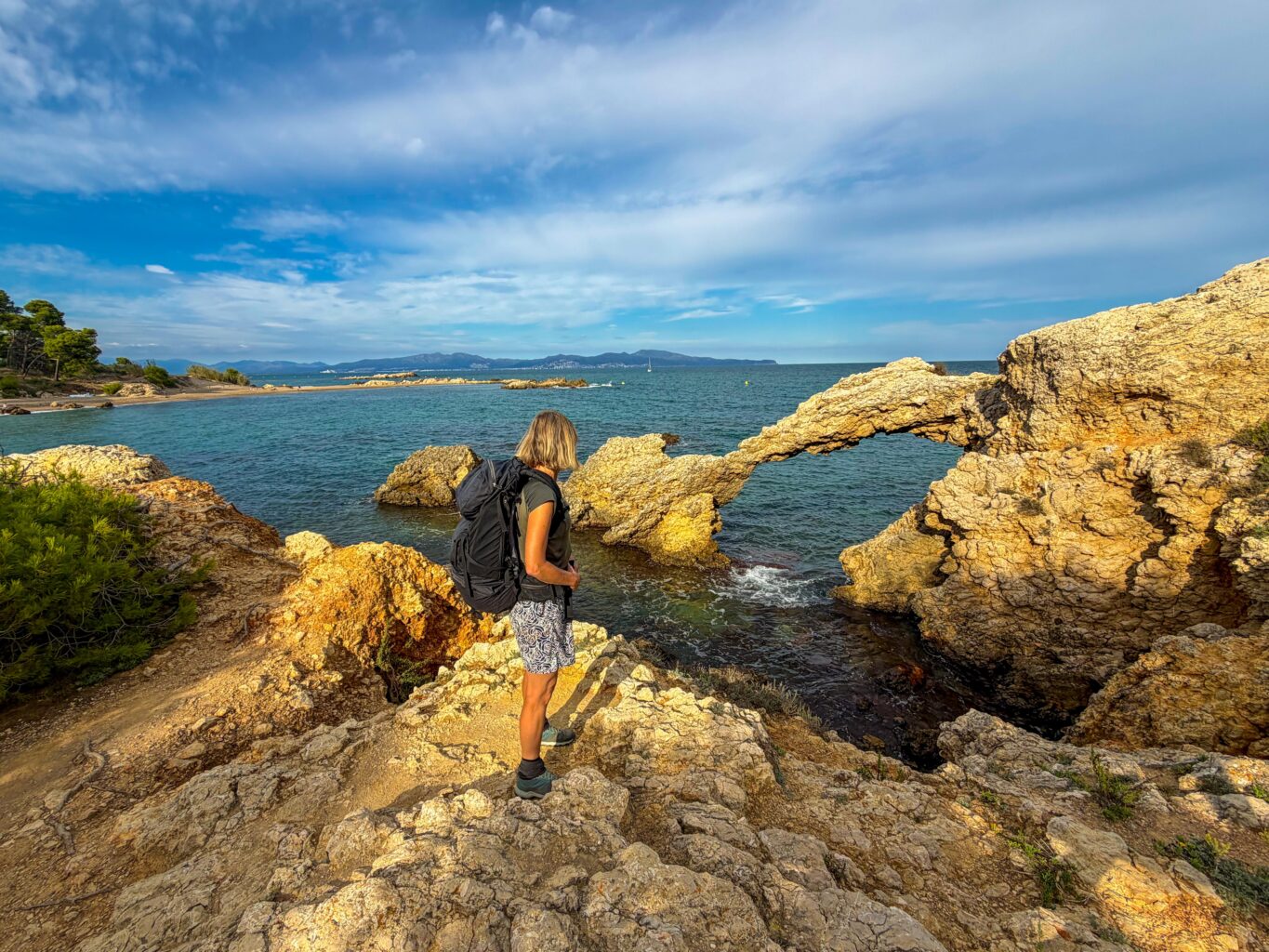
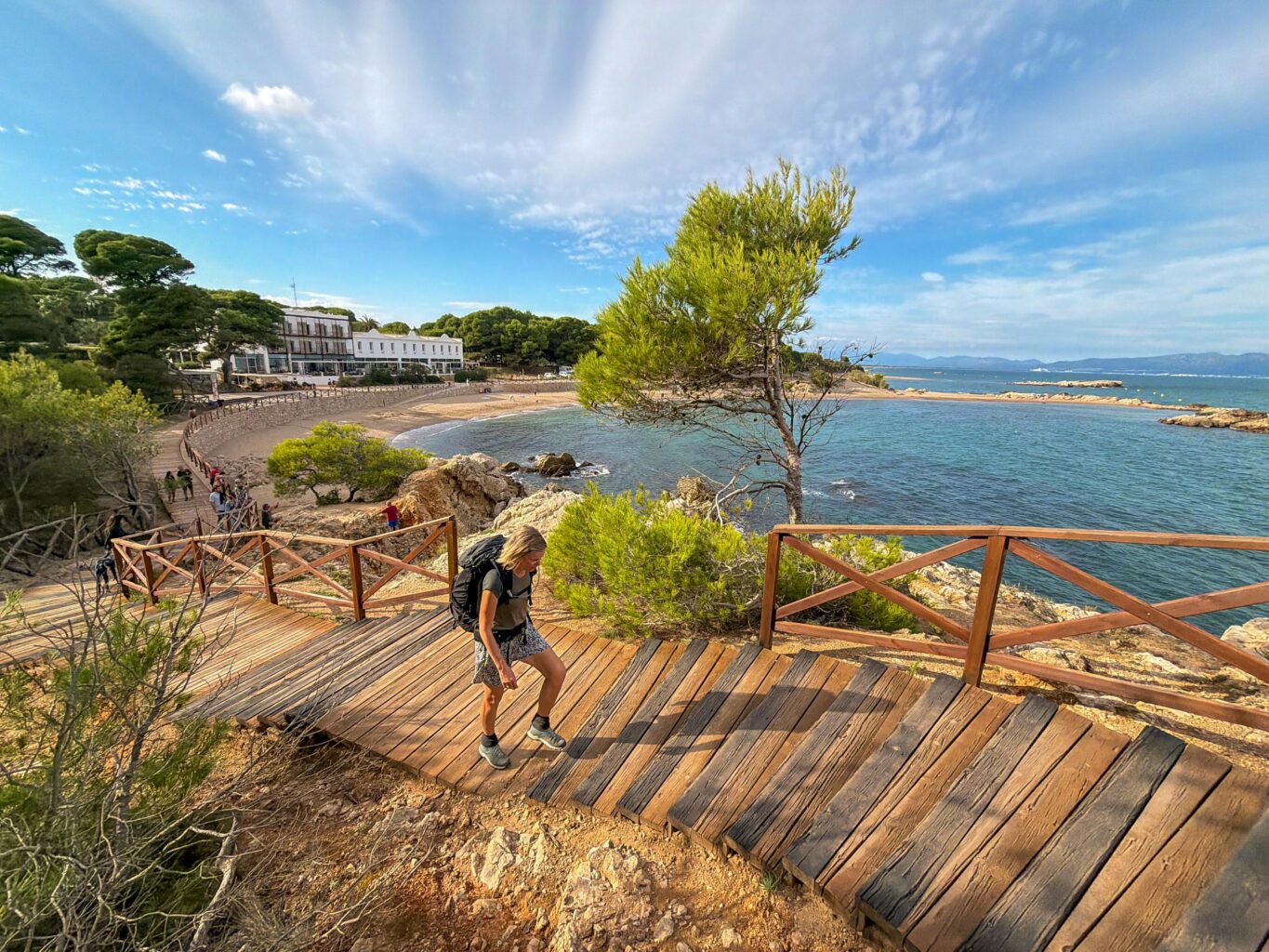
We walk past it. The counter meanwhile stands at 30 kilometres and we are ready for a shower. Once again the receptionist of Hotel Centre is waiting for us with open arms. We sleep in the same room. This evening the restaurant with the phenomenal pork cheek is closed, so it will be a hearty plate of pasta at the Italian’s in the bay. After we went from one celebration into another today, we close the day festively with a glass of bubbles and Italian treats. Tomorrow, hopefully, another celebration. It does not stop!
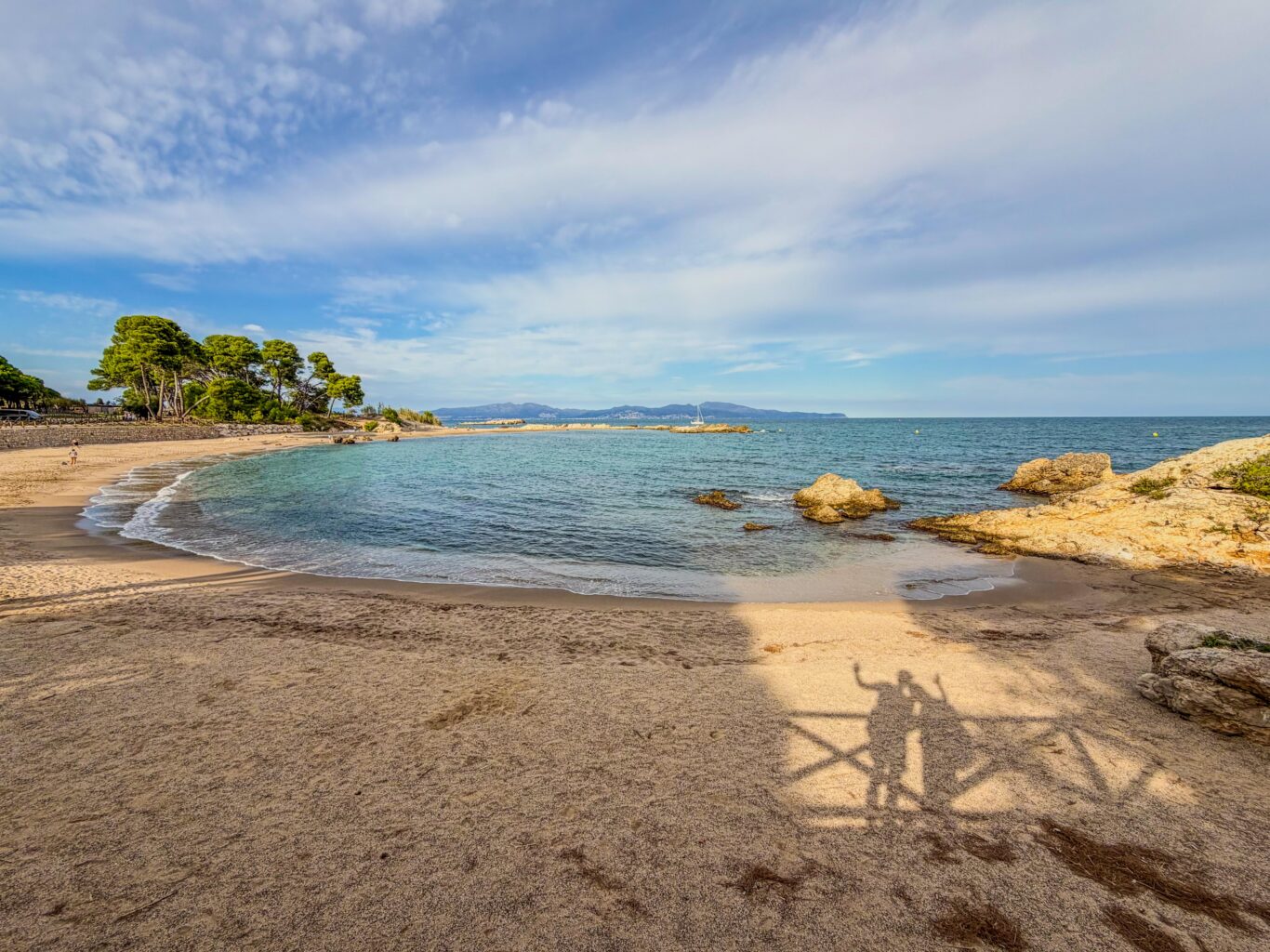
Staying at: Hostal l’Escala Centre. A lovely hotel run by a brother and sister.
Distance: 30 km
Elevation: 46 metres up, 21 metres down
We work together with WAW Travel. For this walk, WAW Travel provided our overnight stays and breakfast. More information
This post was translated from Dutch with the help of AI. Read the original Dutch version.

No comments