

We have done it more often. That we were so impressed by something that we went again the next day. Two evenings in a row to the same band, for example. Or the same holiday destination two years running. It always ended in disappointment. It is never the same experience. You are in a different mood, the circumstances are different, now it is raining and then the sun was shining, yesterday the sound was brilliant and now it is terrible. That sort of thing. Conclusion? Secretly you should just be happy to leave it at that one time.
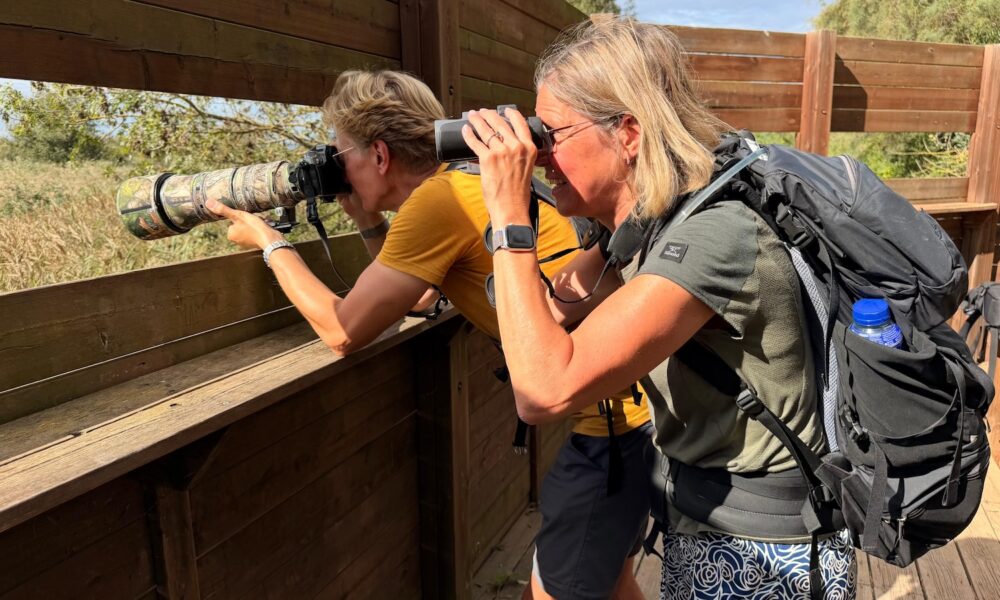
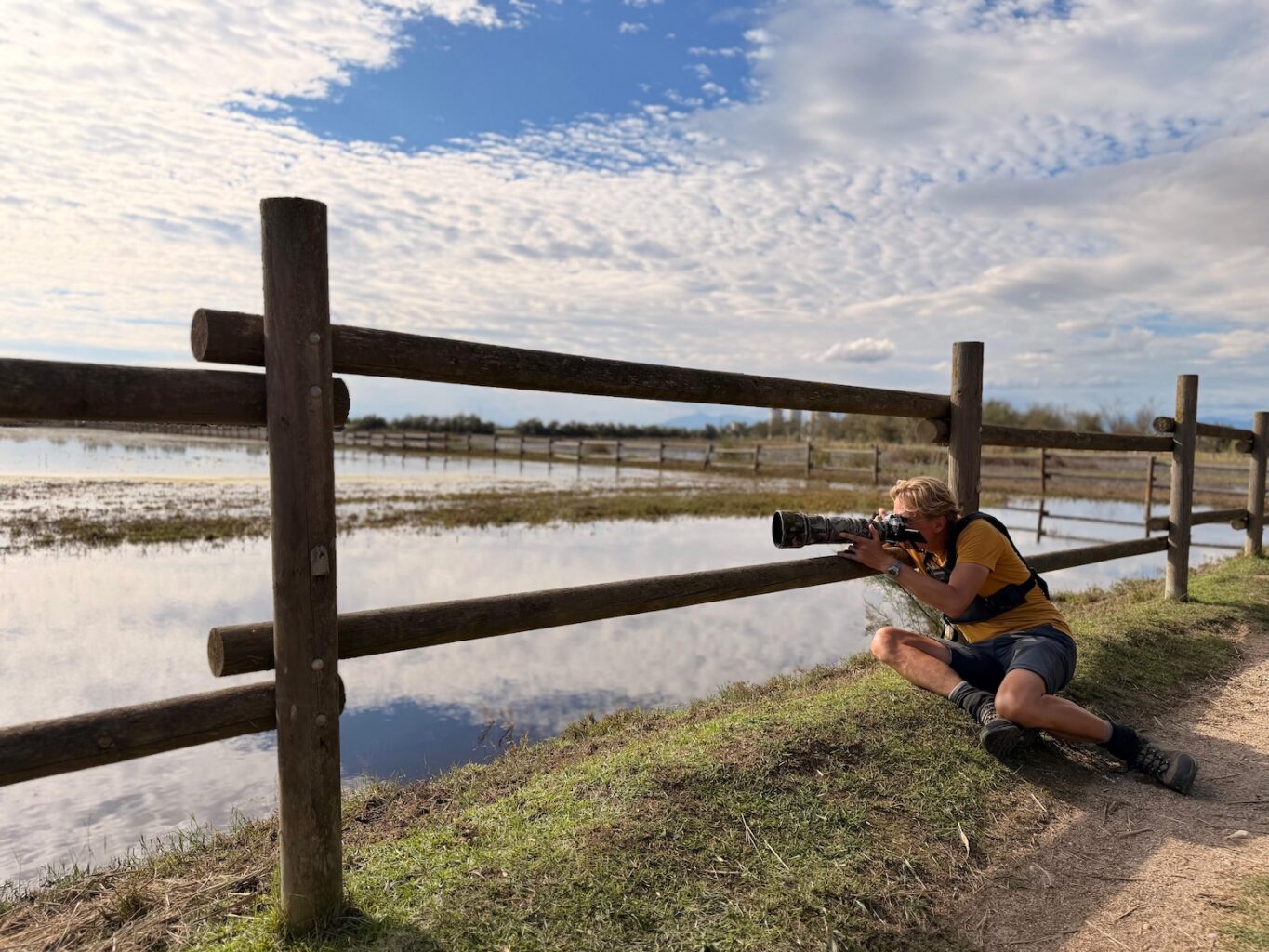
Even so, we fall for it again today. We are going to walk through the same nature reserve two days running. The Aiguamolls de l’Empordá, the second-largest wetland in Catalonia, made such an impression on us yesterday that we postpone the journey to our house a little longer. Today we are going through it again, this time without a rucksack but with a large camera and binoculars.
Monk parakeets
After a lovely cup of coffee at the same Deutsche Konditorei as yesterday (there we go again! 🤷♀️) we swap everything over and go into the park. We walk past the bird hide we completely missed yesterday; the second one too. Pieter is determined to go to the field of old sunflowers first, because that is where those beautiful little monk parakeets were. We almost run there, but you can guess it already: when we appear at the field, we see zero parakeets. Not a single one. Zero. Zilch.
I feel a slight sense of guilt because I very much wanted that cup of coffee, which means we are later in the park than yesterday. Pieter could not care less. He accepts completely that we might see nothing at all today and will be sincerely happy with whatever comes along. He does not say that to cheer me up; that really is his conviction. Everything that comes along is beautiful; he has already accepted in advance that it will come as it comes. A true stoic; I could still learn something from that.
So much beauty
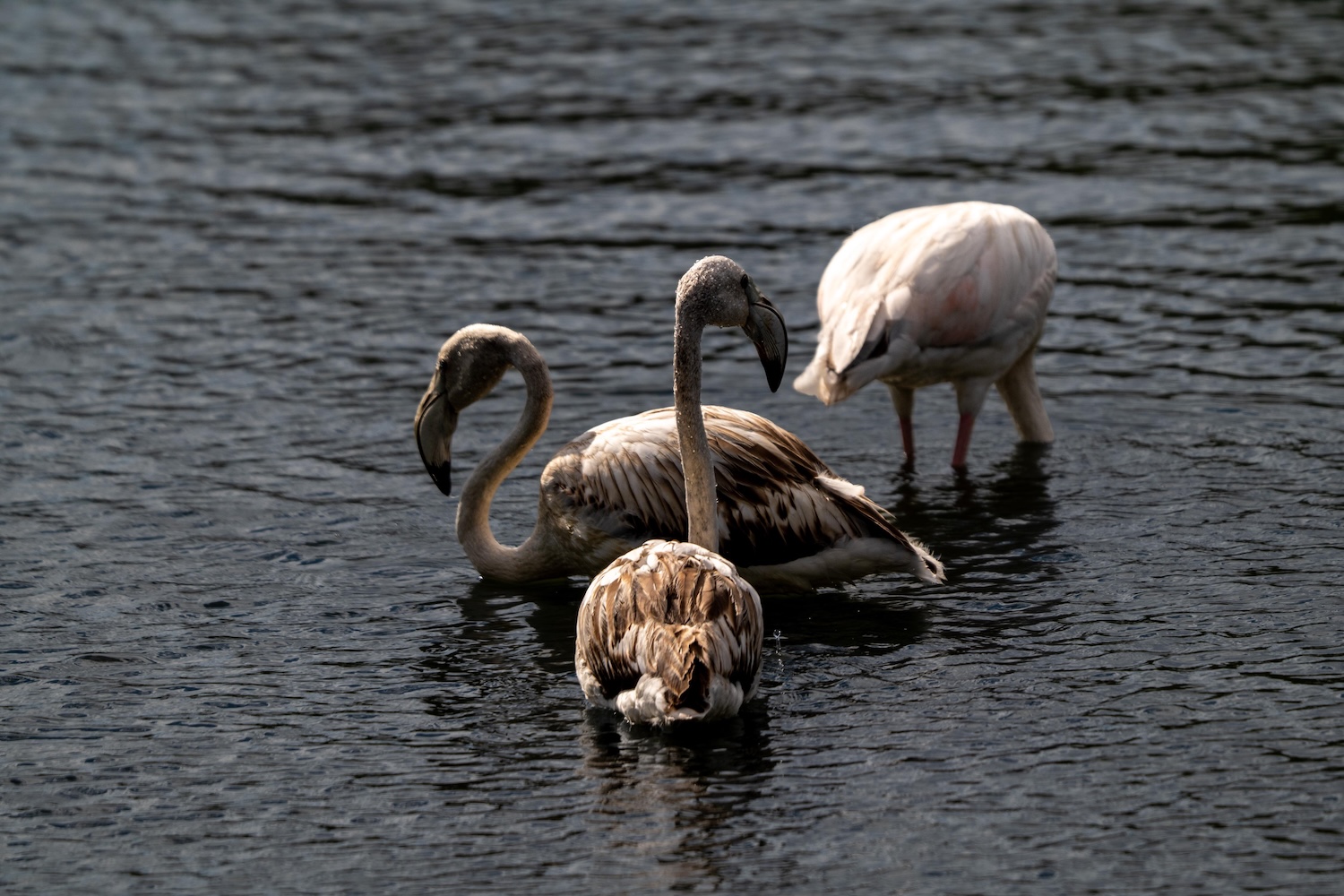
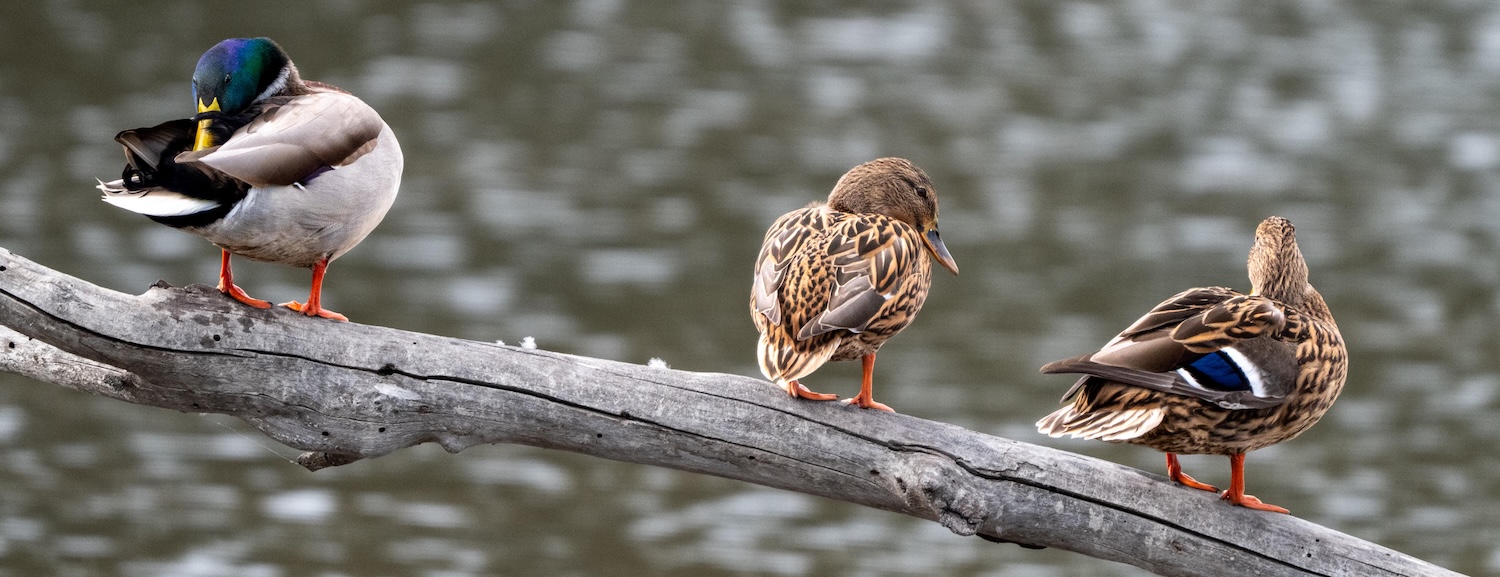
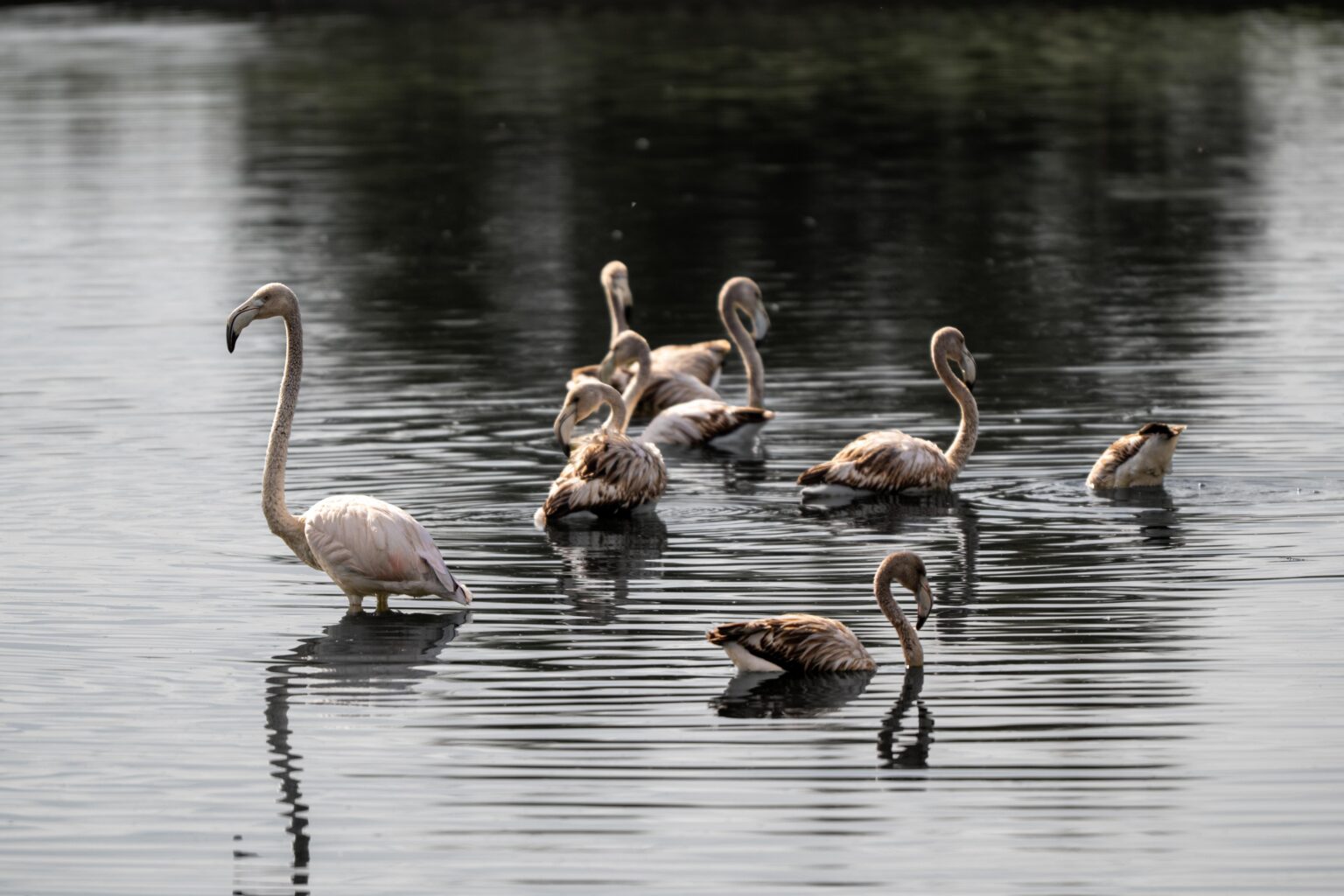
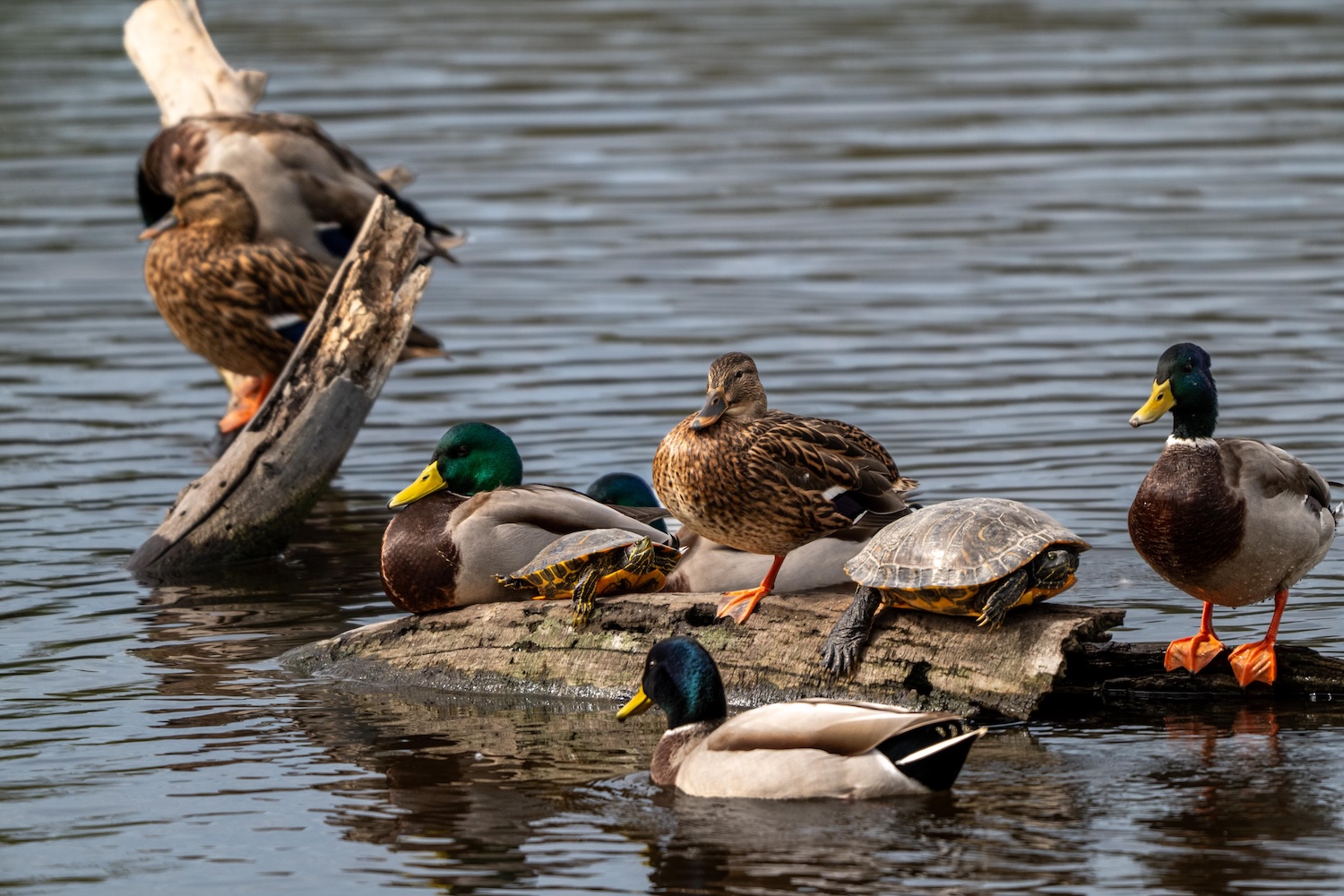
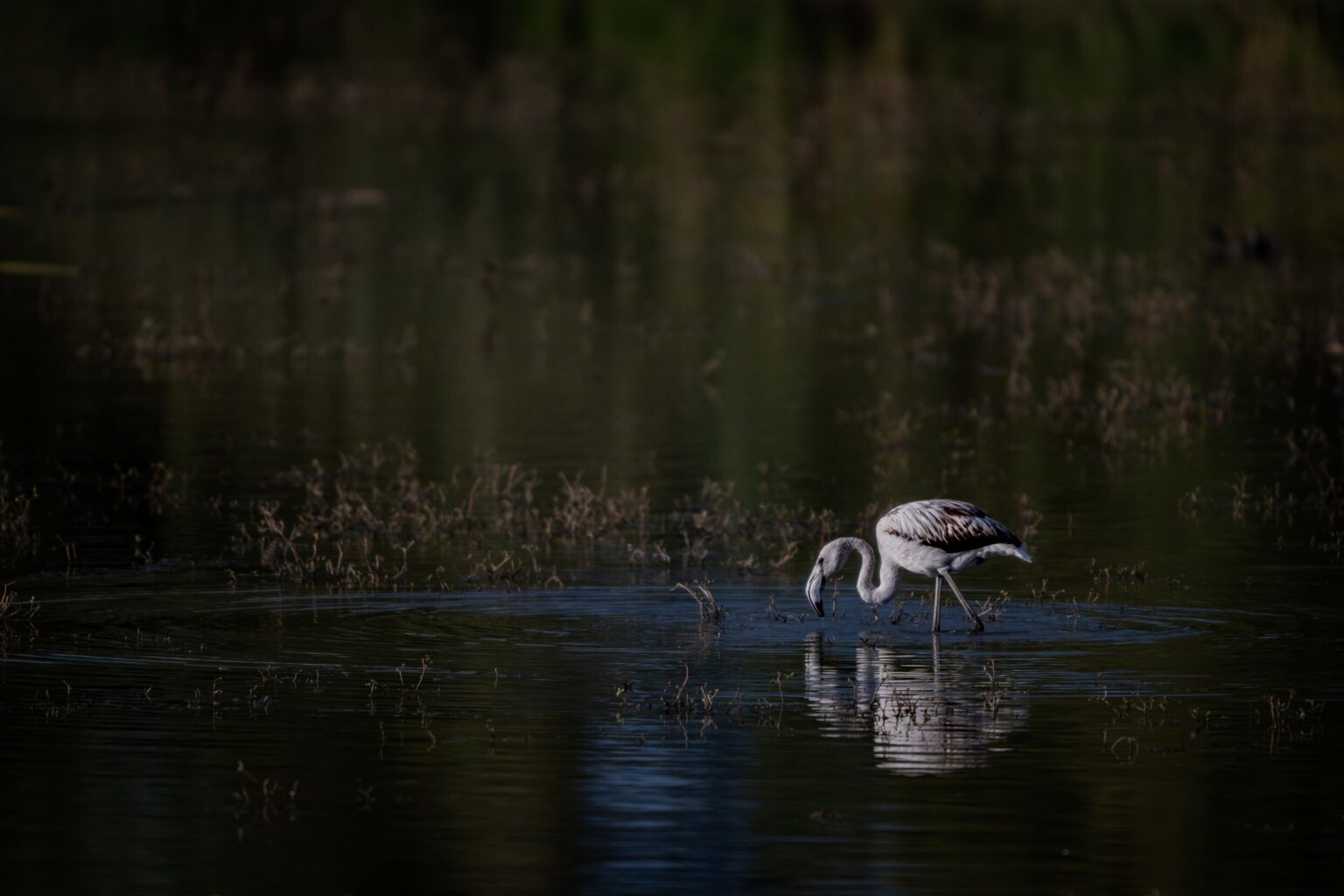
We walk back to the two hides we had run past, and are very glad that yesterday’s flamingos are still simply performing their tap dances. They seem to be mostly young birds; only one flamingo we see is a very pale pink, the rest of the plumage is largely grey. Pieter gets talking over his enormous camera with a German who is standing there with a smaller, but also very good camera. They exchange experiences while I enjoy all the beauty in front of me: flamingos, shovelers, storks, swans, mallards and little grebes. With my binoculars I get them fairly close and I can even take a good look at a water rail. Via the Merlin app I see that there are also meadow pipits, goldfinches, Cetti’s warblers and linnets around us, but my heart skips with excitement when I see that there is a kingfisher nearby.
Hey, is that not…
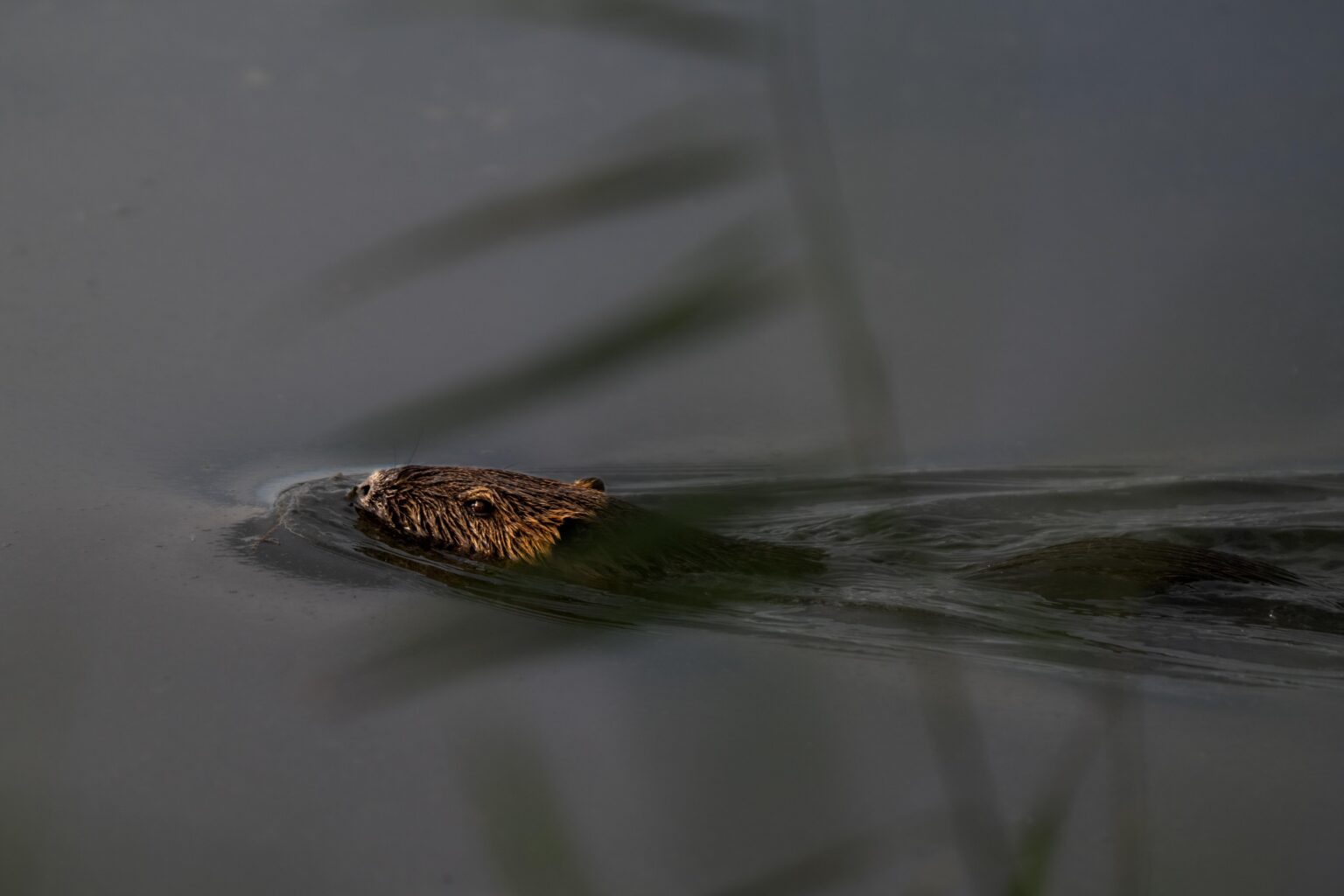
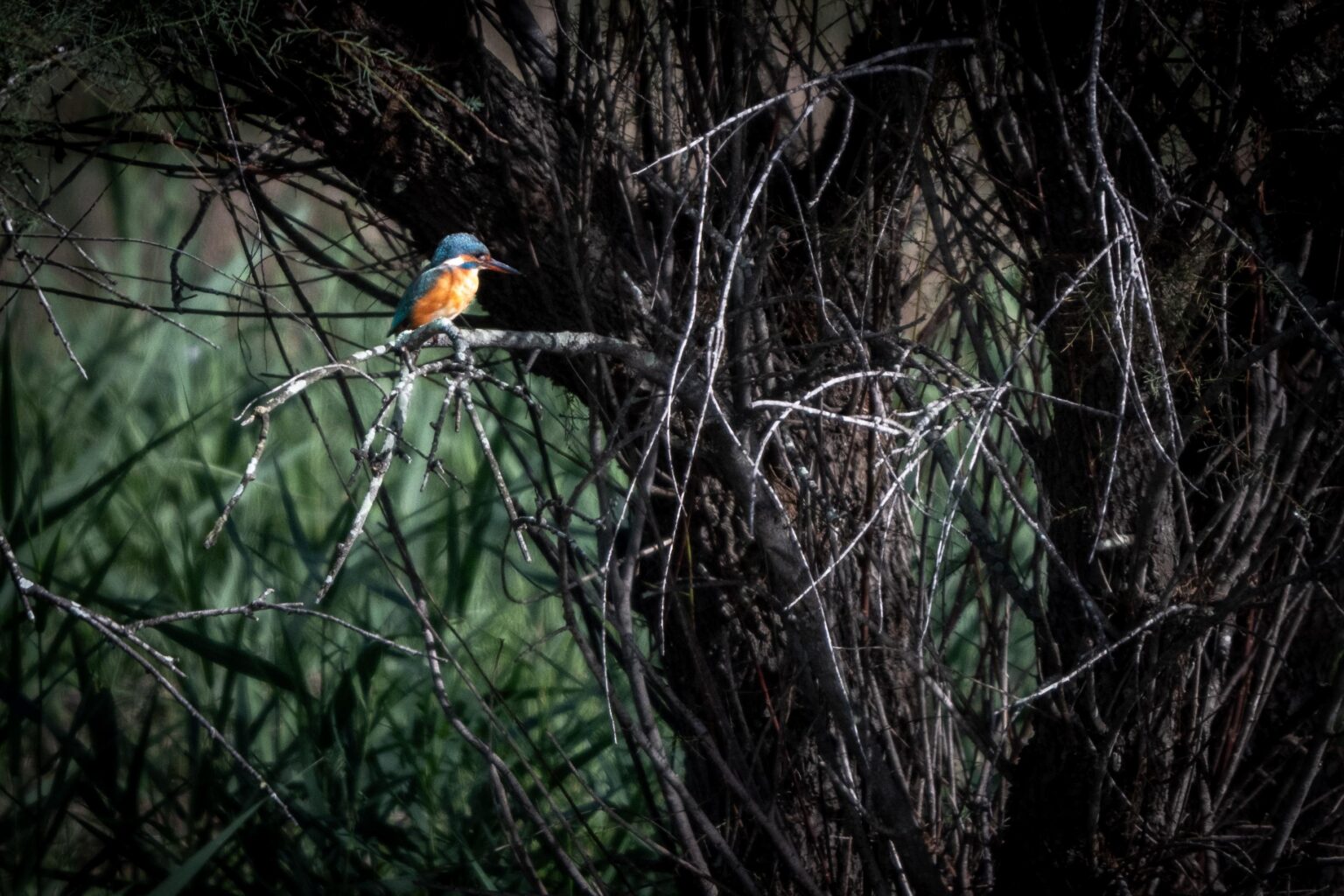
The conversation with the German is over, we go to the next hide. There is little to see. Just as Pieter says, ‘No action here at all,’ a beaver comes swimming past below us in the water! As if it was waiting for its cue: no action at all? Ha! The two women standing with us in the hide, two Brits, are also about to leave the hide, until one of them says: ‘Hey, is that not a kingfisher?’
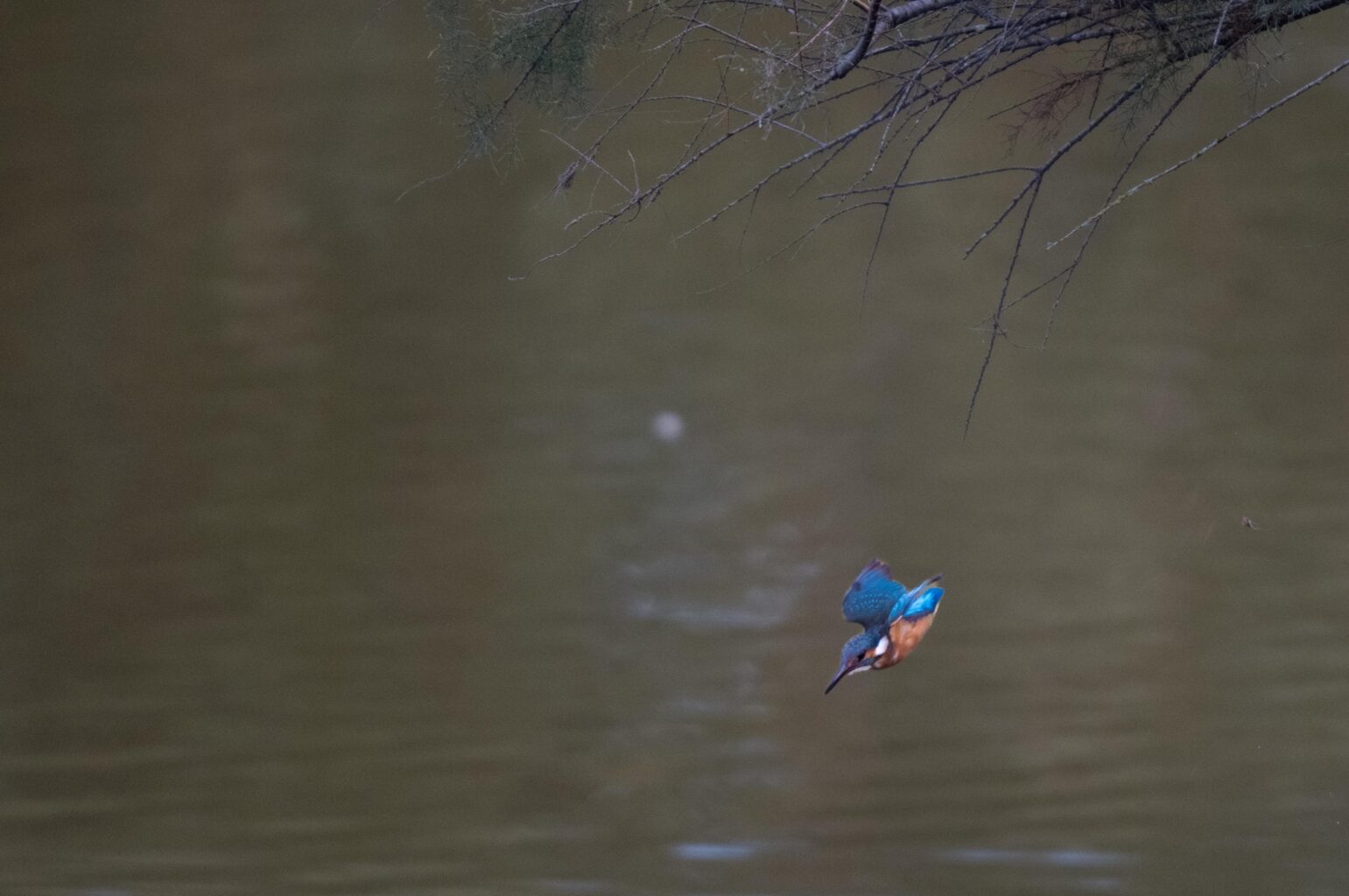
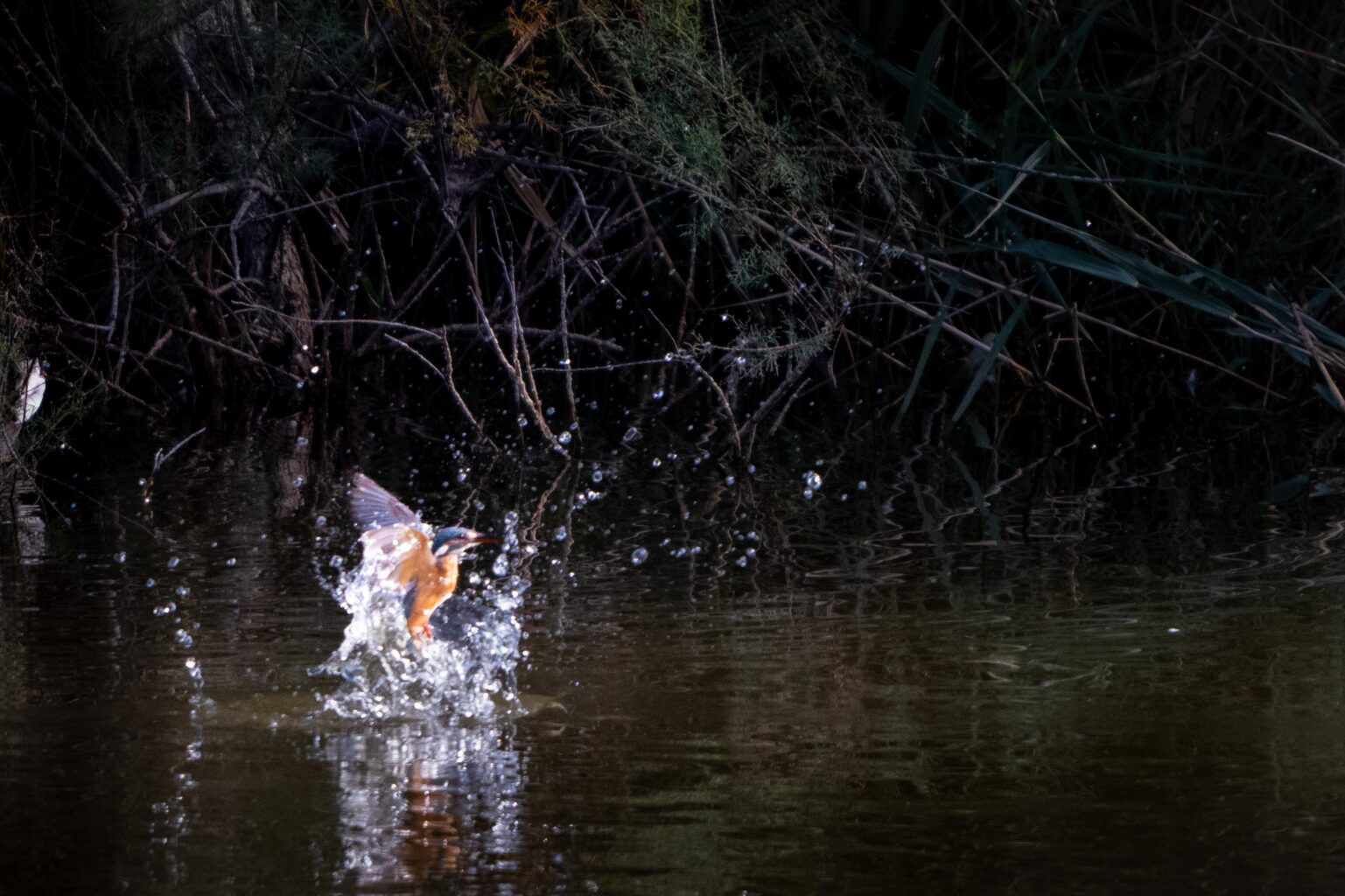
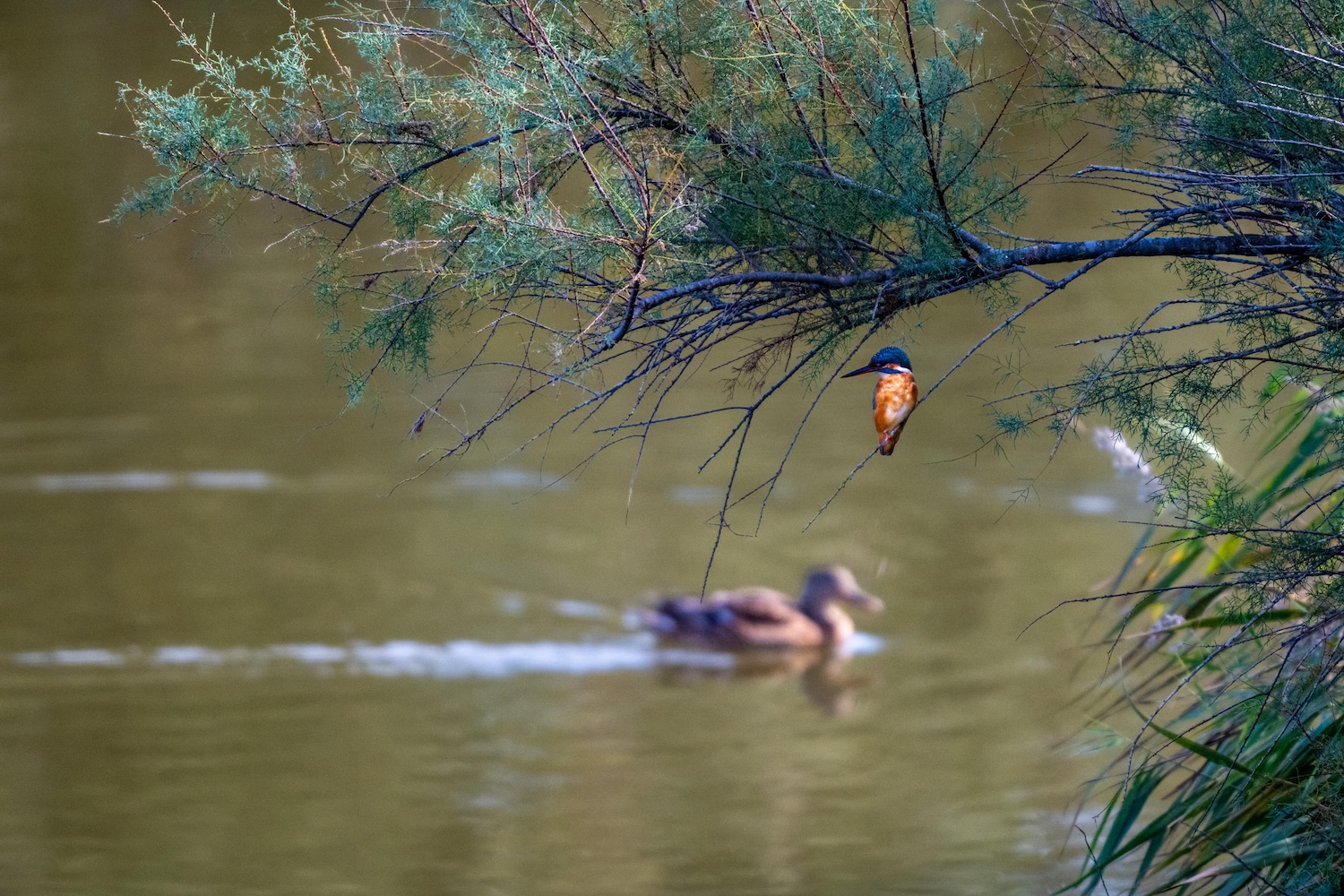
For the next twenty minutes we sit with bated breath watching the little kingfisher hunting in front of us. It mostly sits still on a little branch above the water, kindly lets itself be captured in profile by Pieter (though it is a little too far away to get it completely sharp), and then takes a dive towards the water. It is incredible to see that little blue flash of light skimming over the water and then settling somewhere, where we then have a good view of its little orange breast.
Cattle egrets on horses
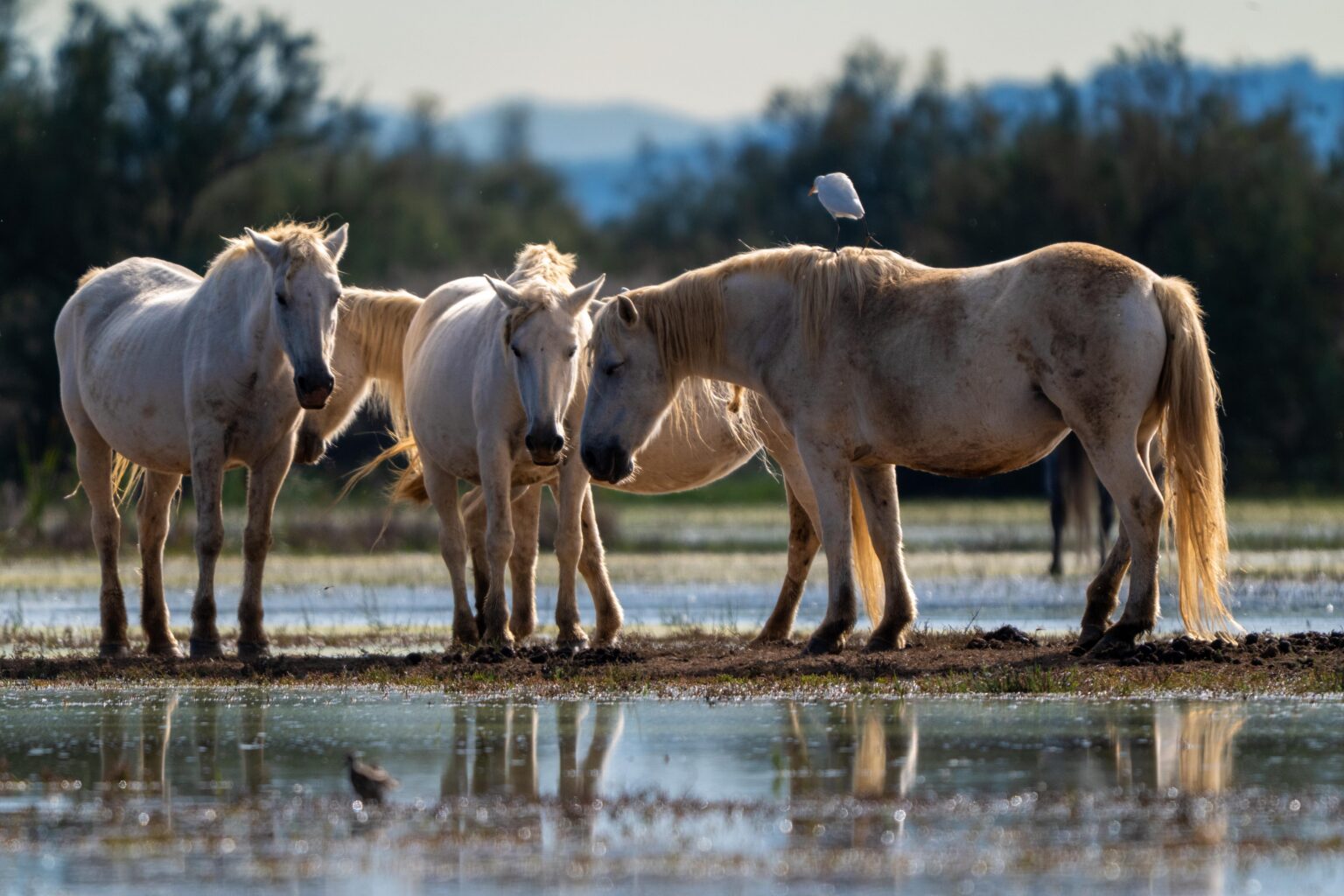
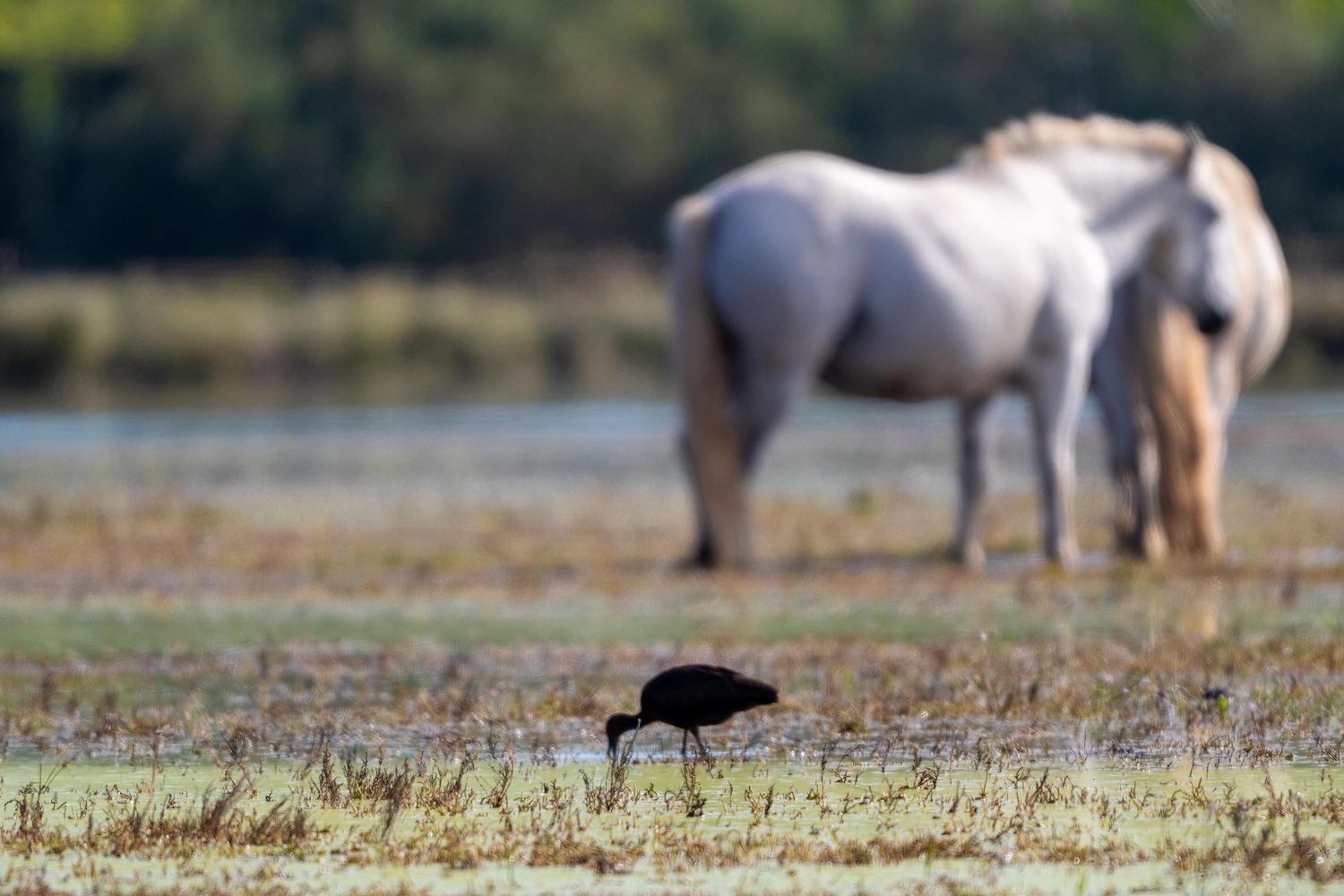
As soon as the little kingfisher has finished hunting and flown away, we walk on, delighted and happy, but with stiff shoulders, a painful neck and tired arms from holding the camera/binoculars up. Today is Fiesta Nacional de España, the day Columbus discovered America, which marked the beginning of the spread of the Spanish language and culture beyond Europe. The whole of Spain is therefore off today, and in these parts that apparently means that everyone goes to this wetland. By two o’clock it is so busy with day visitors, screaming children, dogs and cyclists that we take to our heels. Actually that is just as well. After the little kingfisher we have also seen the white horses with the glossy ibises again, and I was so happy especially with this image. A horse patiently letting a cattle egret walk around on its back and pick insects from its mane.
And then still: the monk parakeets
We walk back to our car, which we have parked just outside the park. Again past the hide from which we saw the little kingfisher and the beaver, again past the hide where the flamingos were, again past the hide where we saw the roe deer walking yesterday. And then we come back to the field of old sunflowers. ‘You have got to be kidding!’ Pieter squeals as we look out over the field. Dozens of little monk parakeets are sitting, just as they were yesterday morning, pecking at the old sunflower seeds. A beautiful sight! I keep quiet and try not to scare them off. Pieter walks two steps at a time, then holds his camera high, shoots a few images, and shuffles on. All so as not to let those creatures take off en masse . Just look how beautiful:
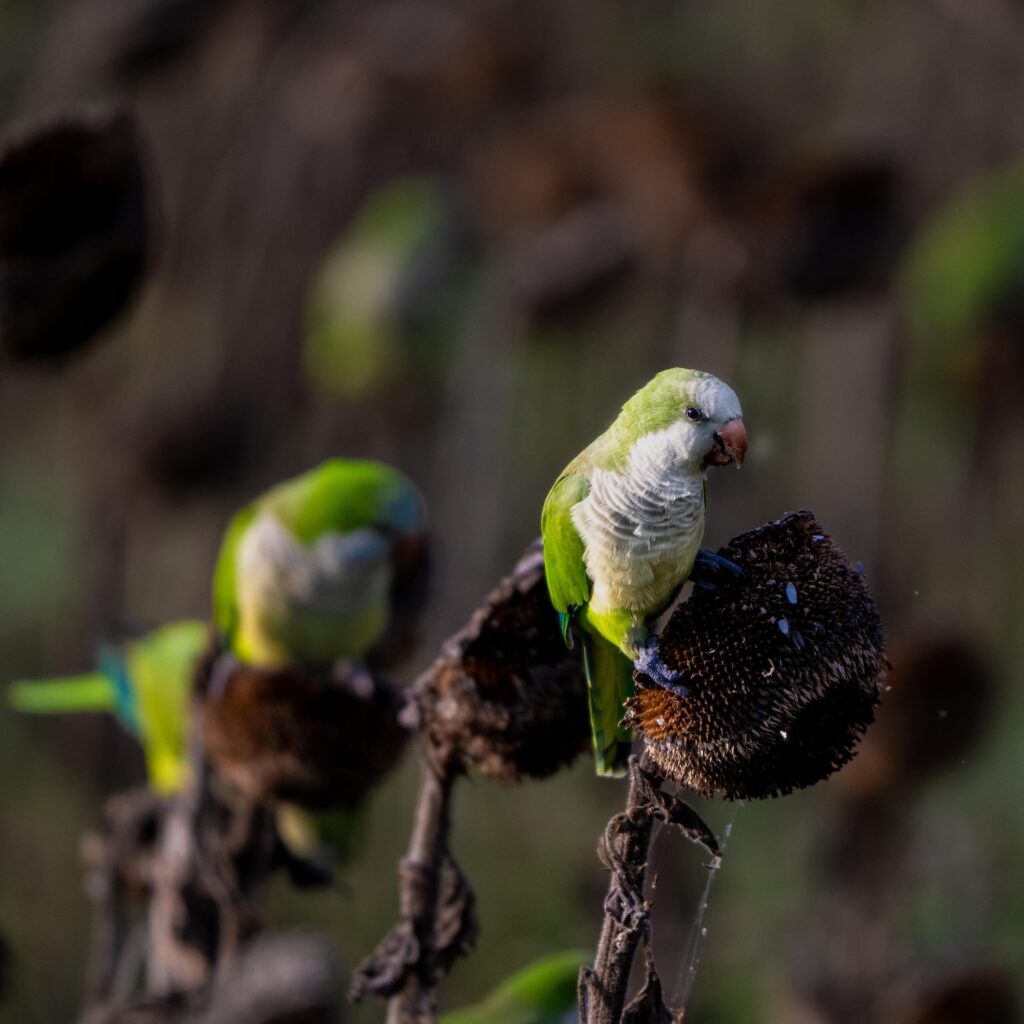
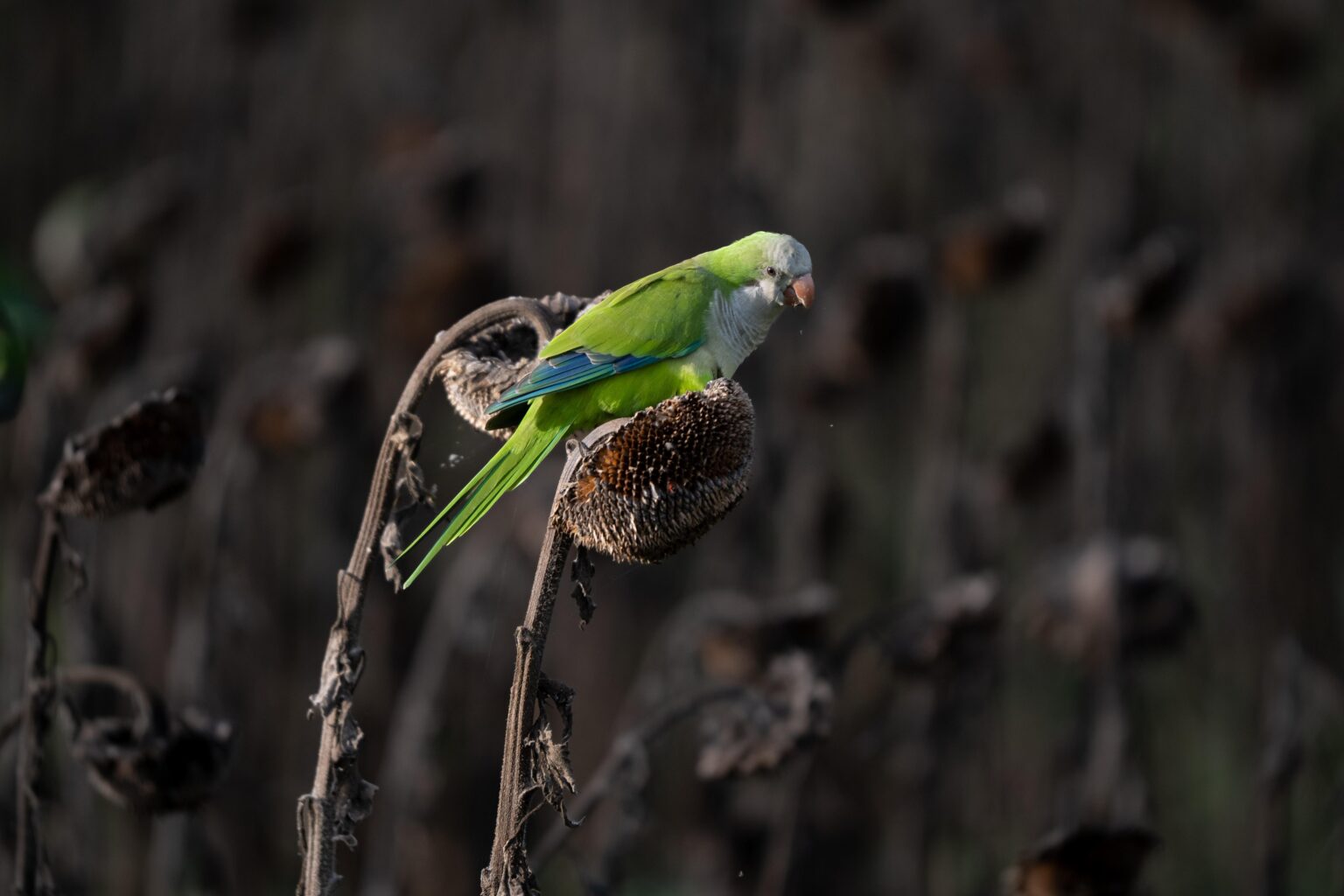
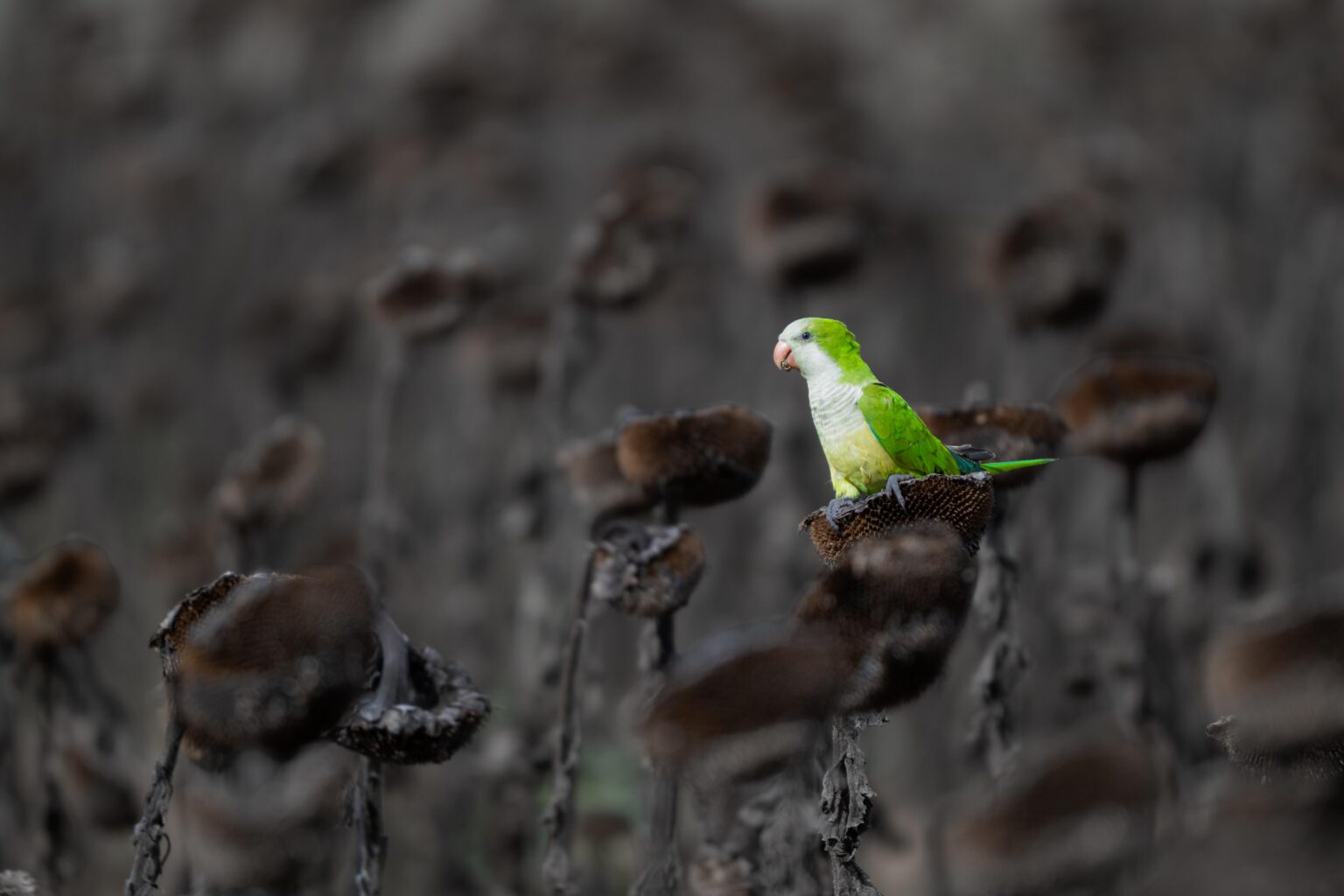
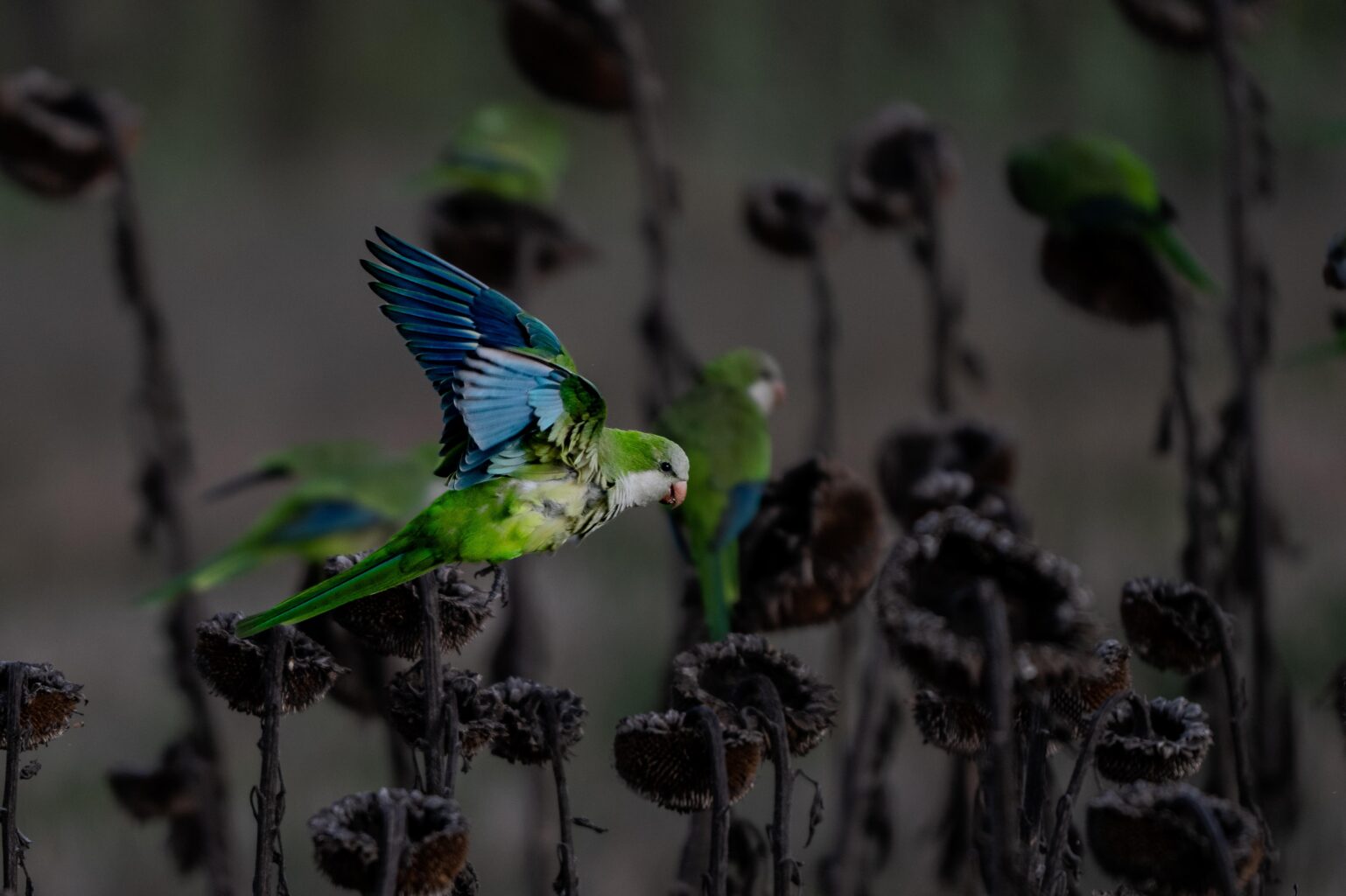
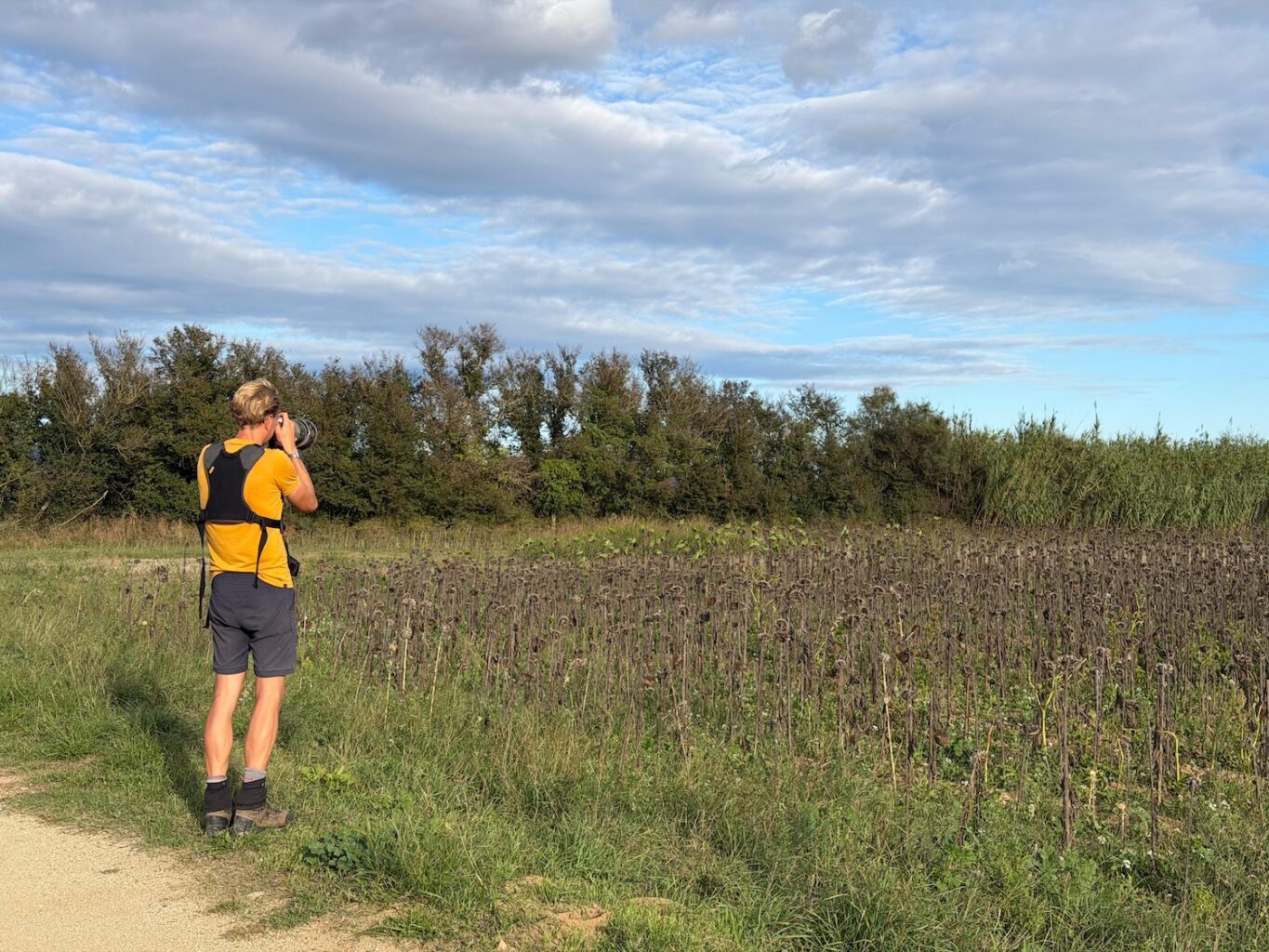
Here they are still sitting; a second later they all fly up.
Utterly tired from ambling, peering, holding the equipment up, concentrating and yet secretly walking seventeen kilometres, we sink into our car seats like two plum puddings. We breathe out for a very long time, then look at each other and start laughing hard. What a day! You should never see the same concert two times in a row, and at a holiday destination you had also better vary things a bit, but Aiguamolls de l’Empordá? Again tomorrow!
We work together with WAW Travel. For this walk, WAW Travel provided our overnight stays and breakfast. More information
This post was translated from Dutch with the help of AI. Read the original Dutch version.

No comments