

The weather forecast is fairly miserable for today. Just look:
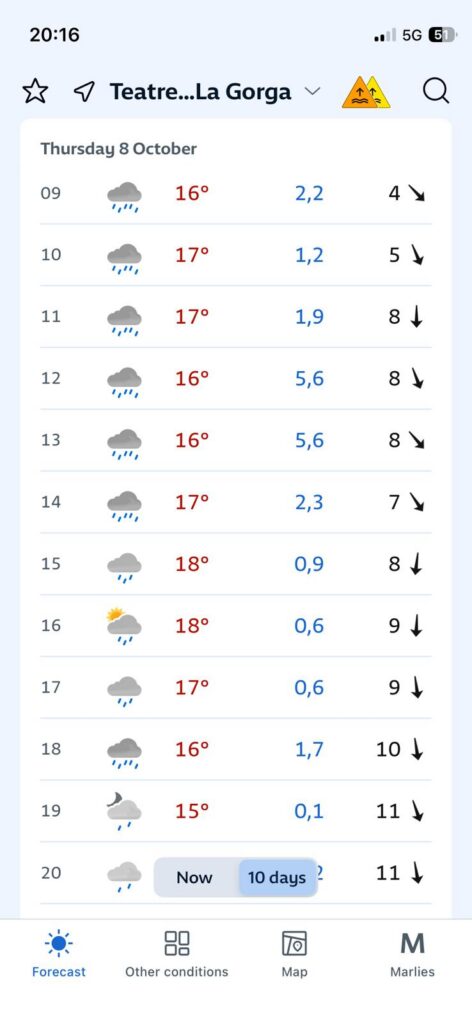
Oh dear. It is 18 km long, but not all that up and down, according to the Germans. So we start the day with a bit of a lie-in. Who knows, perhaps most of the rain will have passed over by then?
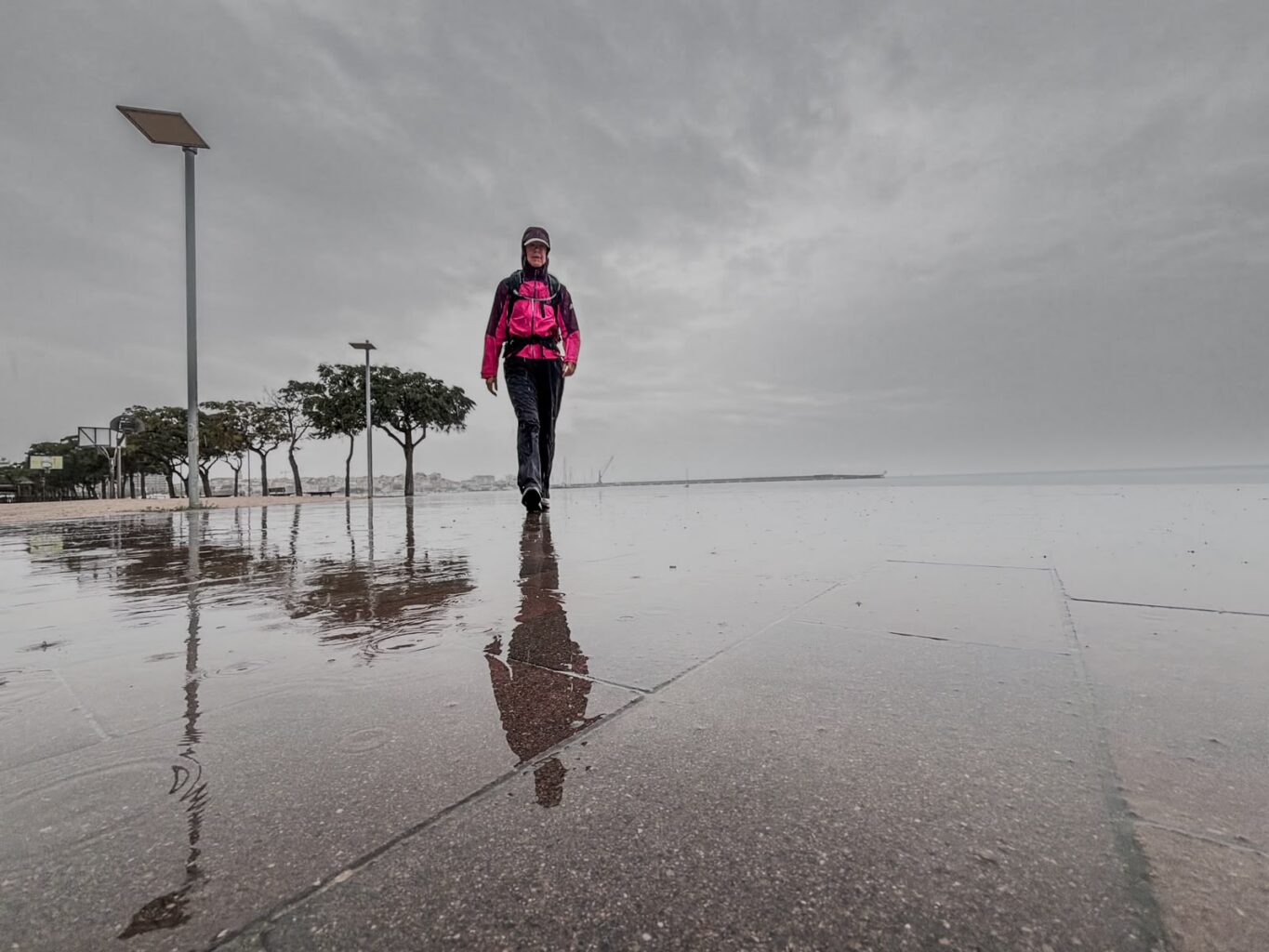
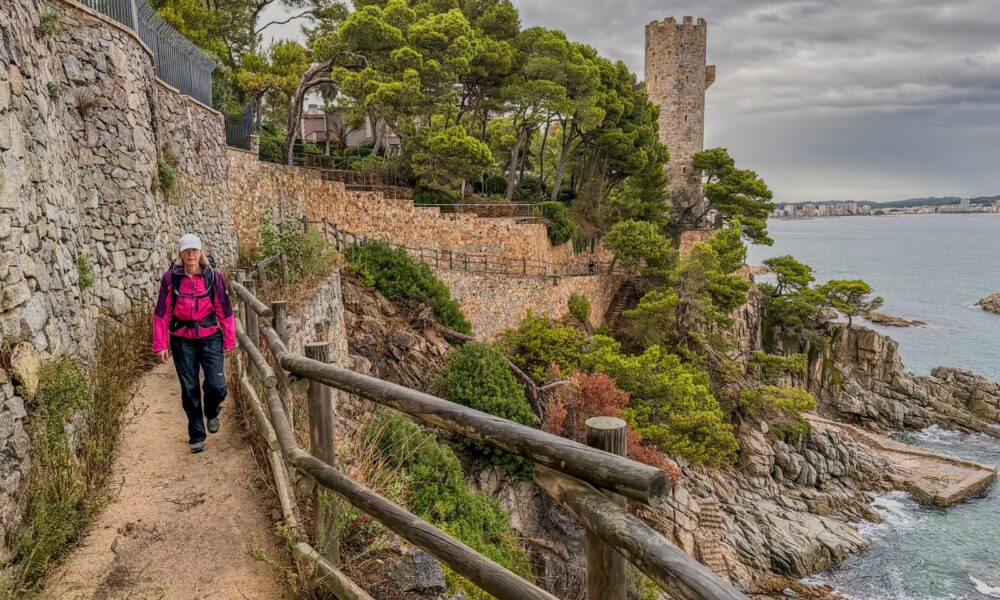
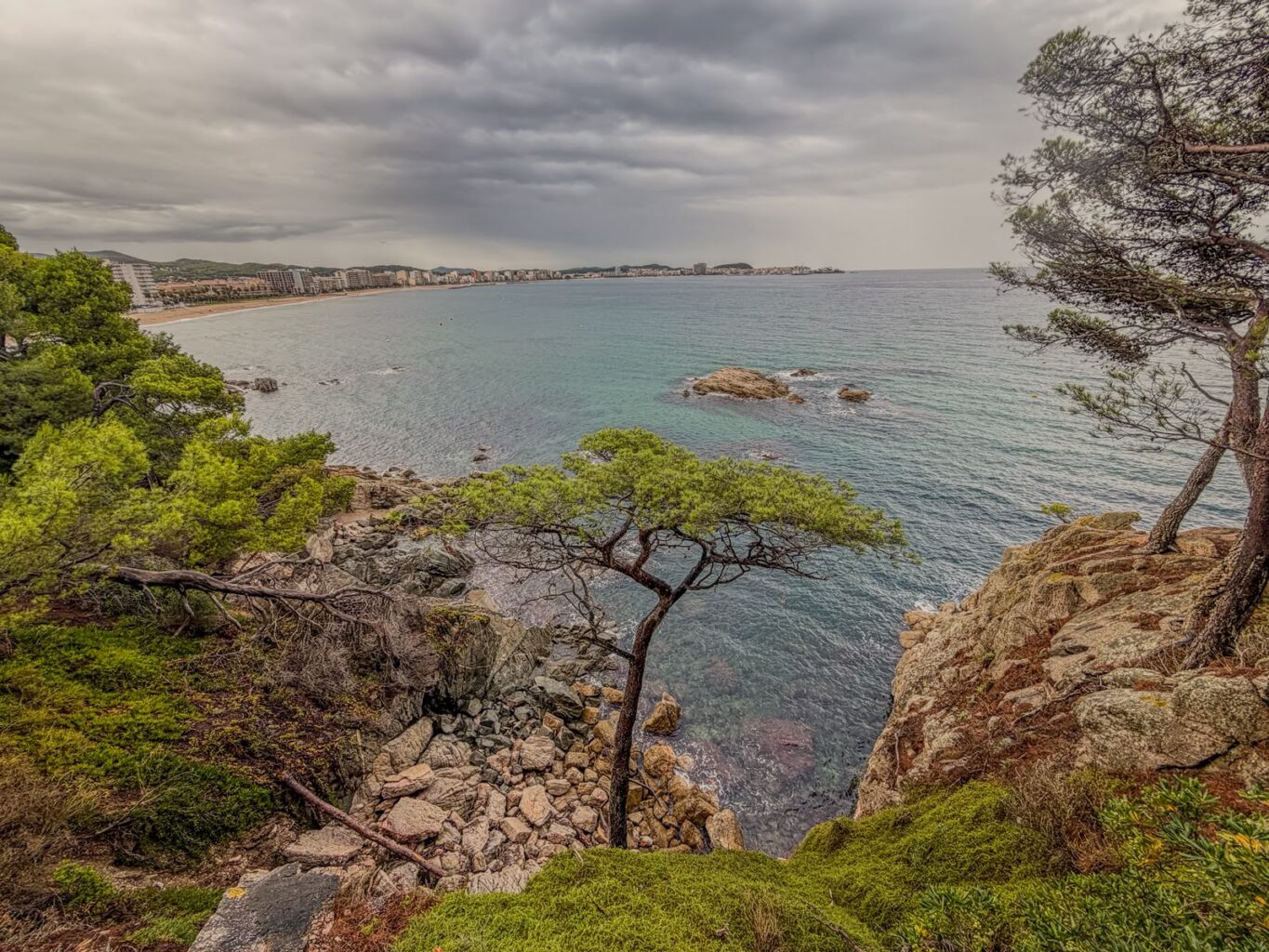
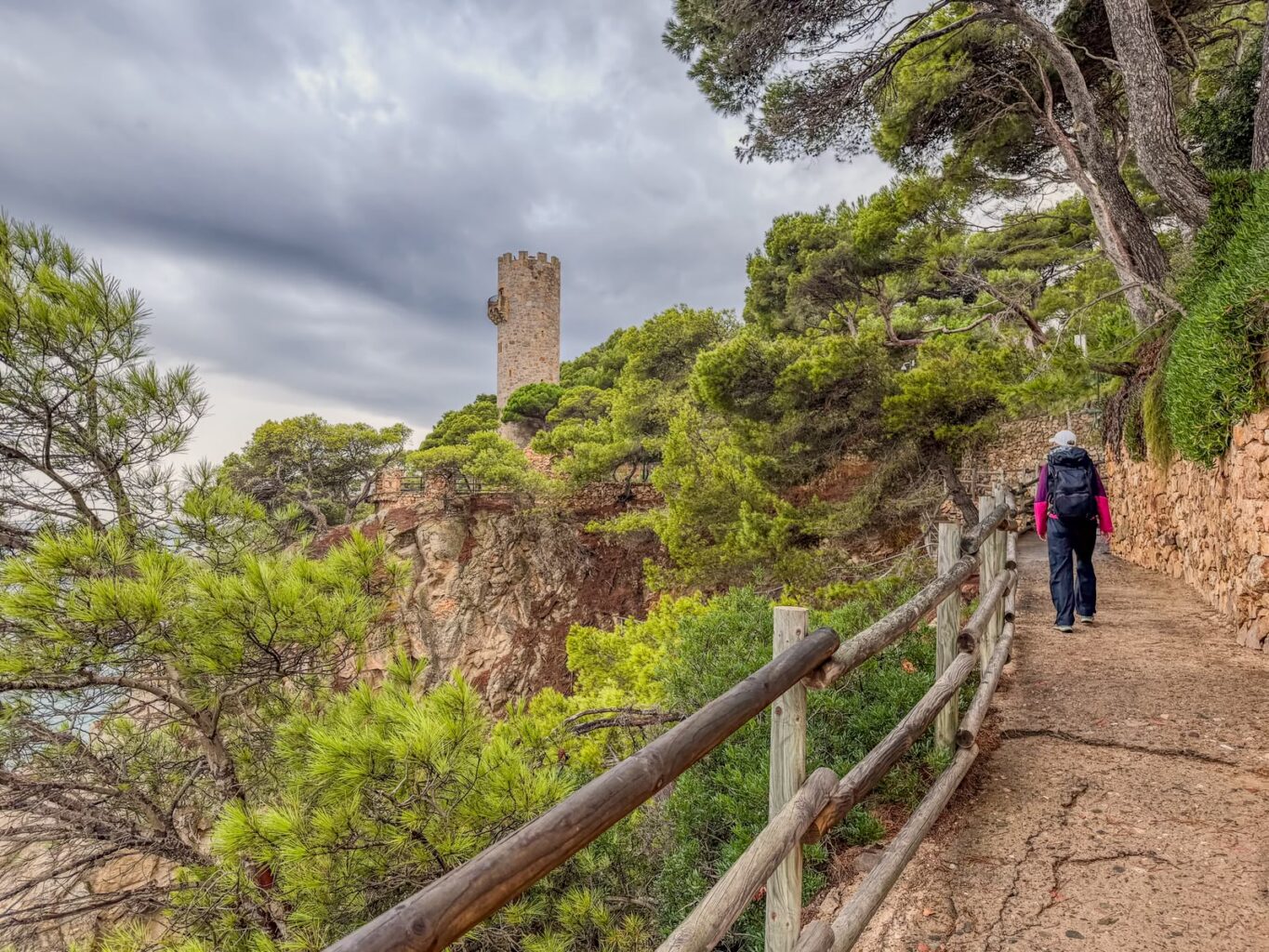
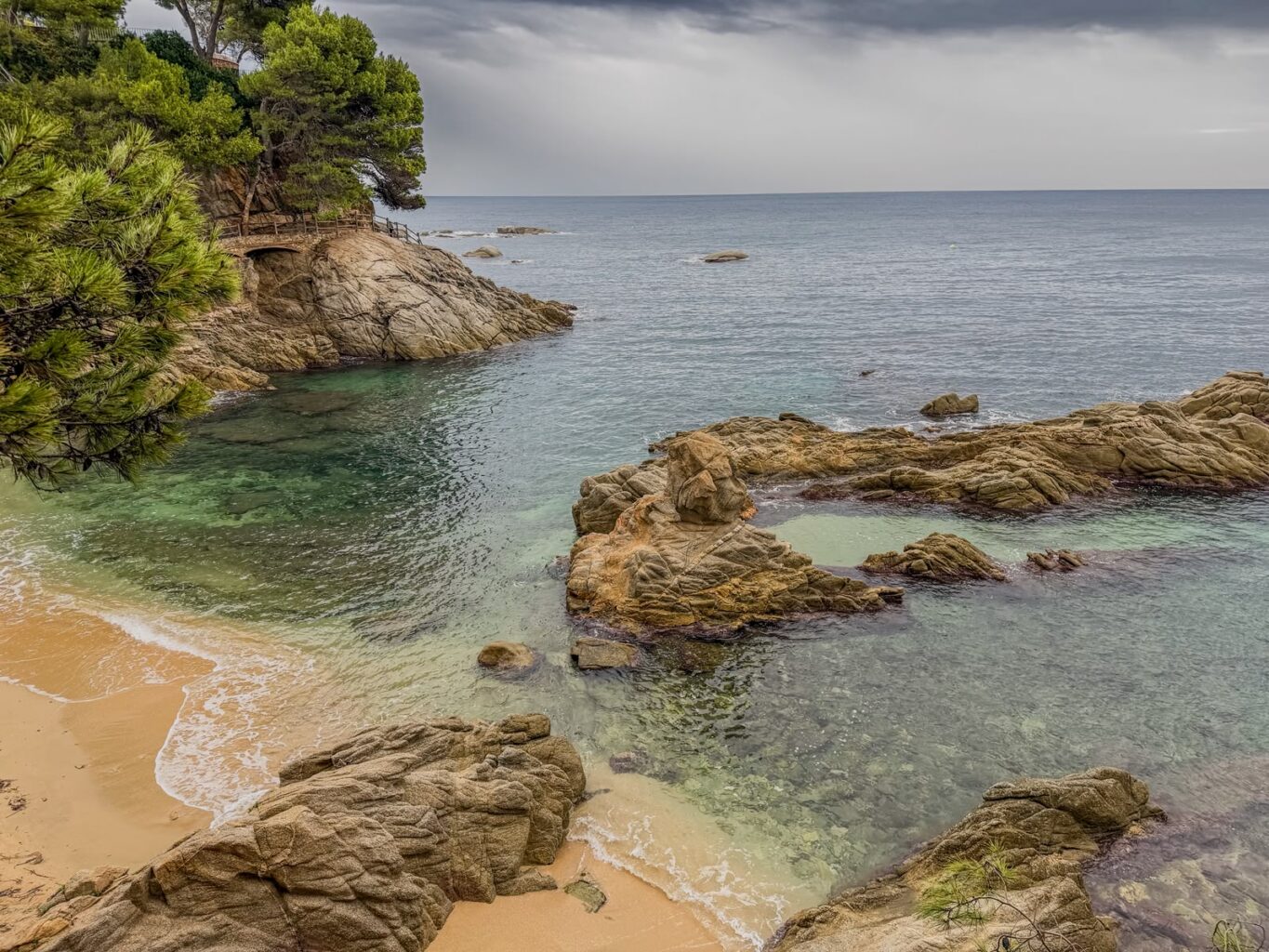
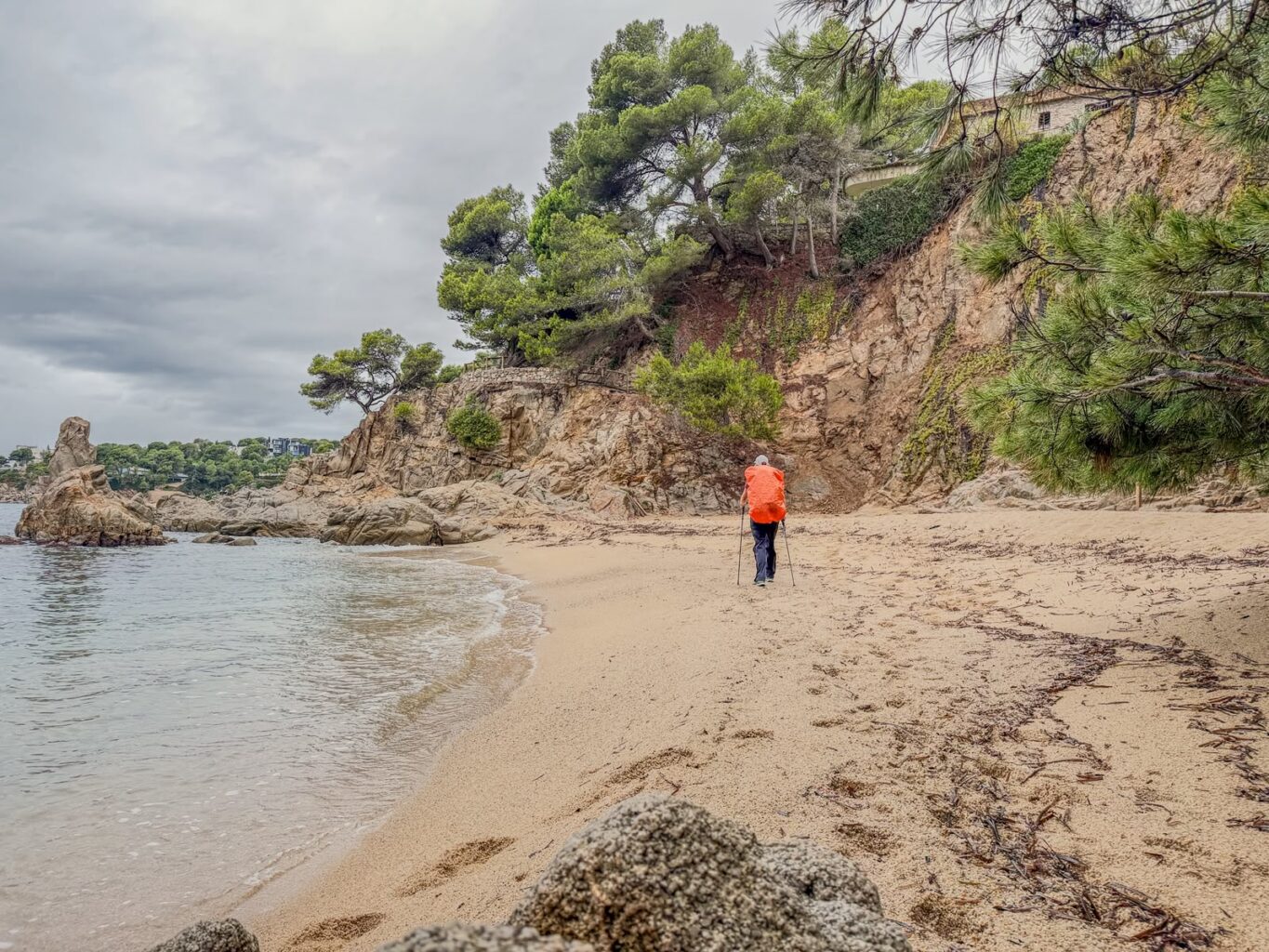
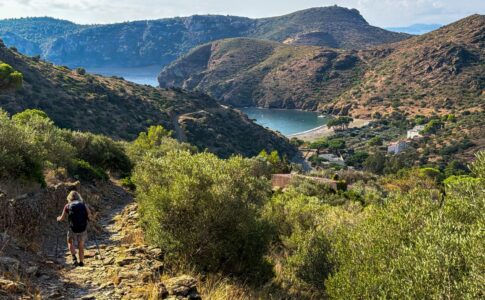
No, then. Luckily the first part of the walk is along the promenade of Palamós, so it is a wonderfully relaxed start. Only after five kilometres do the first steps appear. Down the steps for a little cove below, up the steps for a higher cliff. This goes on like a yo-yo, up and down, until shortly before Platja d’Aro we come upon a proper collapse. In the storm of last Sunday a tree came down here and took a piece of the hillside with it in its wake. It is down to us to clamber over it without coming to grief.
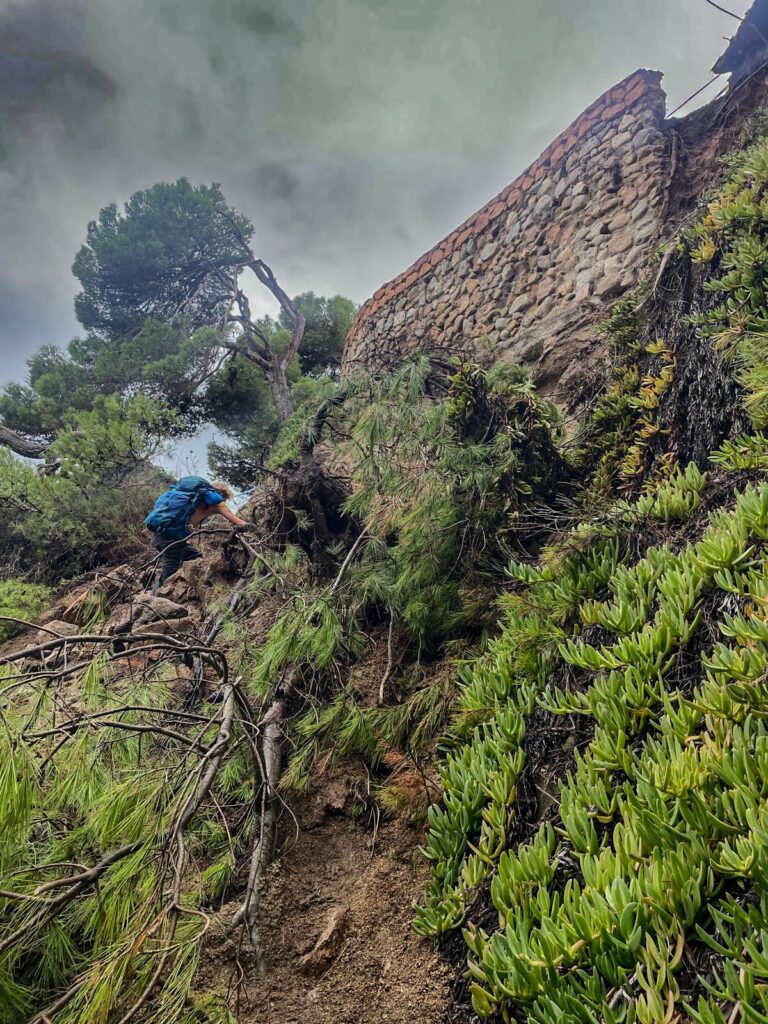
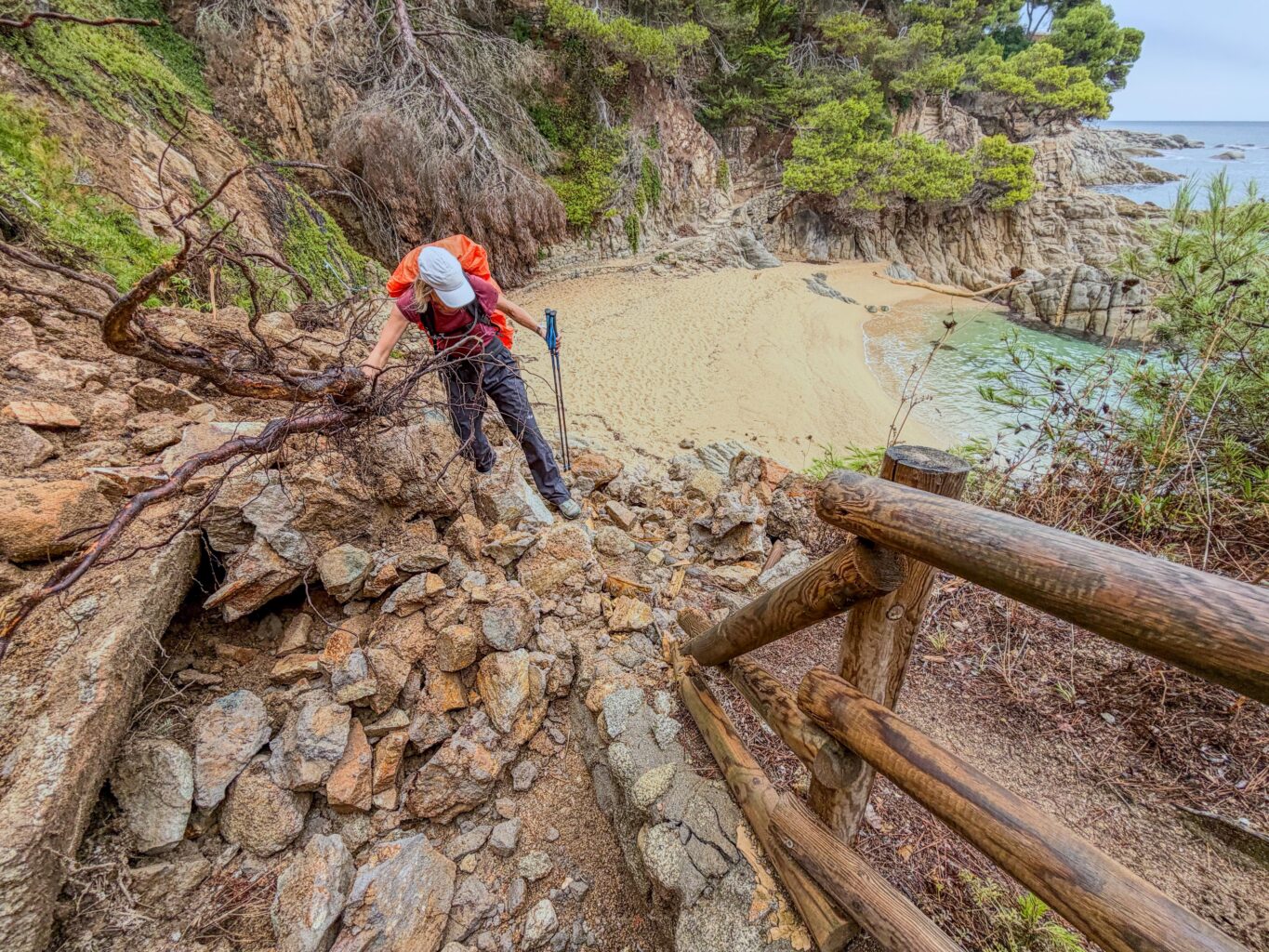
We manage it! We are safely on the other side. An older lady with her grown-up son comes towards me on the narrow little path. ‘Este camino esta rota alla,’ I say to the lady in my best Spanish. I point to the rubble. ‘Oh, it’s like that over there too, it’s difficult there as well,’ she says to me in unmistakable Amsterdam Dutch. Ha ha! And there I was thinking I could pass for Spanish. Later, when I think about this, I realise that I should at least have said ‘Esto camino esta roto’, even if that is probably still completely incorrect Spanish. Ah well.
Marcel Cerdan
In Platja d’Aro we eat at a lunch place called Marcel Cerdan. Inside, everything is hung with photos of boxers, and specifically of that one boxer, Marcel Cerdan. Neither of us has ever heard of the man, but he turns out to have been a genuine world champion from the 1940s. Also known as ‘le bombardier Marocain’, the Moroccan bomber, because he grew up and started his boxing career in Morocco. He was perhaps even more famous for his much-discussed romance with Edith Piaf. When we ask the woman behind the bar, it turns out that Marcel Cerdan’s son is the owner of this café. A homage to his father, who lost his life at the age of 33 in a plane crash when he was on his way for his rematch against Jake LaMotta. In our dim-wittedness we did not even take a photo of it 🤭
Sant Feliu de Guixols
After Platja d’Aro the rain and the wind get steadily worse. We decide to cut across to our hotel, along busy roads and via the Decathlon – where sadly they do not have a new rain cover for my rucksack. Along the way we also pass this house on the Sant Pol beach here in Sant Feliu de Guixols. The story behind it is a lovely one: around 1910 this Casa Estrada (popularly also called Casa de les Punxes (house of the points)) was built by Pere Mártir Estrada, a wealthy cork manufacturer. According to a local legend he had a little turret built for each of his nine children. Those turrets are clad in blue-and-white trencádis, a mosaic of broken tiles, and the windows have typically Modernista decorations of leaf motifs. In 2013 it was bought by someone who wanted to turn it into a hotel, but the renovations were soon halted. Since then it has stood empty and the windows have been boarded up. Such a shame, though, of such a special building? 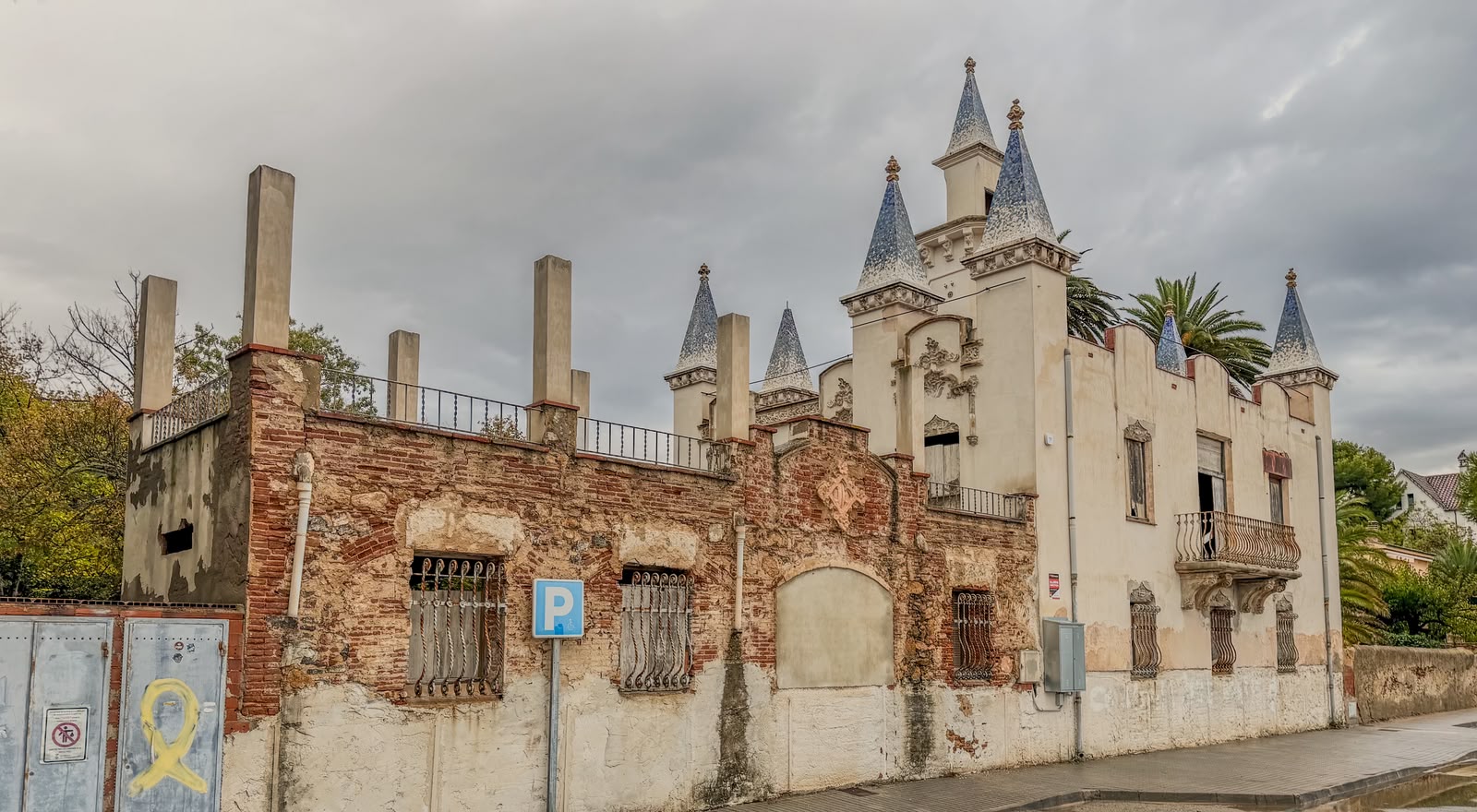
After that we walk through the rain to our hotel. A hot shower, dry clothes and a hairdryer are waiting there. One thing we may as well conclude today: that weather forecast was bang on!
Staying at: Hostal Boutique Es Portalet, in the middle of Sant Feliu de Guixols. A nice sitting room where you can read or have a drink, a lovely atmosphere.
Distance: 17 km
Elevation: 293 metres up, 292 metres down
We work together with WAW Travel. For this walk, WAW Travel provided our overnight stays and breakfast. More information
This post was translated from Dutch with the help of AI. Read the original Dutch version.

No comments