

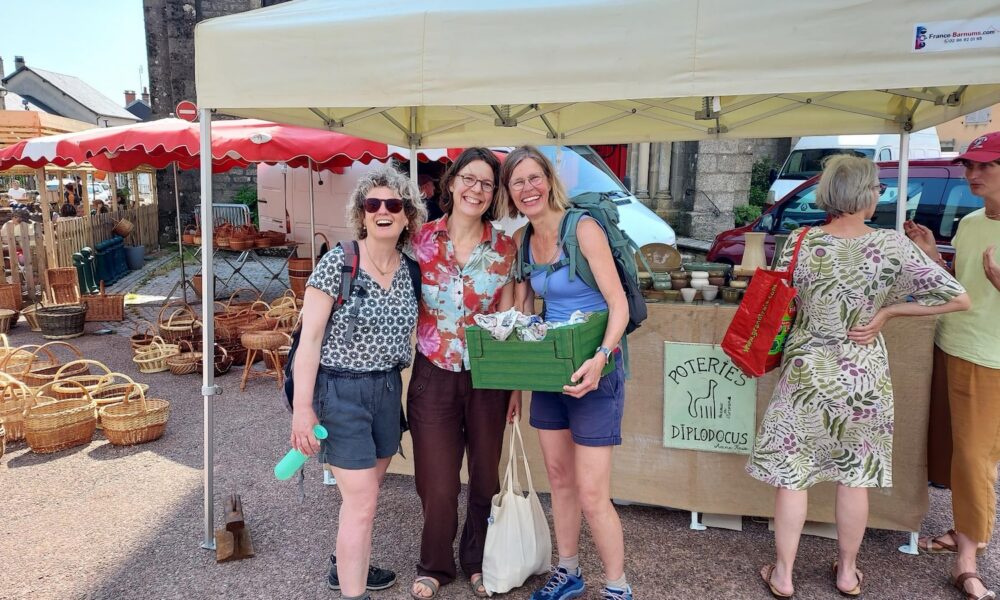
Well, at the farm… It is not a real farm, the wonderful spot in the Morvan where our friends Alexandra and Mathijs live, at least not a farm as you might picture it: a gigantic house, enormous stables beside it, hectares of land where there are either crops or cows, large dogs keeping an eye on the place. But on the other hand: what makes something a farm? Alex and Mathijs grow their own vegetables, have chickens, bees and cats, harvest their own fruit, bake their own bread, make their own yoghurt and ferment their own sauerkraut. Then you may surely claim the title of farm, may you not?
We have been there often over the past ten years and I have written about it once or twice as well. Nowhere do I feel so at ease, such an outdoor person, so as if I am getting air and coming to rest as I do at Alex and Mathijs’s. There is a certain energy in that house, in that overwhelming garden, in their chemistry and the way they are intensely interested in everything the world has to offer.
This time I had gone there with my friend Leonoor. Alexandra, Leonoor and I got to know each other at our student society Koko, when all three of us were studying in Maastricht, now almost 35 years ago. We sometimes saw each other often, sometimes hardly at all, and now for a good number of years now and then. It is as it is with friendships that go a long way back: when we see each other, it is as of old, warm and familiar. When we do not see each other, we know it is all right. Lovely all round.
Cows on the path
A week before we came, Alex had taken a wrong step in her garden. Result: a sprained ankle. Long walks were not an option for a while, but then, walking fanatics that we are, Leo and I of course did have to explore the area a little. The two of us walked to Ouroux, where we would meet Alex and Mathijs, who were going there by car. Soon after setting off we ran into a little problem: cows on the path. In itself I do not get nervous about that very quickly, but of this herd part was walking to the left of us, part to the right, and a few were walking on the path in front of us. We withdrew, hoping that the herd would unanimously choose one field and stay there.
In vain. Five minutes later Leo and I were still standing there, willing that herd into a whole with our eyes. There was no movement in them at all, except those chewing jaws. Otherwise they stood looking at us drowsily. The three cows on the path in front of us in particular were problematic. If they were to keep walking ahead of us, Leonoor and I would be the ones preventing them from returning to their herd. A position we would rather not be in. The solution: call Mathijs.
‘Are they aggressive?’ I asked him.
‘Well, that can happen if they feel cornered.’
Mmmm. With Alexandra’s nervousness about the cows here in the back of my mind, I peer at the animals on the path in front of us. ‘Do we have an alternative route?’ Mathijs had to think for a moment, but luckily one was at hand, even if it was less beautiful and a bit of a detour. We were happy to accept that. Without torn clothes or horn prints in our backsides we arrived in Ouroux an hour later.
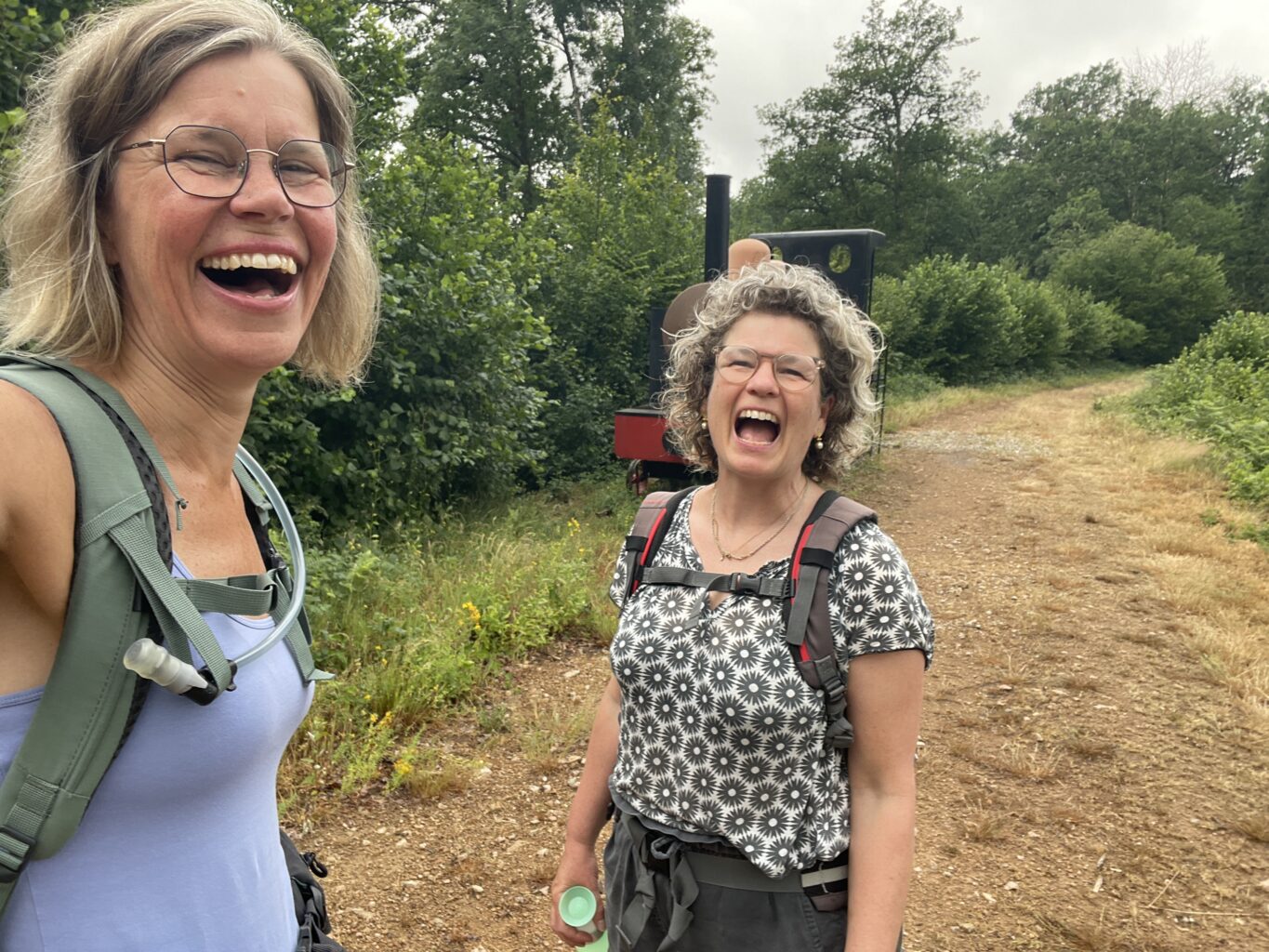
Here we can laugh again
Birds and the bees
After we had bought little goat’s cheeses at the market, stroopwafels from Gauffres d’Or and delicacies from a Tunisian market woman, we headed home again, where we made ourselves useful in the garden. One great buzzing mass, everywhere you walked. While the heat of the day shimmered around us (it was 41 degrees) Alexandra pointed out little wasps with long dangling legs. Cartonnières (called paper wasps in Dutch) gnaw lines of wood from posts with their jaws, grind this down and vomit it out again as a kind of paste, with which they make their little nests. Those nests thus seem to be made of cardboard; hence their name.
The loudest buzzing we heard came from gigantic black insects with a cool bluish sheen. What were those? They turned out to be very fond of the garlic flowers and now and then flew skimming past our heads. Carpenter bees, said Alex. Solitary little creatures that are not aggressive, often confused with beetles because of their appearance, and truly beautiful to look at. Just see:
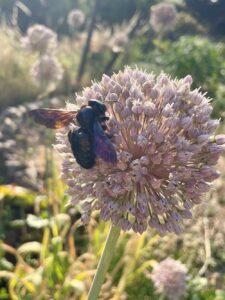
That garlic flower is as big as a fist, so that tells you something 🙂
In the evening we sat on the high terrace at the back of their garden. Mathijs has put this terrace together with his own hands from reclaimed wood. Recently a real conservatory/veranda has appeared at the front of the house, which Mathijs has also put together. He slings his own honey, dressed in a moon-man suit, and chops his own felled trees. But when an insect accidentally slid into his t-shirt via his collar, we saw a very different Mathijs. He flailed his arms around him, panic in his eyes, and in the voice of a screaming kitchen maid he shouted very loudly: ‘Aleeeeeeeeex!’ She looked up at him from the floor of the terrace, her ankle on a little elevation, and said dryly: ‘What do you want me to do?’
Leonoor and I could not stop laughing.
Cyanotype
The next day something quite different was on the programme: cyanotype. Ever heard of it? Alexandra, who works as a volunteer in the local little library, had done this with children last year and wanted to know whether the chemicals still worked. So we would do a few little tests. Cyanotype is an old photographic printing method in which you use a chemical process of two liquids that together become light-sensitive. It is now a typical DIY thing with which people make the most beautiful little blue pictures.
In the morning we had already collected some little twigs, flowers, stamens and other things and in the afternoon we got to work with them. First you lay your treasures on your piece of paper in a fun way. When you were satisfied, you had to repeat this on the official piece of paper that had been smeared with chemicals. Out of the sun, in the dark really, because those chemicals are light-sensitive. Then you lay the paper with your creation on it in the sun, hope that the wind does not get a hold of it because then everything blows away, and then wait a little under ten minutes. After that through a little water bath and voilà!
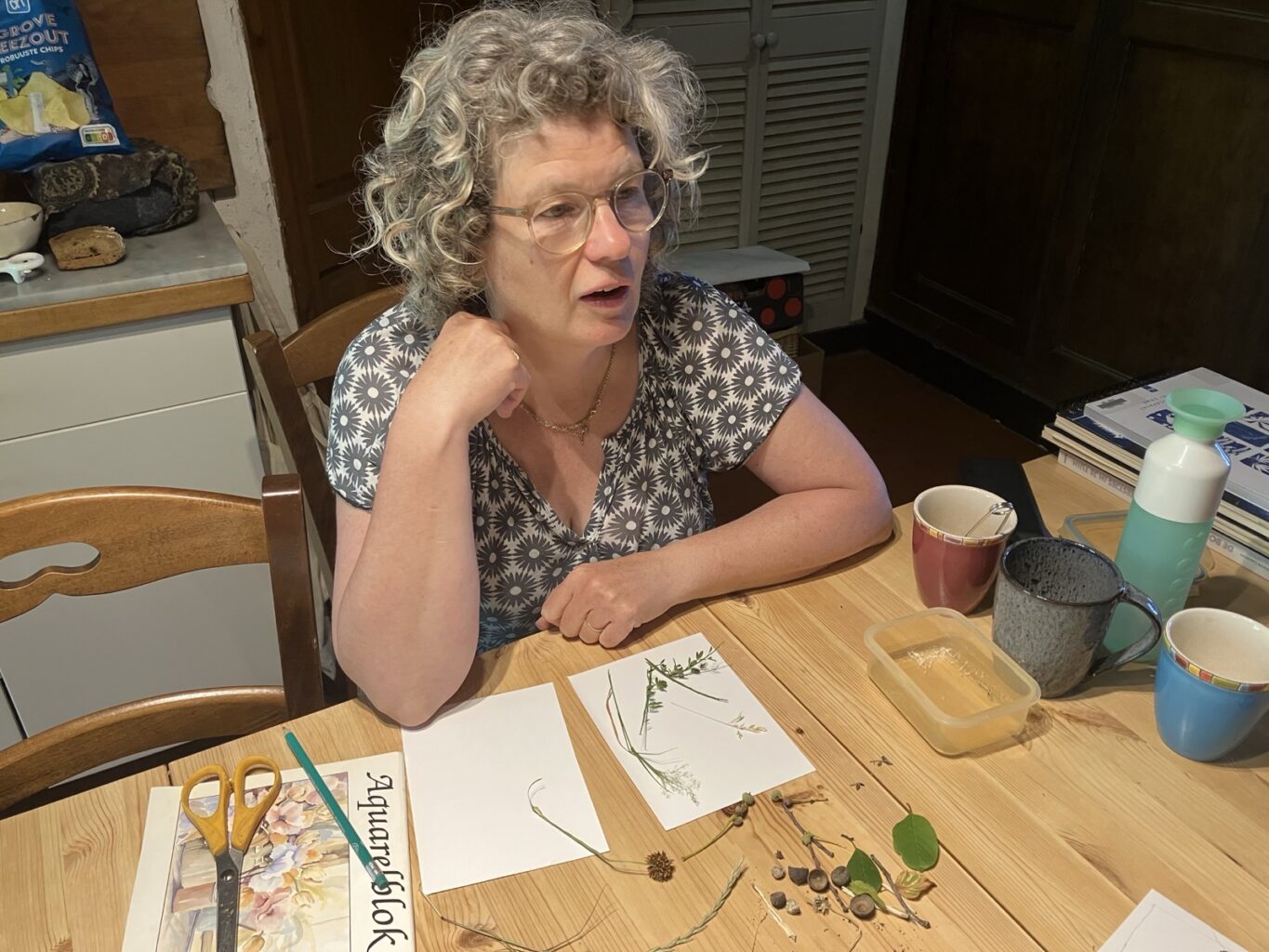
First practise your creation ‘dry’
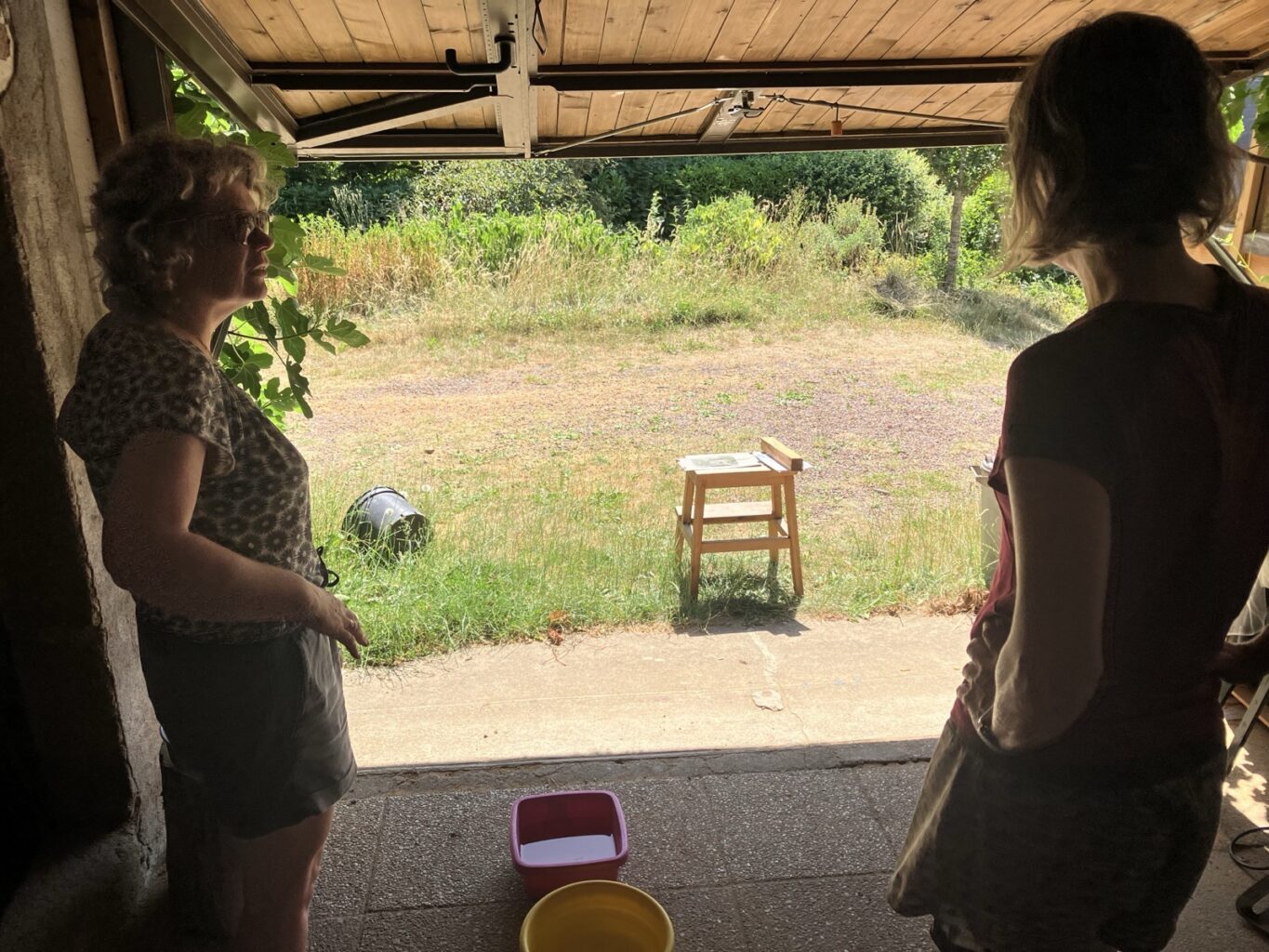
Then repeat it on paper smeared with chemicals and lay it in the sun
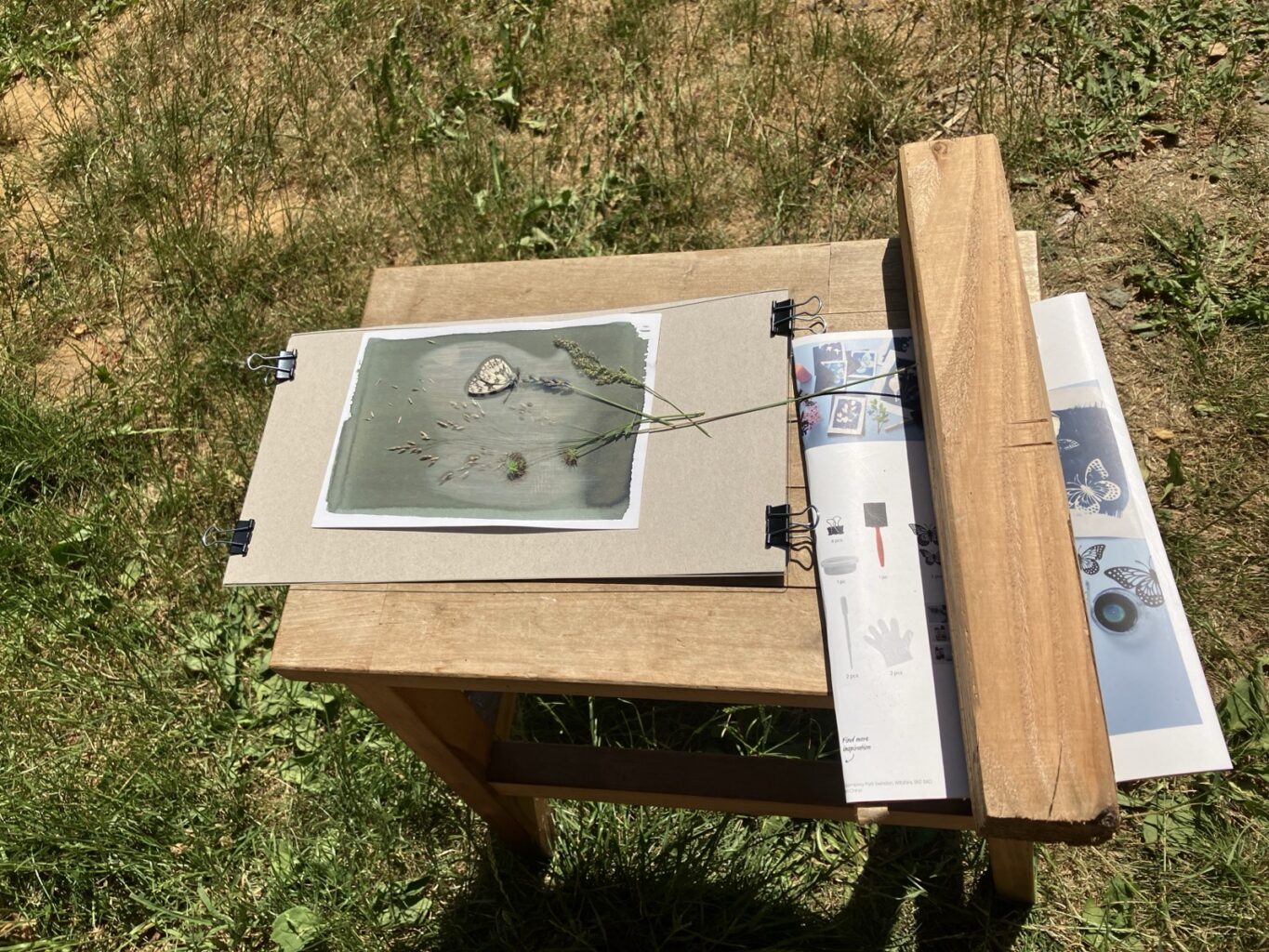
Slowly the colour changes

Through the little water bath
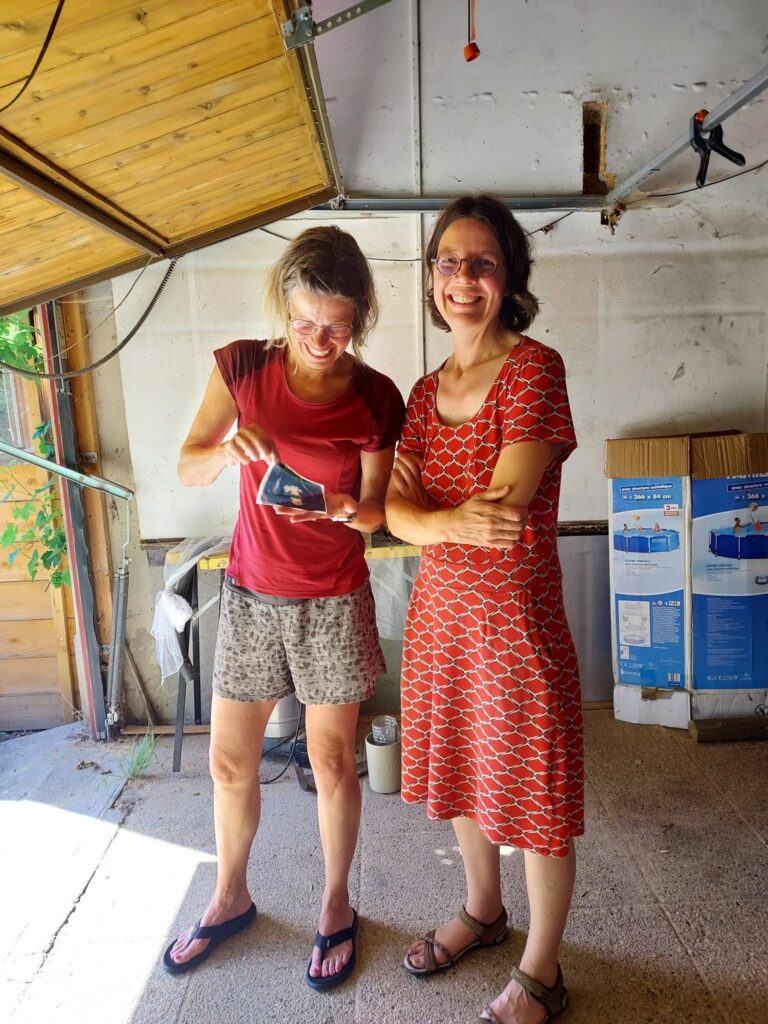
And then here the result
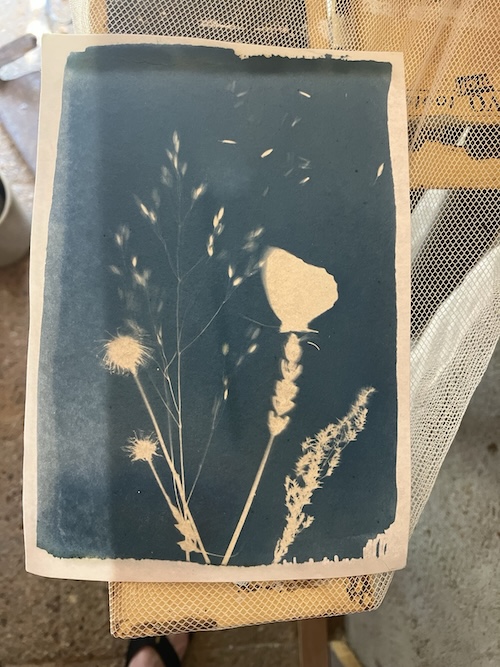
Done! With a dead little butterfly I had laid on it
We were able to conclude that even after a year the chemicals were still doing their work, and Leo and I had learned something new again. So much fun!
That evening we sat down again on the terrace, from where we gazed out over the hills of the Morvan while the sun slowly set. I did not feel like a real little farmer – it was really too warm to work in the garden – but as always it was once again a delicious weekend at the farm!
This post was translated from Dutch with the help of AI. Read the original Dutch version.


No comments